
URTD is primarily used to enhance the efficacy of chemotherapy. By encapsulating potent chemotherapeutics in ultrasound-sensitive carriers (e.g., doxorubicin in thermo-sensitive liposomes), drugs are released selectively within the tumor mass, maximizing cytotoxicity and drastically reducing damage to surrounding healthy organs. The accompanying effect of sonoporation can also temporarily increase cancer cell membrane permeability, facilitating higher intracellular uptake of the released drug.
Ultrasound-Responsive Delivery Solution for Targeted Drug Delivery
In the pursuit of groundbreaking therapies, achieving precise drug localization and on-demand release remains a critical challenge. Our Ultrasound-Responsive Targeted Delivery platforms help you achieve unparalleled spatiotemporal control over drug release, enhancing efficacy and minimizing systemic toxicity. We leverage advanced stimulus-responsive nanocarriers and non-invasive focused ultrasound techniques, ensuring your therapeutic agents reach their precise site of action with exceptional accuracy and safety.
Click Here to View more about our Service
Introduction of Ultrasound-Responsive Targeted Delivery
Ultrasound-Responsive Targeted Delivery (URTD) utilizes external acoustic energy to selectively activate drug-loaded nanocarriers, achieving release at a precise location and time. This sophisticated approach harnesses the non-invasive, deep tissue penetration, and high spatial resolution inherent to medical ultrasound technology.
The mechanism of drug release is primarily driven by the mechanical (non-thermal) and thermal effects induced by the ultrasonic waves:
Mechanical Effects (Cavitation)
The propagation of ultrasound waves causes cycles of compression and rarefaction within the medium. This leads to the nucleation, oscillation, and potential collapse of gas bubbles (acoustic cavitation). Stable cavitation causes oscillations that mechanically perturb the nanocarrier structure or cell membranes (sonoporation), while inertial (transient) cavitation involves violent collapse, generating localized high temperature and pressure, leading to carrier disruption and drug release.
Thermal Effects (Hyperthermia)
High-intensity focused ultrasound (HIFU) can increase the local temperature, triggering the phase transition of certain thermo-sensitive nanocarriers, such as low-temperature sensitive liposomes (LTSLs), resulting in rapid drug efflux.
This combination of effects allows URTD to overcome physiological barriers, such as enhancing vascular permeability in solid tumors or reversibly opening the blood-brain barrier, making previously inaccessible targets viable. Cited literature consistently highlights URTD's ability to minimize systemic exposure while multiplying therapeutic concentration at the target, making it a powerful strategy for improving the therapeutic window of potent agents.
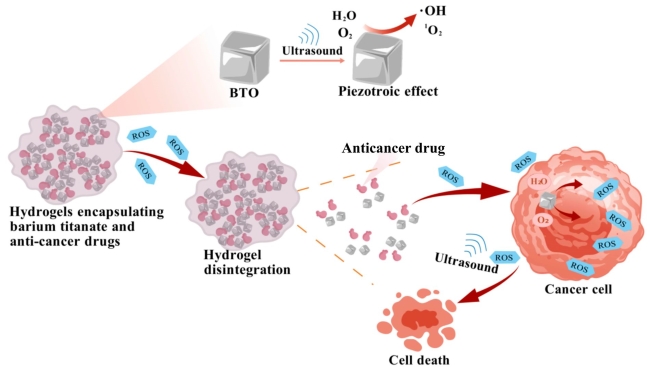 Fig.1 Ultrasound-responsive controlled release drug system based on piezoelectric catalysis.1
Key Ultrasound-Responsive Materials and Systems
The mechanism of US-triggered release typically relies on two main categories of materials: Phase-Change Liposomes (PCLs) and Ultrasound Microbubbles (MBs) or combined systems.
| Material Class | Specific Agent / Example | Mechanism of Action | Applications / Notes |
|---|---|---|---|
| 1. Low Transition Temperature (Tm) Lipids (for PCLs) | DPPC/DSPC Blends | Undergo phase transition when heated by FUS (39°C to 42°C), creating transient pores for rapid drug release. | Used to formulate traditional temperature-sensitive liposomes. Tm is near 41°C. |
| Lysolipids | Conical shape destabilizes the lipid bilayer structure upon heating, significantly enhancing pore formation and leakage. | Often incorporated into DPPC-based PCLs to increase the sensitivity and rate of drug release. | |
| 2. Perfluorocarbon (PFC) Agents | Perfluoropentane (PFP) | A liquid with a low boiling point (29°C). FUS induces vaporization, causing a sudden volume expansion that mechanically ruptures the liposome (acoustic droplet vaporization, ADV). | Used in Phase-Change Liposomes (PCLs) for explosive drug release; enhances imaging contrast. |
| Perfluorohexane (PFH) | Similar to PFP but with a higher boiling point (56°C), requiring different US parameters for vaporization. | Offers a more stable formulation at body temperature than PFP. | |
| Gaseous PFCs (e.g., Perfluorobutane) | Forms the core of conventional Microbubbles (MBs). MBs oscillate and collapse under US, generating mechanical shear forces that temporarily increase blood vessel and cell membrane permeability. | Used in combination with drug-loaded liposomes to enhance drug extravasation and delivery efficiency. |
Application in Drug Development
The spatiotemporal control offered by Ultrasound-Responsive Targeted Delivery opens up transformative applications across several therapeutic areas, moving beyond the limitations of passive targeting strategies like the Enhanced Permeation and Retention (EPR) effect.
Oncology and Cancer Therapy
Neurotherapeutics and BBB Penetration
The Blood-Brain Barrier (BBB) is a major obstacle for delivering neurological drugs. Focused ultrasound combined with microbubbles or nanocarriers can temporarily and safely disrupt the BBB at a highly localized point, enabling therapeutic agents (such as gene therapy vectors or complex biopharmaceuticals) to enter the brain tissue to treat conditions like Alzheimer's, Parkinson's, and brain tumors.
Gene and Nucleic Acid Delivery
Delivering fragile payloads like siRNA, mRNA, or plasmid DNA requires robust protection and efficient cellular uptake. URTD systems, often incorporating cationic lipids or polymers, use cavitation to facilitate the release of these genetic materials and enhance their passage into the cell cytoplasm, significantly boosting transfection efficiency in vivo.
Thrombolysis and Cardiovascular Health
Ultrasound-activated microbubbles can be loaded with thrombolytic agents. When precisely focused on a blood clot, the mechanical forces rapidly release the agent directly onto the thrombus, accelerating its breakdown while minimizing the systemic risk of hemorrhage.
What We Can Offer
The most formidable barrier in modern drug development is systemic toxicity, often stemming from the inability of traditional carriers to distinguish between diseased and healthy tissue. Creative Biolabs specializes in engineering smart nanocarriers that remain inert during systemic circulation but are rapidly triggered by externally applied ultrasound energy at the target site.
We provide a seamless pathway from concept to preclinical validation, delivering tailored nanomedicine solutions that overcome biological barriers, including dense tumor microenvironments and the challenging blood-brain barrier (BBB).
Specific Deliverables and Solutions:
Custom Nanocarrier Formulation
We design and synthesize stimuli-responsive carriers, including specialized liposomes, polymeric micelles, and nanodroplets loaded with perfluorocarbons, optimized for your specific therapeutic payload (small molecules, nucleic acids, or proteins).
Acoustic Parameter Optimization
We determine the ideal ultrasound frequency (e.g., HIFU or LIFU), intensity, and duration necessary to achieve the highest therapeutic index for your chosen formulation, ensuring efficient drug release without collateral tissue damage.
Theranostic Integration
Our systems can be engineered for dual functionality, integrating ultrasound contrast agents directly into the drug carrier to enable real-time imaging, tracking the nanocarrier accumulation, and monitoring drug release in situ.
Validated Release Kinetics
We provide rigorous in vitro and in vivo release profile analysis, confirming the controlled and on-demand nature of the drug release upon ultrasound application, validating the spatiotemporal precision essential for clinical translation.
By partnering with Creative Biolabs, you gain access to decades of expertise focused on translating complex nanomedicine concepts into clinical-ready solutions.
FAQs
How do these stimulus-responsive systems compare to conventional sustained-release drug carriers?
Conventional carriers offer broad, time-dependent release, meaning the drug is constantly leaking into the body, leading to systemic exposure and often sub-optimal concentrations at the disease site. Stimulus-responsive systems, however, are designed for on-demand activation. They maintain a state of stable encapsulation until the external trigger (ultrasound) is applied, ensuring the therapeutic payload is concentrated and released only when and where it is needed. This maximizes local therapeutic effect and significantly reduces off-target side effects.
What are the primary mechanisms that cause the drug to release from the nanocarrier using ultrasound?
The two main physical effects are mechanical and thermal. Mechanically, the ultrasound waves cause micro-sized bubbles to oscillate (cavitation), creating forces that physically disrupt the carrier shell, or temporarily increase tissue permeability (sonoporation). Thermally, if a thermo-sensitive carrier is used, the local temperature increase generated by the focused ultrasound can melt or destabilize the carrier matrix, leading to rapid, bulk release of the drug. The choice of nanocarrier dictates which mechanism is predominant.
Is the ultrasound energy used sufficient to cause damage to healthy surrounding tissues?
The ultrasound parameters are meticulously tuned to be highly localized and minimized. By employing Focused Ultrasound (FUS), the energy is concentrated only at the focal point (the target tissue). In most applications, we use low-intensity parameters that leverage non-thermal mechanical effects to trigger release, well below the thresholds for inducing thermal ablation or unwanted tissue damage. Safety is paramount, and every formulation is optimized to be triggered at the lowest effective acoustic intensity.
What types of therapeutic payloads can be successfully encapsulated and delivered using this method?
This technology is highly versatile. It can effectively encapsulate small molecule compounds, including hydrophobic and hydrophilic agents, as well as complex biopharmaceuticals like proteins, peptides, and various forms of nucleic acids (e.g., plasmids, siRNAs). The key is the customized design of the nanocarrier (liposome, micelle, or nanodroplet) to ensure chemical compatibility, high loading capacity, and stable retention until acoustic activation.
What is required from my side to initiate a project on a novel ultrasound-responsive formulation?
The most crucial information we need to begin is the nature of your therapeutic payload (chemical structure, solubility, desired dose range), the target disease indication, and the anatomical site you wish to target. This allows our specialists to immediately evaluate the optimal nanocarrier platform and begin the feasibility assessment, dramatically accelerating the time to the first prototype. We encourage a detailed discussion of your project goals to ensure alignment from day one.
Creative Biolabs is dedicated to advancing the frontier of drug delivery through our expertise in stimulus-responsive nanomedicine. Our Ultrasound-Responsive Targeted Delivery services provide the controlled release and precision targeting necessary to unlock the full potential of your therapeutic candidates, transforming project challenges into clinical successes.
Reference
- Cui, Kaixi et al. "Ultrasound-Responsive Drug Delivery System Based on Piezoelectric Catalytic Mechanisms." Journal of functional biomaterials vol. 16,8 304. 21 Aug. 2025, Distributed under Open Access license CC BY 4.0, without modification. https://doi.org/10.3390/jfb16080304.
Our services are For Research Use Only. We do not provide services to individuals.
Online Inquiry