Functionalized nanocarriers (such as LNPs or polymers) are offered, surface-modified with proprietary shuttle peptides or receptor-mediated ligands, achieving efficient and focused enzyme transport across the blood-brain barrier.
Targeting Delivery for Enzyme Replacement Therapy
Enzyme replacement therapy (ERT) is a lifeline for treating serious inherited metabolic diseases, including lysosomal storage disorders (LSDs). However, traditional ERT is challenged by short enzyme half-lives, inefficient lysosomal entry, and its crucial inability to cross the blood-brain barrier (BBB) to treat central nervous system (CNS) lesions. Creative Biolabs' targeted delivery technology focuses on molecular engineering and nanoencapsulation, aiming to achieve precise targeting of lysosomes and breakthrough BBB delivery.
Click Here to View more about our Service
 Protein & Peptide Encapsulation Service for Targeted Delivery Ligand Synthesis Service for Surface Functionalized Nanoparticles & Targeted Delivery
What is Targeted Delivery?
In the field of ERT, "targeted delivery" is the core technology for achieving treatment success. It refers to:
Encapsulation and Stabilization: Encapsulating easily inactivated therapeutic enzymes within a protective carrier to enhance activity and stability in the bloodstream.
Intracellular/Lysosome Targeting: Modifying the carrier surface with specific ligands (such as the Mannose-6-Phosphate Receptor, M6PR ligand) ensures efficient internalization and delivery of the enzyme to lysosomes within the target cell to perform its function.
Breaking the Blood-Brain Barrier (BBB): Developing cross-BBB delivery systems, such as advanced peptide-conjugates or engineered nanocarriers, to deliver enzymes to the central nervous system for the critical treatment of neuropathies.
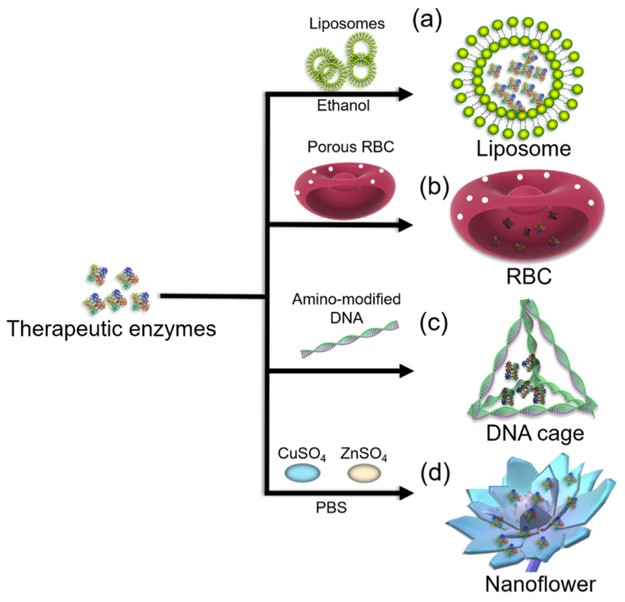 Fig.1 Illustration of entrapment approaches for therapeutic enzyme immobilization.1
Applications for Enzyme Replacement Therapy
The Creative Biolabs delivery platform provides technical support for ERT's key innovations:
Treatment of CNS-Related LSDs
Specialized nanocarriers or conjugate systems are developed that successfully cross the blood-brain barrier (BBB) to deliver functional enzymes for the treatment of Gaucher disease, mucopolysaccharidosis, and other diseases with devastating neurological symptoms.
Enhanced Lysosomal Targeting
Optimization of the M6PR ligand or the use of novel targeting molecules on the carrier surface significantly improves the efficiency of enzyme uptake and specific delivery to the target cell's lysosome.
Enzyme Stability & Long-Lasting Delivery
Encapsulation of the enzyme prolongs its circulating half-life, which stabilizes the therapeutic agent and reduces the required patient infusion frequency and discomfort.
Targeted Gene Expression
Vector tropism engineering of viral carriers (e.g., AAV) facilitates the precise delivery of enzyme-encoding genes to desired cells (e.g., neurons), achieving permanent, endogenous enzyme production.
Delivery Challenges of Enzyme Replacement Therapy
- Difficulty Crossing the Blood-Brain Barrier (BBB): Most LSDs are accompanied by severe CNS damage. Large, systemic enzyme molecules cannot effectively penetrate the BBB, fundamentally limiting the treatment of neurological lesions.
- Lysosomal Targeting & Endosomal Escape: Although M6PR targeting is effective for cellular uptake, a high percentage of the enzyme may still be inactivated or degraded in the endosome or during transport. It is necessary to ensure the enzyme is delivered efficiently and intact to the lysosome.
- Enzyme Stability & Immunogenicity: Deficient enzymes are exogenous proteins, which are easily degraded by proteases in vivo and can trigger undesirable immunogenic responses, thus severely affecting long-term therapeutic efficacy.
What We Can Offer
Creative Biolabs offers professional targeted delivery technologies, focusing on solving the critical challenges of lysosomal targeting, BBB penetration, and enzyme stability in ERT:
BBB Penetration Delivery System
Enhanced Lysosomal Targeting & Release
Services include optimized ligand coupling on the carrier surface to enhance affinity for receptors such as M6PR; or designing pH-sensitive carriers to promote the necessary enzyme release in the acidic endosomal environment before lysosome fusion, optimizing the final therapeutic dose.
Enzyme Stabilization & Low Immunogenicity
Advanced protein nanoencapsulation technology is used to maximize protection of the enzyme's active structure; or custom polymer modification is provided to shield the enzyme, effectively reducing its antigenicity and immune clearance rate.
High-throughput In vitro Screening
Customized in vitro BBB and lysosomal uptake models are provided to accelerate the screening of the most efficient and safe CNS-targeted ERT delivery systems, reducing time-to-clinic.
Why Choose Us?
Years of Expertise
Deep domain knowledge in enzyme kinetics and delivery system design.
End-to-End Solutions
Expertise spanning protein conjugation, nanoparticle synthesis, and AAV vector engineering.
Focus on CNS
Proven ability to design carriers that penetrate the most challenging biological barrier.
IP-Rich Platform
Access to proprietary ligand libraries and formulation protocols that enhance the therapeutic index.
Workflow
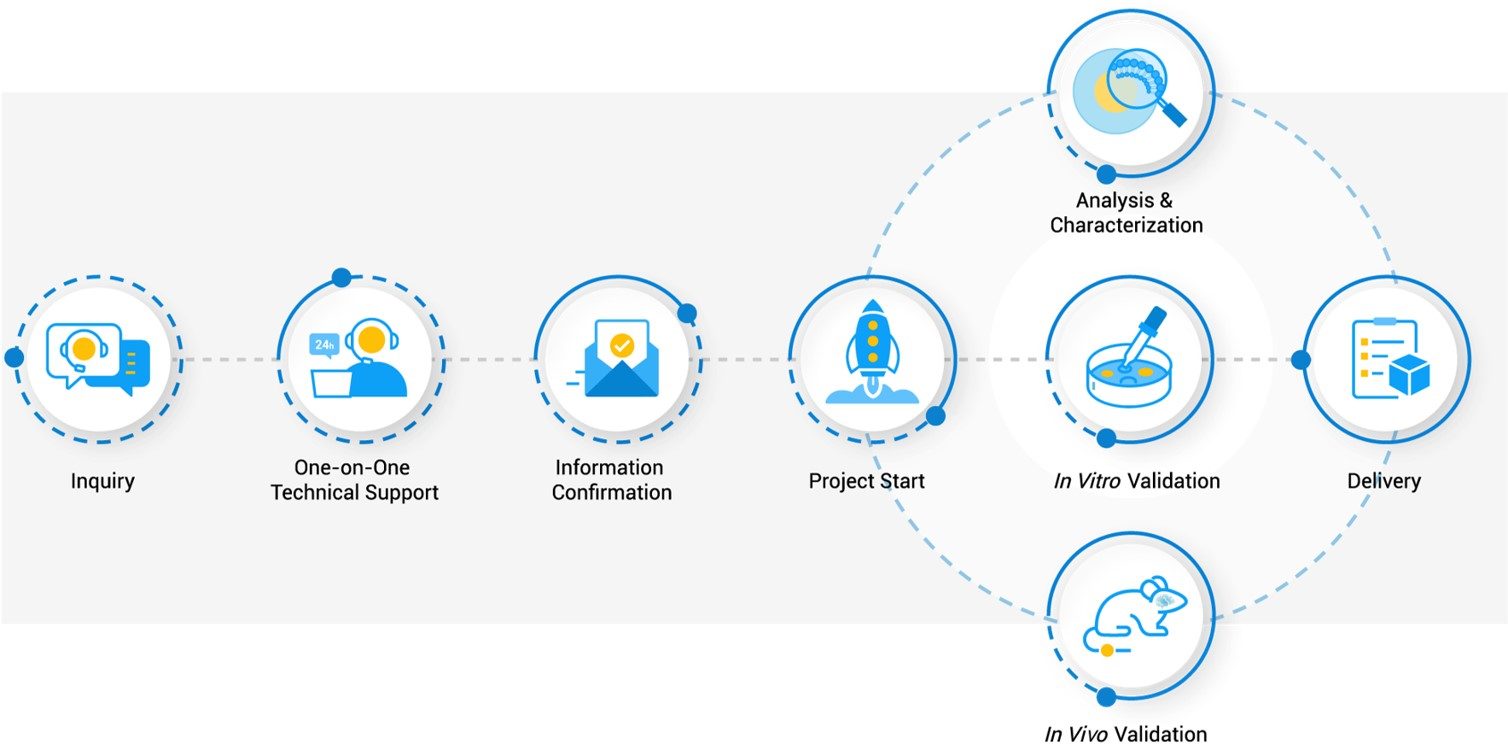
Overcome the blood-brain barrier with targeted delivery technology! Your enzyme replacement therapy needs to overcome the challenges of lysosomal targeting and CNS delivery. Please contact our team of ERT delivery experts for customized lysosomal targeting and cross-BBB delivery solutions.
Reference
- Zhu, Chen-Yuan, et al. "Recent strategies for the immobilization of therapeutic enzymes." Polymers 14.7 (2022): 1409. Distributed under Open Access license CC BY 4.0, without modification. https://doi.org/10.3390/polym14071409
Our services are For Research Use Only. We do not provide services to individuals.
Online Inquiry