Optimized LNP formulations are designed to achieve highly efficient encapsulation and delivery of mRNA/siRNA/DNA. We focus intensely on maximizing endosomal escape efficiency and modulating LNP surface chemistry for fine-tuned organ specificity, moving beyond standard hepatic tropism.
Targeting Delivery for Gene Therapy
Gene therapy is revolutionizing the treatment of genetic, cancer, and chronic disorders. Its core challenge is the safe and precise delivery of therapeutic nucleic acids to target cells. Targeted delivery is key to wider clinical application.
Creative Biolabs provides advanced, fully integrated gene delivery system development services, helping clients optimize vector design, solve critical in vivo targeting and immunogenicity problems, and accelerate the pathway to clinical success.
Click Here to View more about our Service
 LNP-based Delivery System Development Services Cationic Liposomes Development Services for RNA Delivery Nucleic Acid Encapsulation Service
What is Targeted Delivery?
In the field of gene therapy, "targeted delivery" is the bridge and guarantee for achieving therapeutic effect. It refers to the strategy of engineering carriers to transition treatment from a broad systemic approach to a surgical scalpel. This high-precision approach is defined by three critical functions:
Encapsulation
Protecting therapeutic nucleic acids (DNA, mRNA, siRNA, etc.) from rapid degradation and clearance is the first line of defense. Efficient encapsulation ensures maximum stability and optimal circulation time.
Homing
This crucial function involves both inherent tropism and sophisticated active targeting. Utilizing engineered ligands (peptides, antibodies) specifically delivers the vector to disease-relevant cells, maximizing concentration and increasing the therapeutic index.
Release
The final step facilitates the essential escape of nucleic acids from acidic endosomes and lysosomes after cellular uptake. This conditional event prevents cargo destruction, allowing the functional molecule to reach its target sites (nucleus or cytoplasm).
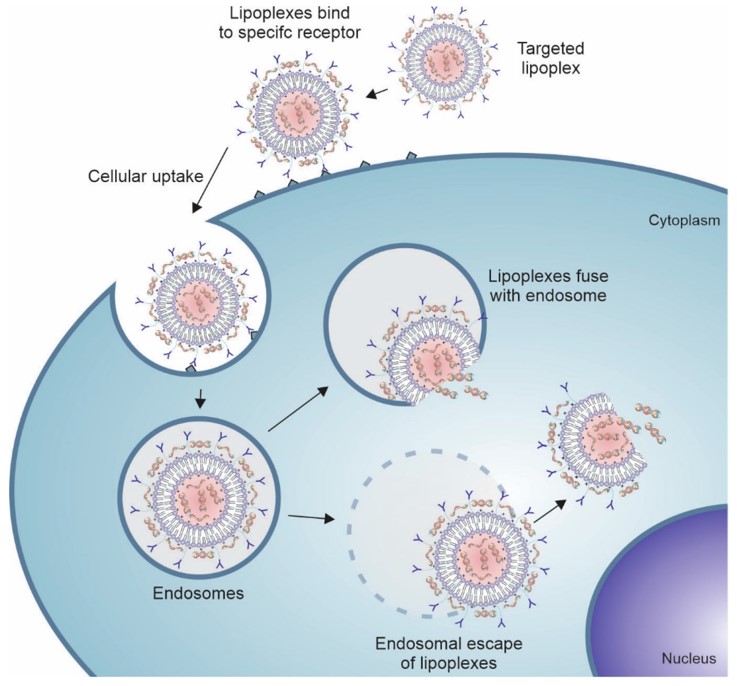 Fig.1 The cellular uptake of targeted lipoplex and release of nucleic acids into tumor cells.1
Applications Powered by Precision Delivery
Targeted delivery systems ensure the therapeutic payload reaches its destination safely and effectively, transforming the scope of modern medicine across multiple modalities:
Treatment of Rare Hereditary Diseases
Delivery of functional genes (DNA or mRNA) is used to repair or replace defective genes, offering the potential for lifelong cures in monogenic disorders.
Treatment of chronic diseases: Nucleic acids encoding therapeutic proteins, antibodies, or cytokines are delivered to achieve sustained, localized drug expression in vivo, transforming the management of conditions like cardiovascular disease or neurodegeneration.
In vivo Gene Editing
Delivery platforms encapsulate complex cargoes such as CRISPR/Cas9 Ribonucleoprotein (RNP) complexes or mRNA/gRNA to achieve precise and permanent repair or knockout of disease-causing genes directly within the patient.
In vitro Engineering of Cell Therapy
Efficient, low-toxicity, non-viral gene delivery tools are essential for the rapid and scalable engineering of next-generation cell therapies, including CAR-T, CAR-NK, or induced pluripotent stem cells (iPSCs).
In-depth Exploration: Our Gene Therapy Sub-fields
Click the headings below to explore our in-depth delivery solutions in specific gene therapy modalities:
Focusing on the LNP platform to deliver therapeutic mRNA (for expressing therapeutic proteins).
Delivering plasmid DNA or viral vectors for gene supplementation or sustained expression.
Delivering siRNA or ASO for silencing and knocking down disease-related genes.
Delivery Challenges That Limit Gene Therapy Potential
- Limitations & Safety of Viral Vectors: Vectors such as AAV and lentiviruses present challenges including high production costs, inherent immunogenicity (which severely limits redosing), payload capacity constraints, and potential dose-limiting toxicities.
- Non-specific distribution & off-target toxicity: Ensuring the vector accumulates in a high proportion in target tissues (such as the nervous system and muscle) after in vivo administration is difficult. Conversely, accumulation in non-target organs such as the liver and spleen drives unwanted side effects and wastes valuable material.
- Cell barrier & nucleic acid degradation: Fragile nucleic acid molecules must overcome rapid enzymatic degradation in the bloodstream. Furthermore, they need to successfully bypass the cellular defense mechanism of endosomal escape within the cell before reaching the cytoplasm or nucleus to effectively perform their function.
What We Can Offer
We offer professional targeted delivery technologies, focusing on solving the limitations of gene therapy vectors, in vivo targeting, and safety challenges:
Next-Generation LNP Platform
Active Targeting Modification of Vector Surfaces
We utilize high-affinity peptides, antibodies, or aptamers to chemically modify the surface of viral or non-viral vectors. This ensures precise recognition and binding to specific cell surface receptors, significantly enhancing tissue specificity and cellular uptake.
Novel Viral Vector Engineering
Our platform includes optimizing the AAV capsid through rational design and directed evolution. This yields novel AAV serotypes with reduced neutralizing antibody (NAb) formation (enabling redosing) and enhanced native or engineered targeting, supported by robust, high-titer vector production capabilities.
Advanced EV/Exosome Carriers
We engineer Extracellular Vesicles (Exosomes) for superior biocompatibility, low immunogenicity, and natural ability to traverse barriers like the BBB, using both endogenous (parental cell) and exogenous (electroporation/sonication) loading strategies.
Why Choose Us?
Years of Expertise
Deep domain knowledge in overcoming the toughest delivery barriers across viral, LNP, and exosome platforms.
Integrated Platforms
Seamless delivery solutions covering AAV, LNPs, and engineered Exosomes (EVs) for diverse payloads.
Conditional Release
Proprietary "smart" systems for pH and enzyme-triggered payload release, ensuring maximum localized effect.
De-Risking Focus
Our methods lower off-target toxicity and improve scalability, accelerating your clinical timeline and reducing cost.
Redosing Strategies
Specific engineering to mitigate immunogenicity, enabling critical repeat administration protocols.
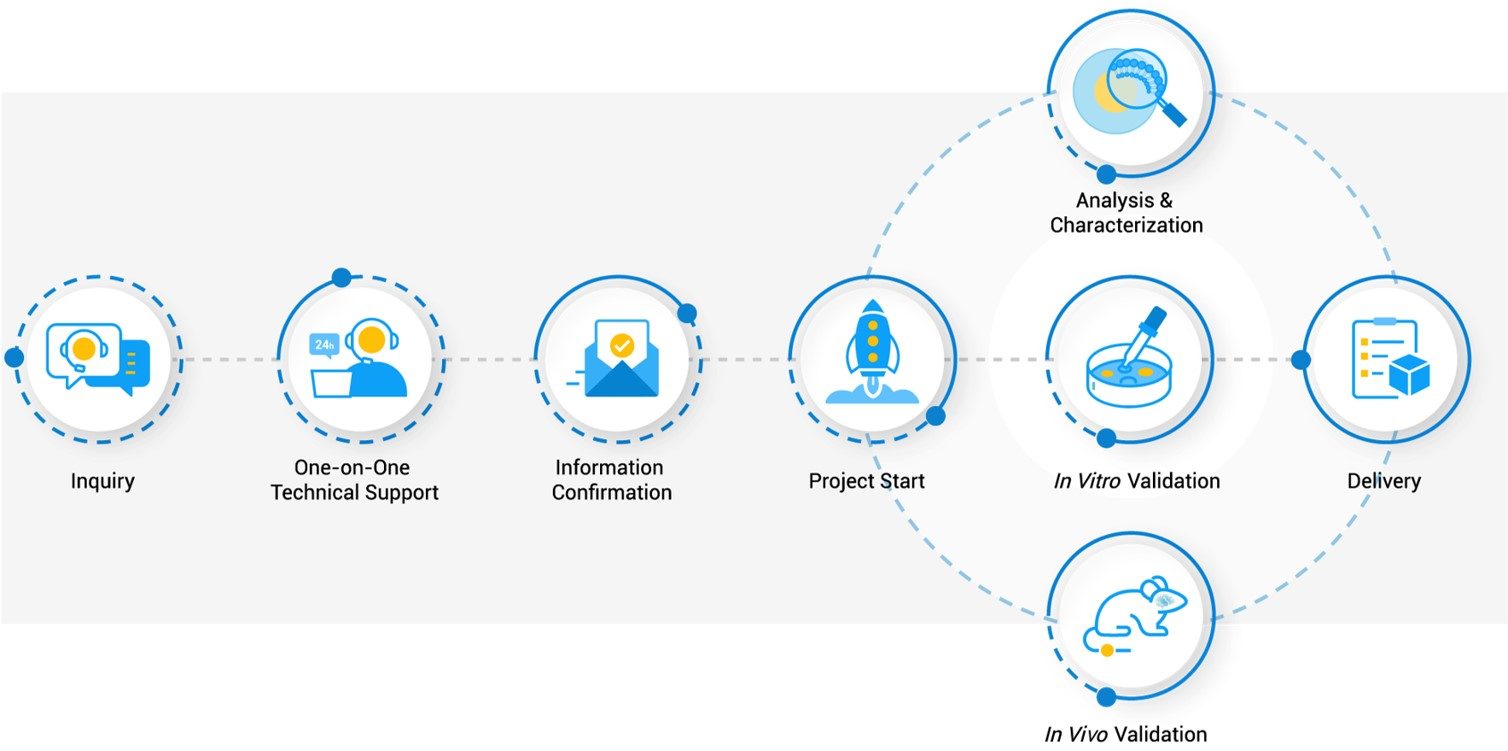
Workflow
Stop letting delivery hurdles limit your therapeutic potential. Partner with Creative Biolabs to transform your promising gene constructs into commercially viable, precision-guided medicines. Contact our R&D team today.
Reference
- Luiz, Marcela Tavares, et al. "Targeted liposomes: A nonviral gene delivery system for cancer therapy." Pharmaceutics 14.4 (2022): 821. Distributed under Open Access license CC BY 4.0, without modification. https://doi.org/10.3390/pharmaceutics14040821
Our services are For Research Use Only. We do not provide services to individuals.
Online Inquiry