
Customized nanocarrier surface modification, integrating targeting ligands such as DC-SIGN, CD40, or Clec9A to achieve precise delivery to specific APC subsets (e.g., conventional DC1). This includes specialized delivery to reprogram M2 macrophages within tumors.
Targeting Delivery for Immunology
Modern immunology, pivotal in medicine, demands precise regulation of the immune system for therapeutic success. Whether boosting anti-tumor responses or suppressing autoimmunity, the critical challenge is the specific delivery of therapeutic payloads to target immune cell populations. Creative Biolabs provides targeted delivery technology development, focusing on nanocarrier engineering to achieve precise targeting of immune cells, enhanced vaccine immunogenicity, and effective regulation of the immune microenvironment.
Click Here to View more about our Service
What is Targeted Delivery?
In the field of immunology, "targeted delivery" is a core tool for achieving therapeutic goals. It refers to a sophisticated molecular strategy where therapeutic agents are encapsulated in vectors and actively directed to specific cell populations within the immune system or lymphoid organs. This includes Cell-Specific Targeting, which guides immune-active payloads (such as antigens, adjuvants, or mRNA) via surface-modified ligands (e.g., DC-SIGN targeting ligands) specifically to antigen-presenting cells (APCs) like dendritic cells (DCs). Furthermore, it focuses on Immune Signaling Optimization, ensuring optimal payload release and processing within the target cell to maximize antigen presentation efficiency or gene expression. Finally, successful targeted delivery aims for Humoral/Cellular Immune Homeostasis by precisely regulating the balance of Th1/Th2 responses through vector design.
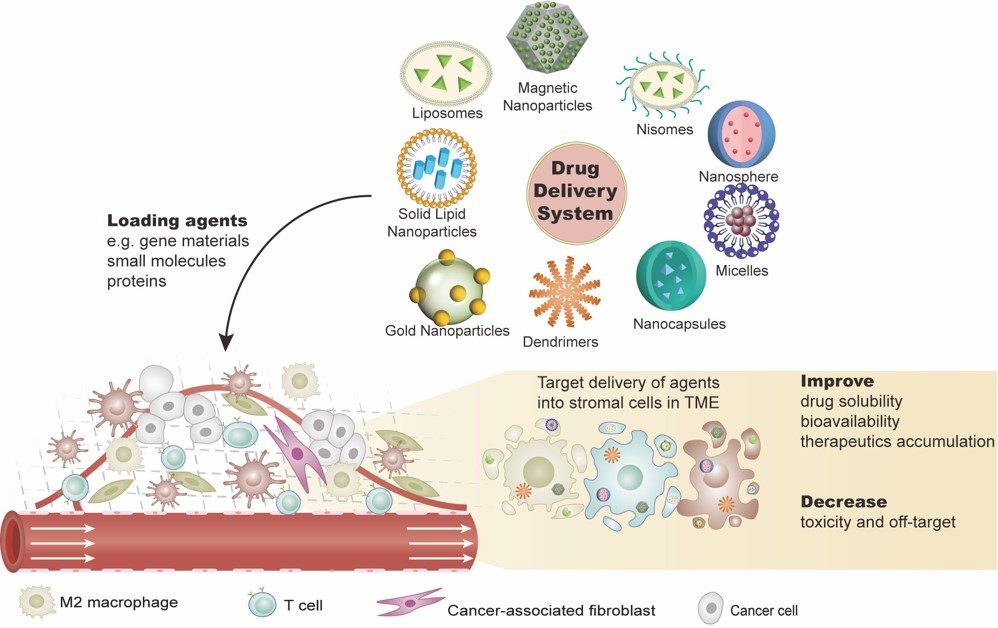 Fig.1 Drug delivery systems (DDSs) targeting the ovarian tumor microenvironment (TME).1
Applications for Immunology
Novel Nucleic Acid Vaccine Development
Delivering a highly stable platform to efficiently route mRNA or DNA vaccines to DCs or lymph nodes, significantly enhancing both humoral and cellular immune responses against infectious diseases.
Enhanced Cancer Immunotherapy
Achieved through Tumor Microenvironment Reprogramming, where delivery of immune checkpoint inhibitor mRNA/siRNA or oncolytic viruses targets immunosuppressive cells, such as M2-like Tumor-Associated Macrophages (TAMs), reversing immunosuppression to transform the TME.
Autoimmune and Inflammation Therapy
Focused on Immune Tolerance Induction via the delivery of tolerogenic antigens or immunosuppressive molecules to specifically target activated T cells or specific immunosuppressive cell populations for the treatment of autoimmune diseases (such as type 1 diabetes and rheumatoid arthritis).
Neuroimmune Disease Delivery
Developing vectors capable of crossing the blood-brain barrier to deliver immunomodulators for the treatment of CNS immune diseases such as multiple sclerosis.
Delivery Challenges of Immunology
The complexity of the immune system presents significant obstacles to achieving reliable therapeutic outcomes:
- Precise Targeting of Immune Cell Subpopulations: The immune system is composed of a variety of complex cell subpopulations. It is a major challenge to ensure that vectors target only specific cell types (such as conventional DC1s or M1 macrophages) while avoiding non-specific activation of bystander cells. Furthermore, breaching intracellular sanctuaries—where pathogens like Mycobacterium tuberculosis or HIV hide inside macrophages—requires specialized cellular uptake and endosomal escape mechanisms.
- Immunogenicity & Inflammation Control: The carrier material itself (e.g., LNP components, polymers) or the delivered nucleic acid may be recognized by pattern recognition receptors (PRRs), triggering non-specific and unwanted inflammatory responses that compromise therapeutic safety.
- Payload Stability & Lymph Node Delivery: Vaccine payloads must stably circulate, avoid degradation, efficiently reach lymph nodes, and ensure highly efficient release and processing within dendritic cells (DCs) to achieve optimal immune activation.
What We Can Offer
We offer professional targeted delivery technologies, focusing on solving the challenges of cell targeting, activity enhancement, and microenvironment regulation in immunology:
Immune Cell-Specific Targeting Platform
Novel Vaccine Delivery System Optimization
Delivery system optimization enhances the enrichment of mRNA/DNA vaccines in lymph nodes and the efficiency of endosome escape within DCs, maximizing antigen presentation and immune priming. This is critical for improving the efficacy of both prophylactic and therapeutic vaccines.
Immune Microenvironment Reprogramming Vectors
Synergistic delivery of immune checkpoint inhibitors and chemotherapeutic drugs/photosensitizers, or delivery of siRNA, specifically knocking down immunosuppressive molecules to transform "cold tumors" into "hot tumors."
Low Immunogenicity Vector Design
Rigorously evaluating and optimizing the biocompatibility of vector materials, combined with proprietary nucleic acid modification technology, to minimize non-specific inflammatory responses and improve the overall safety profile of the therapeutic.
Why Choose Us?
Validated Cell Targeting
Proven success in specific delivery to DCs and lymphoid tissue.
TME Reprogramming Focus
Specialized platforms for flipping M2/M1 macrophage polarity.
Superior Stability
Proprietary formulations guaranteeing payload integrity in vivo.
Regulatory Experience
Design adherence to quality and safety standards for clinical translation.
Customized Solutions
Flexible technology to support diverse therapeutic payloads (mRNA, DNA, small molecules and proteins).
Workflow
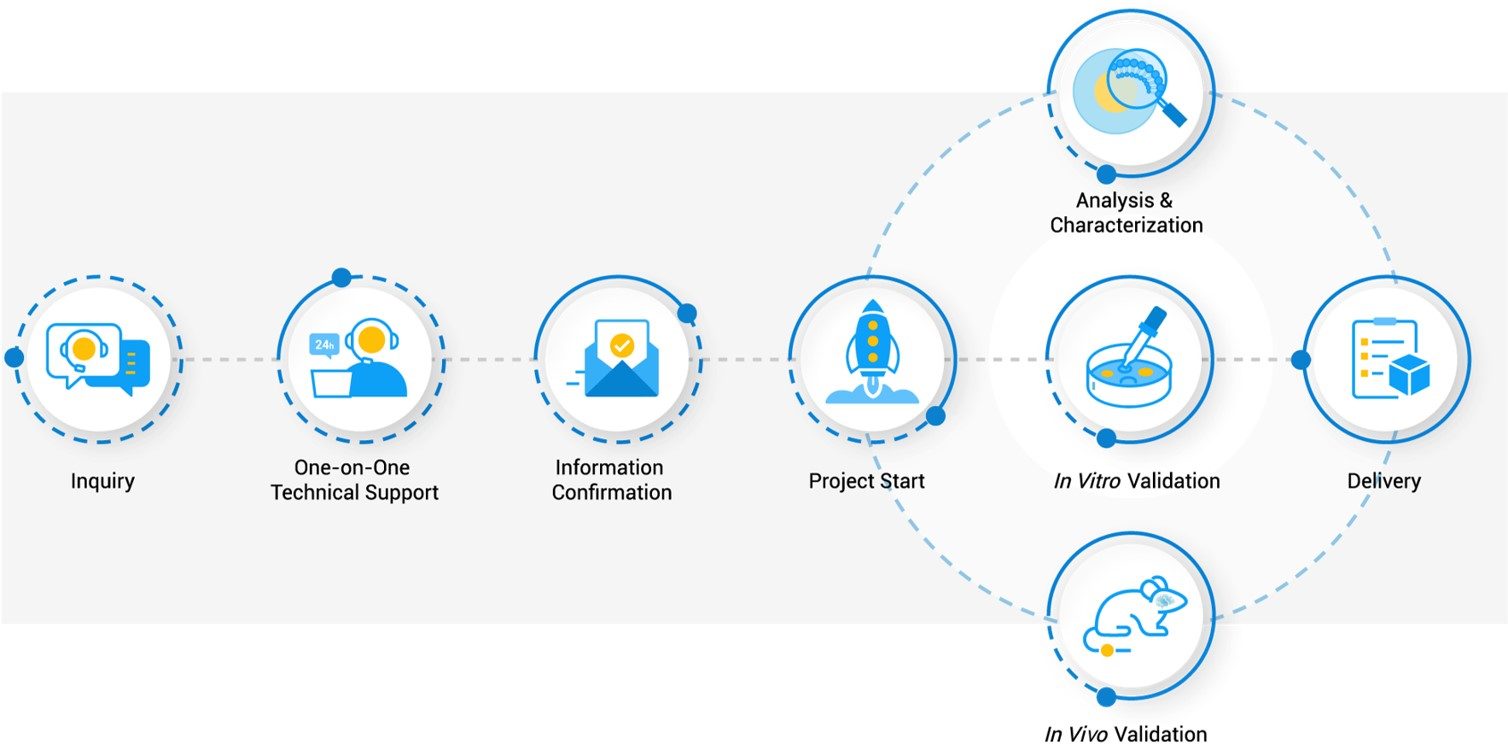
Ready to unlock the next level of immune-based therapy? Contact our team today to discuss how our targeted delivery platforms can accelerate your innovative immunology programs.
Reference
- Peng, Hongling, Xiang He, and Qiao Wang. "Targeted drug delivery system for ovarian cancer microenvironment: Improving the effects of immunotherapy." Frontiers in Immunology 13 (2022): 1035997. Distributed under Open Access license CC BY 4.0, without modification. https://doi.org/10.3389/fimmu.2022.1035997
Our services are For Research Use Only. We do not provide services to individuals.
Online Inquiry