
Optimizing polymeric micelles, liposomes, or inorganic nanoparticles, etc., for efficient encapsulation of hydrophobic PS, preventing aggregation, and maximizing ROS generation activity.
Targeting Delivery for Photodynamic Therapy
Photodynamic therapy (PDT) is a highly selective, minimally invasive treatment for tumors and infections. It utilizes photosensitizers (PS) and specific light to synergistically generate reactive oxygen species (ROS) that selectively remove diseased tissue. Precise targeting and activation of the PS are critical for clinical success. Creative Biolabs' targeted delivery technology focuses on the engineering of nanocarriers to address the core challenges of photosensitizer hydrophobicity, tumor accumulation, and light penetration depth in vivo.
Click Here to View more about our Service
What is Targeted Delivery?
In the field of PDT, "targeted delivery" is the core element for achieving efficient photoactivation. It includes several functional aspects that enhance treatment safety and efficacy:
Tumor/Lesion Enrichment: Encapsulating photosensitizers in nanocarriers, utilizing the EPR effect or active targeting, increases the concentration of photosensitizers in tumor/lesion tissues, minimizing systemic phototoxicity.
Stability and Water Solubility Optimization: Nanoencapsulation addresses the common problems of poor water solubility and easy aggregation of photosensitizers, enhancing their in vivo survival and activity.
Deep Photoactivation Strategy: The carrier can integrate near-infrared (NIR) photoresponsive materials or upconversion nanoparticles (UCNPs) to solve the problem of insufficient light penetration depth in traditional PDTs.
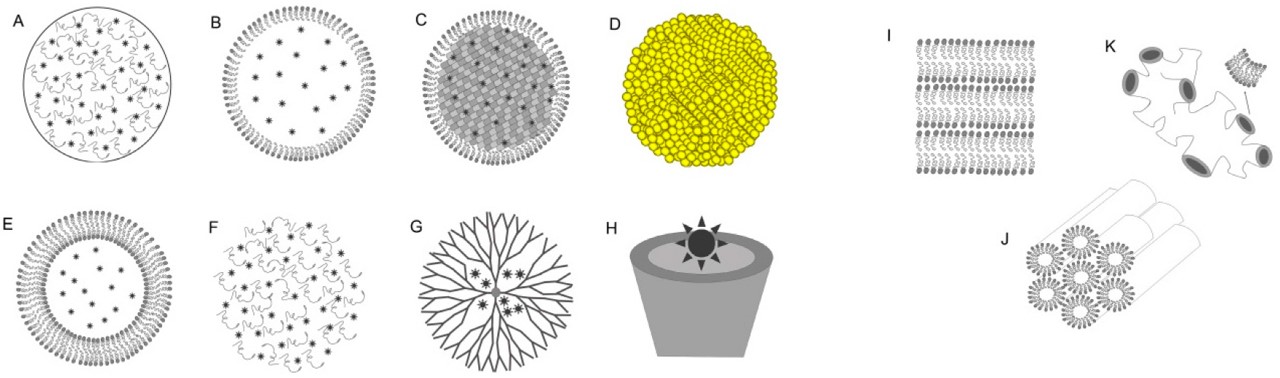 Fig.1 Nanotechnology-based PS delivery for photodynamic therapy of cancer.1
Applications for Photodynamic Therapy
Precise Tumor Removal
Delivering highly efficient photosensitizers for superficial tumors (e.g., skin and esophageal cancer) or achieving the removal of deep tumors via advanced light delivery.
Antibacterial and Antiviral Therapy
Delivering photosensitizers to target and eliminate drug-resistant bacterial or viral infections, avoiding antibiotic resistance problems.
Photothermal/Photodynamic Synergistic Therapy
Developing multifunctional nanoplatforms with both photodynamic and photothermal therapy (PTT) capabilities for more efficient tumor clearance.
Immune Modulation
Inducing immunogenic cell death (ICD) in tumor cells to initiate a systemic antitumor immune response.
Addressing Deep Tumor Treatment
Utilizing UCNPs or Near-Infrared (NIR) photosensitizers to increase light penetration depth and expand the application range of PDT.
Delivery Challenges of Photodynamic Therapy
- Limited Light Penetration Depth: This is the main bottleneck of PDT. Traditional light (such as visible light) has difficulty penetrating deep tissues, limiting the treatment of deep tumors.
- Tumor Hypoxia: The oxygen-dependent nature of ROS generation means that the low-oxygen (hypoxic) microenvironment of many solid tumors severely limits therapeutic efficacy, often leading to treatment resistance.
- Poor Water Solubility and Aggregation: Many highly effective photosensitizers are hydrophobic molecules that easily aggregate in aqueous solutions, causing fluorescence quenching and reduced ROS generation activity.
- Non-specific Toxicity: Retention of photosensitizers in non-target tissues (such as skin) can lead to severe systemic and skin phototoxicity, which must be addressed through precise delivery.
What We Can Offer
We offer professional targeted delivery technologies focused on solving the challenges of deep penetration, enrichment, and stability of PDTs:
High-Load Encapsulation & Stability
Precision Subcellular Targeting
Integration of motifs (like Triphenylphosphonium/TPP) for organelle-selective delivery (e.g., mitochondria) to maximize cytotoxic damage and intrinsic apoptosis.
Active/Responsive Targeting
Modifying carrier surfaces with tumor-specific ligands (Active Targeting) or designing pH/enzyme-responsive carriers to ensure precise, on-demand release in the tumor microenvironment.
Deep Tissue Activation & Hypoxia Control
Delivery of UCNPs or NIR PS to improve light penetration, alongside H2O2-responsive platforms for in situ oxygen generation to reverse tumor hypoxia.
Multifunctional Synergistic Platforms
Integrating PS and photothermal agents (PTT) or chemotherapy drugs to construct multimodal therapeutic nanosystems for highly efficient tumor clearance.
Why Choose Us?
Deep Expertise
Over years in nanomedicine, synthetic biology, and material science.
Precision Focus
Proven expertise in organelle-selective and microenvironment-responsive carrier design.
Hypoxia Solution
Dedicated focus on O2-generating platforms to overcome the PDT oxygen deficit.
Translation Ready
Comprehensive support from synthesis optimization to regulatory compliance.
Workflow
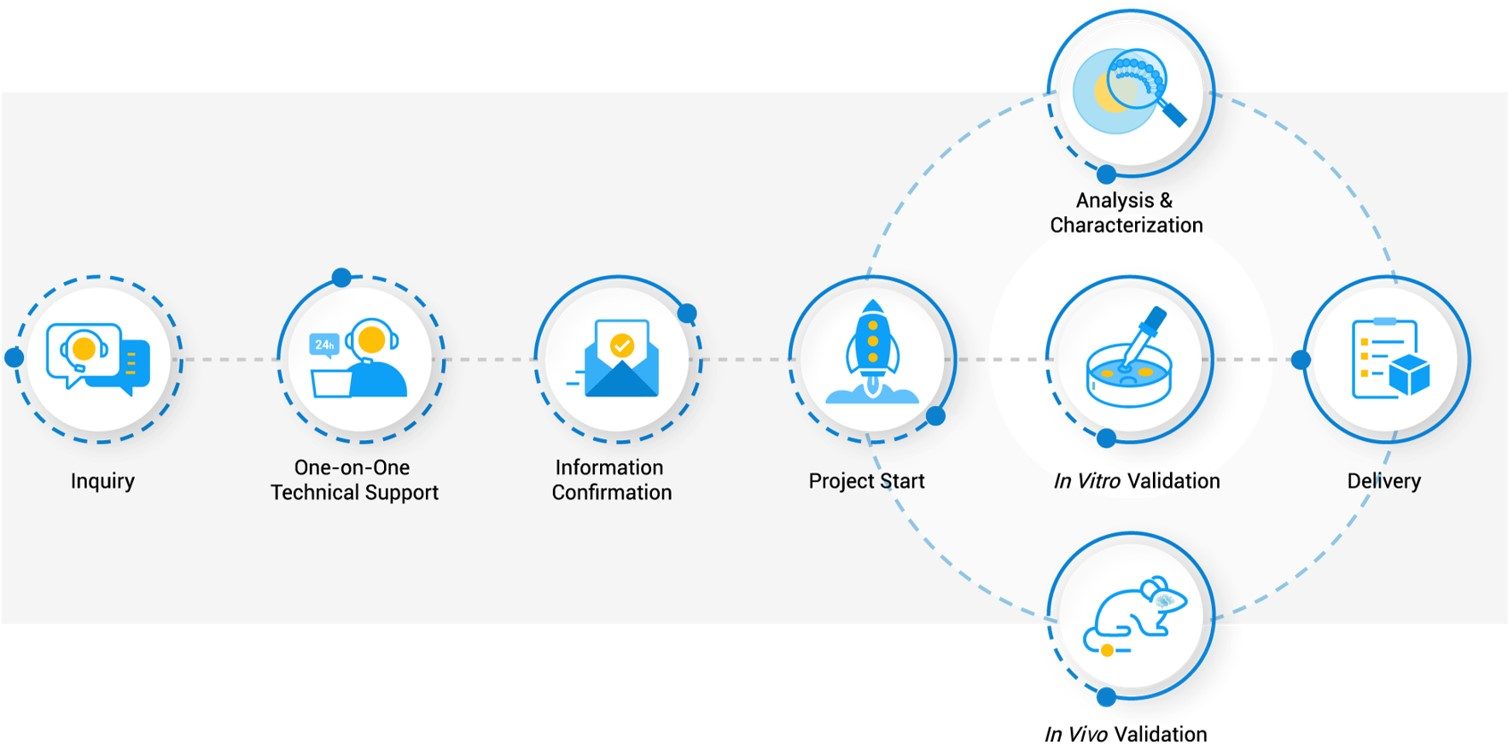
The future of PDT is precision. Let us build your targeted delivery platform. Contact our team today to schedule an initial consultation on how we can accelerate your PDT candidate.
Reference
- Calìxto, Giovana Maria Fioramonti, et al. "Nanotechnology-based drug delivery systems for photodynamic therapy of cancer: a review." Molecules 21.3 (2016): 342. Distributed under Open Access license CC BY 4.0, without modification. https://doi.org/10.3390/molecules21030342
Our services are For Research Use Only. We do not provide services to individuals.
Online Inquiry