
The primary application is boosting the effective dose of nutrients. For example, essential polyunsaturated fatty acids (PUFAs), like omega-3s, are highly susceptible to oxidation, which degrades the molecule and creates off-flavors. Encapsulating these fatty acids in multi-layered emulsions shields them from environmental stressors, ensuring that intact molecules reach the small intestine for maximum absorption and utilization. This approach is vital for the success of supplements and functional foods designed to support cognitive and cardiovascular health.
Targeted Delivery in Food & Nutrient
In the pursuit of next-generation functional foods and dietary supplements, the challenge of Targeted Delivery in Food and Nutrients is paramount. Many potent bioactives, such as vitamins, antioxidants, and essential fatty acids, are highly unstable and possess low inherent bioavailability, diminishing their health benefits before they can be absorbed. Our Targeted Delivery in Food and Nutrients service helps you maximize the bioavailability and stability of functional ingredients through advanced encapsulation and site-specific release technologies. This approach ensures your product delivers its full promise to the consumer, solving critical formulation and efficacy challenges.
Click Here to View more about our Service
Targeted Delivery in Food and Nutrients
Targeted delivery in the food and nutritional sciences is a critical discipline focused on packaging functional ingredients into protective carriers that control their release kinetics and direct them to their optimal site of action within the human body. This field is driven by the necessity to overcome the inherent limitations of many natural compounds, which are often unstable and poorly absorbed. By utilizing techniques like nanoemulsification, microencapsulation, and the integration of smart biopolymers, we can effectively manage the journey of a nutrient from the food product to the cellular level. This scientific approach elevates the efficacy of dietary ingredients, making true functional foods achievable.
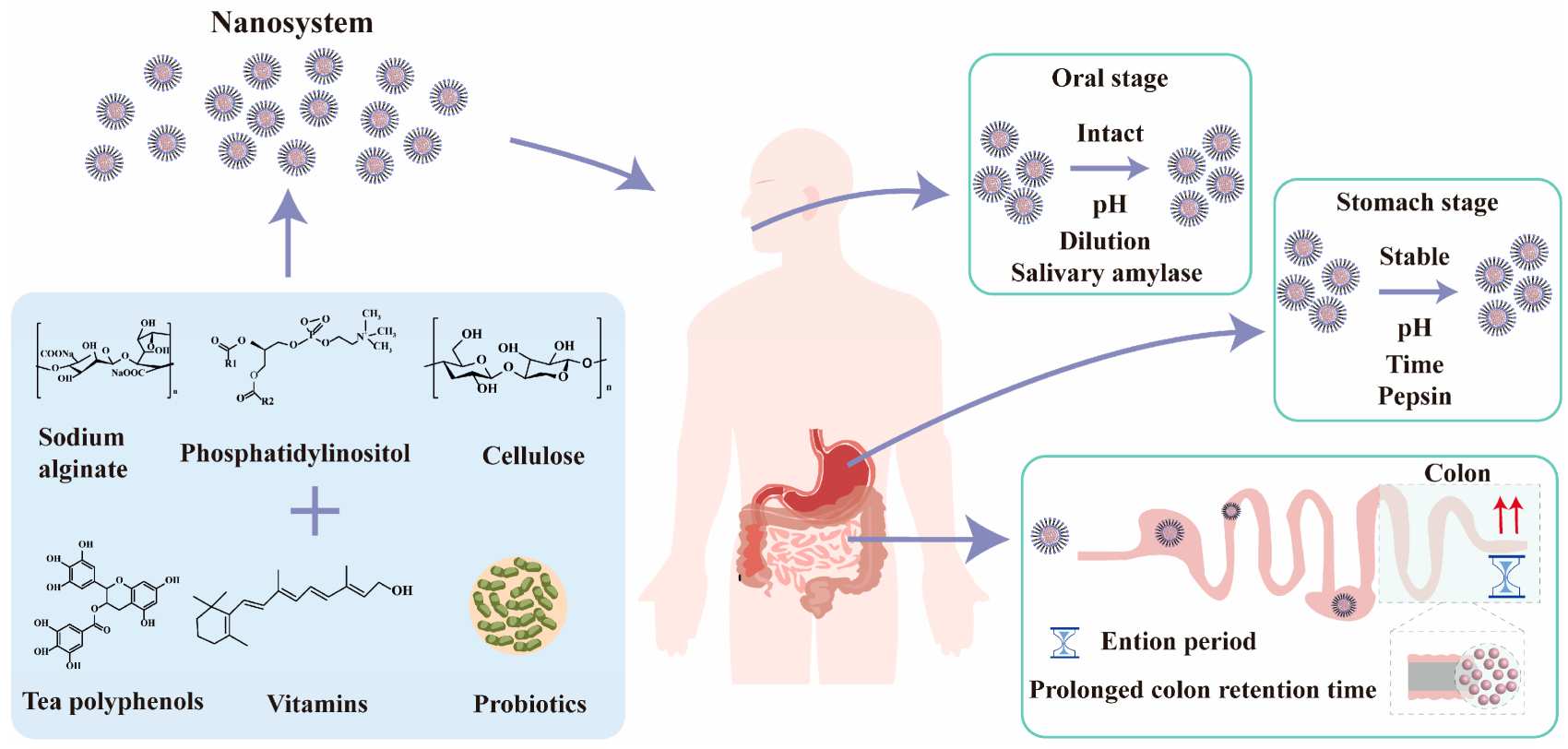 Fig.1 The digestion and absorption of polymeric nanoparticles infused with functional food constituents throughout the gastrointestinal tract.1
Delivery systems enable two major advancements in food technology: Functional Foods and Food Preservation & Safety.
- Functional Foods: This involves enhancing the nutritional or health-promoting effects of food products by incorporating bioactives with proven efficacy, such as polyphenols, probiotics, or vitamins, into a matrix that ensures their survival and high bioavailability.
- Food Preservation & Safety: This focuses on encapsulating antimicrobial or antioxidant agents to extend shelf life and protect against spoilage or pathogenic microorganisms, with the delivery system ensuring gradual and sustained release within the food matrix.
Targeted nutrient delivery is critical for compounds like curcumin, which is highly studied for its anti-inflammatory properties but exhibits extremely low solubility and rapid metabolism. Encapsulation techniques, such as loading curcumin into liposomes or nanodispersions, protect the molecule and dramatically increase its systemic absorption, unlocking its clinical potential. Similarly, the delivery of iron in a protected, highly bioavailable form addresses global anemia issues without the metallic taste and gastric side effects associated with traditional supplements.
Application
The power of targeted delivery extends across the entire food supply chain, transforming raw ingredients into high-value functional products and improving food quality and safety.
Enhancing Bioavailability and Absorption
Developing Novel Functional Foods
Targeted delivery enables the creation of new food products that were previously impossible due to ingredient incompatibility or instability. This includes incorporating heat-sensitive vitamins into baked goods, adding powerful antioxidants to clear beverages, or developing gut-specific delivery of prebiotics and probiotics that are protected from the stomach's harsh acidic environment, ensuring colonization in the colon.
Advanced Food Preservation and Safety
Utilizing delivery systems to embed natural antimicrobial agents (e.g., essential oils or bacteriocins) within food packaging or directly into the food matrix is a growing field. These encapsulated agents offer a slow, controlled release over time, providing superior, long-term protection against microbial contamination and reducing the need for traditional chemical preservatives. This not only extends the product's shelf life but also meets the increasing consumer demand for "clean label" ingredients.
What We Can Offer: Comprehensive Targeted Delivery Services
At Creative Biolabs, we move beyond simple encapsulation to engineer sophisticated delivery systems that respond precisely to environmental cues, such as pH changes or specific enzymatic activity within the gastrointestinal (GI) tract. This precision is essential for sensitive components like probiotics, which require protection from stomach acid, or fat-soluble vitamins, which need enhanced dispersion for optimal absorption in the small intestine. Our expertise lies in customizing these systems—whether they be nanocarriers, liposomes, or biopolymer matrices—to match the unique physicochemical profile of your nutrient and its desired site of action. This ensures controlled release, maximizes therapeutic potential, and significantly enhances consumer acceptance by masking undesirable flavors or textures.
Our specific deliverables include:
Enhanced Stability
Creating protective layers that shield sensitive nutrients from oxidation, light, heat, and acidic degradation during processing, storage, and digestion.
Maximized Bioavailability
Engineering carriers that facilitate absorption across the intestinal barrier, leading to higher active ingredient concentrations in the bloodstream.
Sensory Optimization
Masking the bitter taste or strong odor of compounds like vitamins, minerals, omega-3 fatty acids without compromising their function.
Custom Formulation
Providing ready-to-integrate delivery vehicles optimized for specific food matrices (e.g., beverages, baked goods, supplements).
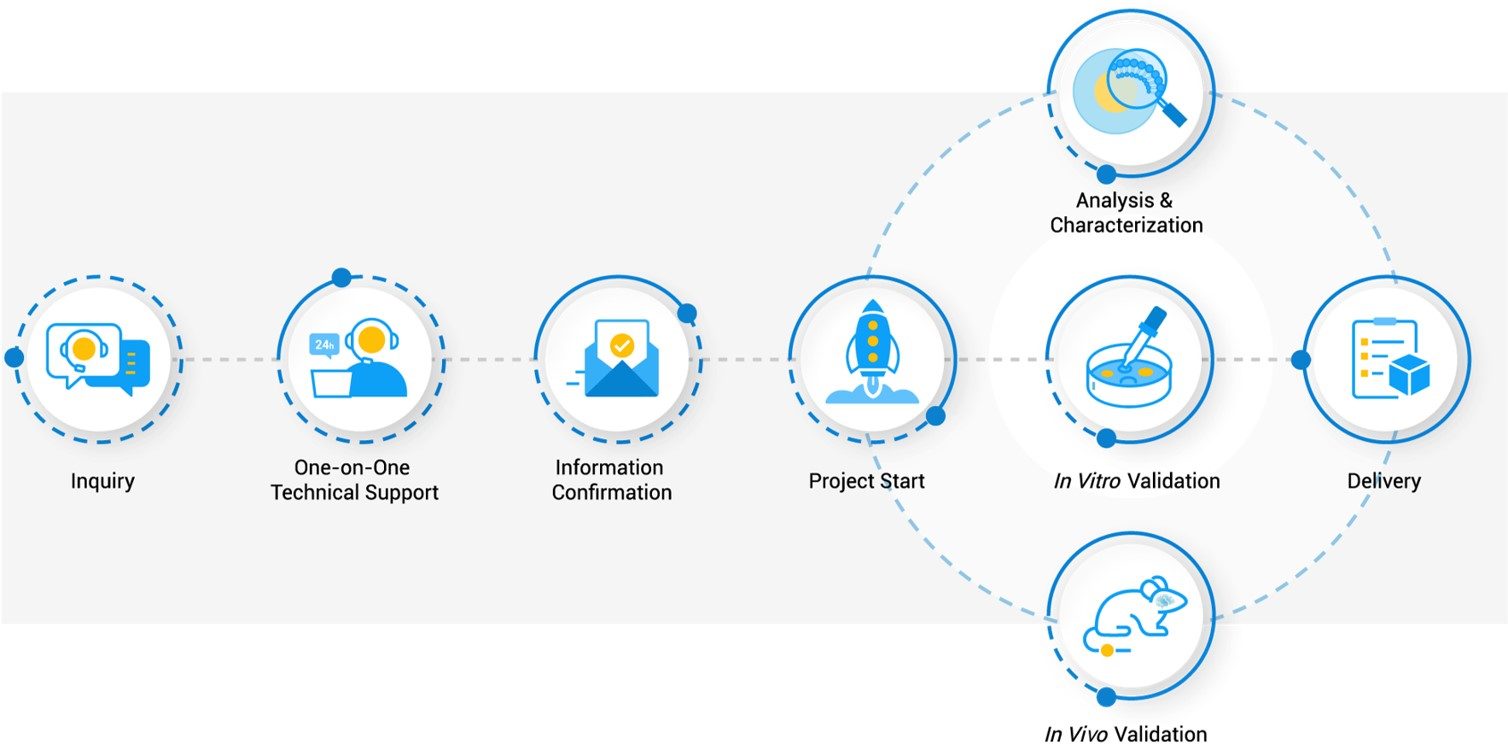
Workflow
FAQs
How do delivery systems ensure that sensitive ingredients survive the harsh environment of the stomach?
The most effective systems utilize multi-layered protection. This often involves an outer shell made of pH-sensitive biopolymers that remains intact in the highly acidic (low pH) stomach environment. Only when the system passes into the higher pH (more alkaline) environment of the small intestine do these materials begin to dissolve or degrade, triggering the controlled release of the active ingredient. This mechanism ensures survival and targeted release.
What is the main difference between using a simple emulsion and a sophisticated nanocarrier like a liposome for nutrient delivery?
A simple emulsion primarily improves the dispersion of oil-soluble ingredients in a water-based matrix. While it offers basic stability, it lacks control. Sophisticated nanocarriers, such as liposomes or polymeric nanoparticles, provide an isolated inner compartment that offers superior protection from degradation (e.g., oxidation, light). Crucially, these carriers can be functionalized with specific surface molecules, allowing them to actively target or be absorbed more efficiently at the intended site, maximizing bioavailability far beyond what a simple emulsion can achieve.
Can these delivery technologies help mask the unpleasant taste or odor of certain nutrients, such as fish oil or bitter herbal extracts?
Yes, sensory optimization is a major application. Encapsulating the ingredient within a continuous, tasteless shell—whether it's a polymer layer or a lipid membrane—effectively prevents the volatile or bitter compounds from interacting with the consumer's taste and smell receptors. This physical barrier ensures the product is neutral in taste and odor, significantly improving consumer palatability and compliance.
What are the key concerns regarding the safety and industrial scalability of utilizing nanosystems in food products?
Safety is paramount, and all advanced delivery materials must be affirmed as Generally Recognized as Safe (GRAS) or meet equivalent regulatory standards. The primary concern is ensuring the non-toxicity and complete GI-tract clearance of the carrier materials. Regarding scalability, the challenge lies in maintaining consistent particle size and high encapsulation efficiency during large-scale production. We address this by using robust, proven industrial processes like high-pressure homogenization and spray drying, which are designed for high-throughput, reproducible results.
My current supplement has low clinical efficacy. How can targeted delivery specifically improve its performance in vivo?
Low efficacy is often a consequence of poor absorption (low bioavailability) or rapid breakdown (low stability). Targeted delivery improves performance by increasing the concentration of the active ingredient that successfully enters the bloodstream. By protecting the compound from harsh digestive enzymes and acidic pH, and by creating nanoparticles that are more easily transported across the intestinal wall, we ensure a much larger percentage of the dose reaches its target tissues intact and functional, thereby enhancing the overall biological effect.
Creative Biolabs is your trusted partner for overcoming the major hurdles in functional food and nutrient development. Our Targeted Delivery in Food and Nutrients services offer highly customized solutions—from nanoscale formulation to industrial-scale validation—guaranteeing enhanced stability, superior bioavailability, and optimized sensory profiles for your most sensitive ingredients.
Reference
- Han, Kangran et al. "Advances in Nanotechnology Research in Food Production, Nutrition, and Health." Nutrients vol. 17,15 2443. 26 Jul. 2025, Distributed under Open Access license CC BY 4.0, without modification. https://doi.org/10.3390/nu17152443
Our services are For Research Use Only. We do not provide services to individuals.
Online Inquiry