
Nanomaterials serve as non-viral abiotic carriers for gene payloads (DNA, siRNA, mRNA). This technique, often simpler and safer than traditional viral vectors, has been successfully demonstrated in delivering exogenous DNA into staple crops like maize and cotton, achieving stable inheritance for new trait development.
Nanoparticle Applications in Plant Science & Agritech
Are you currently facing long development cycles for advanced plant traits, low nutrient-use efficiency, and difficulty in targeted gene delivery? Nanoparticle Delivery Systems and Analytical Services help you accelerate agricultural R&D and obtain highly resilient and efficient plant traits through advanced nanoparticle formulation and comprehensive transport analysis.
Click Here to View more about our Service
Overview of Applications of Nanoparticles in Plant Science & Agritech
The global agricultural sector faces growing demands for food coupled with severe environmental issues, necessitating the adoption of sustainable and highly efficient farming practices. Our research area focuses on leveraging engineered nanomaterials to overcome fundamental biological barriers (like the plant cell wall), facilitating the efficient delivery of bioactive molecules, enhancing plant stress tolerance, and enabling precise genetic modification for sustainable, high-yield agriculture.
What Are Our Research Areas?
Our core focus involves the design, synthesis, and mechanistic validation of novel nanomaterial applications for crop improvement and environmental remediation. This effort is partitioned into two key areas:
Developing nanoparticle-based delivery systems for targeted pesticides, herbicides, and fungicides to minimize environmental contamination and ensure controlled release.
Utilizing nano-fertilizers and abiotic genetic carriers to boost nutrient uptake, abiotic stress tolerance (drought, salinity), and overall photosynthetic efficiency.
Why Choose Us?
Nanomaterials offer specific advantages over traditional bulk chemicals, making them indispensable for next-generation agritech:
- Enhanced Bioavailability and Nutrient Use Efficiency (NUE): The high surface-area-to-volume ratio of NPs dramatically increases nutrient absorption and assimilation by plants.
- Targeted and Controlled Release: NPs can be engineered to release their payload over time, minimizing nutrient leaching into the environment and reducing the frequency of application.
- Effective Abiotic Carriers for Gene Delivery: Nanoparticles, serve as non-viral carriers for DNA and gene silencing agents (e.g., siRNA), effectively overcoming the rigid plant cell wall barrier.
- Mitigation of Abiotic Stressors: Specific NPs can strengthen a plant's antioxidant system and reduce the bioavailability of heavy metals (HMs) in contaminated soil via adsorption and transformation.
Key Applications
Creative Biolabs' technologies empower partners to achieve breakthroughs across critical agricultural applications.
Precision Genetic Modification
Abiotic Stress Mitigation
Nanoparticles, such as advanced Carbon Dots (CDs) or silicon NPs, enhance crop resilience against drought, salinity, and high UV-B exposure. They achieve this by modulating photosynthetic activities, improving water uptake efficiency, and activating the plant's intrinsic defense and antioxidant systems.
Sustainable Fertilization & Remediation
Nano-fertilizers ensure ultra-efficient delivery of essential macro- and micronutrients (N, P, K), leading to substantial improvements in yield and nutrient-use efficiency. Furthermore, specialized NPs (like mercapto-modified silicon NPs) are used for soil remediation by reducing heavy metal mobility and bioavailability over extended periods.
Cellular Transport Engineering
Custom NP design optimizes penetration across the primary cell wall barrier (especially for NPs under 20 nm) and facilitates efficient long-distance transport via the plant's vascular systems (xylem and phloem) for whole-plant systemic treatment.
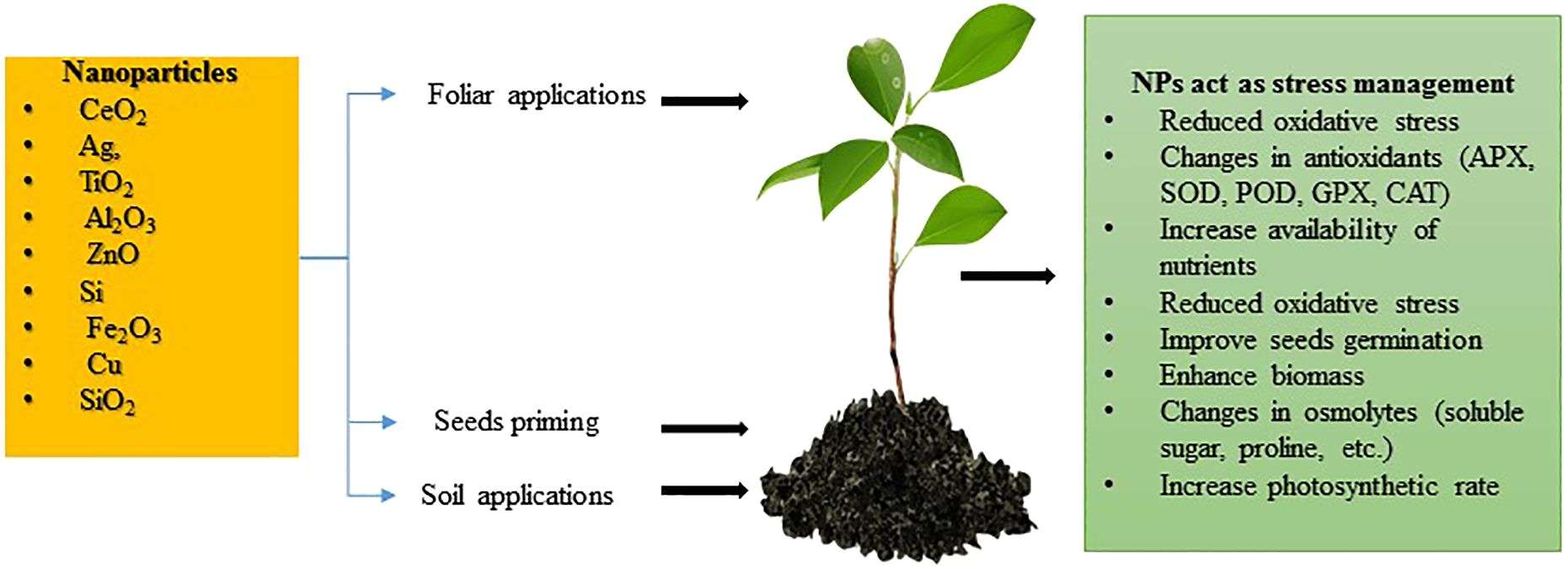 Fig.2 Impact of various nanoparticles and their applications on seed germination, growth performance, physiological parameters, and photosynthetic rate.1
Uncover How We Can Support You - Set Up a Meeting!
How We Support Your Nanoparticle R&D
We offer an integrated suite of services crucial for the successful design, characterization, and validation of nano-agrichemicals and delivery systems. These services are key to overcoming technical challenges like aggregation and ensuring efficient cellular uptake.

LNP-based Delivery System Development
mRNA/siRNA Gene Silencing Carriers
Heavy Metal Remediation & Sensing
Cell Wall Penetration Optimization
Root Uptake & Translocation Efficiency
Nano-Fertilizer Stability Analysis
Translational Impact: Accelerating Field-Ready Solutions
Creative Biolabs' end-to-end expertise accelerates the transition from lab-scale prototypes to scalable, field-ready products. By optimizing nanoparticle design and validating transport mechanisms, we help clients overcome regulatory hurdles and achieve superior performance. Engineered NPs are up to 30% more efficient in nutrient delivery compared to traditional bulk chemicals, leading to substantial yield increases under stress conditions. We provide the data necessary to demonstrate stable genetic inheritance of new traits, significantly reducing your R&D cycles and time-to-market.
Unlock the Creative Biolabs Advantage - Request Your Quote Today!
Products
To facilitate initial research and process optimization, Creative Biolabs offers a range of high-quality products related to nanoparticle synthesis and formulation.
| Product Name | Description | Inquiry |
|---|---|---|
| Professional LNP Formulation Kits | Kits for rapid, high-throughput encapsulation of nucleic acids (DNA/siRNA) for plant gene-editing applications. | |
| Targeted Polymer Products | Custom biodegradable polymers designed to enhance NP stability and targeting specific plant tissues. | |
| Liposome Products | Pre-formulated liposomal systems offering controlled, slow release of water-soluble fertilizers and encapsulated agrochemicals. | |
| Targeted Drug Delivery Kits | Versatile kits containing various NP chemistries for screening the optimal carrier for a specific plant bioactive molecule. | |
| Functionalized Lipid Products | Custom synthesized, positively charged lipids crucial for creating effective drug carriers capable of penetrating negatively charged bacterial cell walls. |
Frequently Asked Questions
What are the primary concerns regarding nanoparticle safety in the food chain?
The main concern is the potential for NPs to translocate from the soil into the crop and then enter the food chain. We address this through rigorous stability analysis and characterization services, focusing on NP transformation and accumulation. Our goal is to design NPs that degrade or remain immobile in the soil, ensuring long-term food safety.
How do your nanoparticle delivery systems compare to traditional methods like foliar spraying or viral vectors?
Nanoparticles offer superior efficiency and precision. Unlike bulk spraying, NPs ensure controlled release and minimize environmental runoff. Compared to traditional viral vectors for genetic modification, abiotic NP carriers are simpler to prepare, offer greater stability, and have favorable safety profiles for regulatory approval.
How important is nanoparticle size for successful uptake and translocation?
Size is critically important. The plant cell wall acts as a size exclusion filter (typically 5–20 nm). As NPs larger than approximately 36 nm have been shown to aggregate and fail to pass the endodermis barrier for long-distance transport via the xylem.
Creative Biolabs is your trusted partner for developing sustainable and efficient nano-agritech solutions. We provide end-to-end support in delivery system development, high-end characterization, and genetic carrier synthesis, accelerating your innovation in crop enhancement and protection. Contact Our Team for More Information and to Discuss Your Project.
Reference
- Cao, Yahan, et al. "Nanoparticles as catalysts of agricultural revolution: enhancing crop tolerance to abiotic stress: a review." Frontiers in Plant Science 15 (2025): 1510482. Distributed under Open Access license CC BY 4.0, without modification. DOI: https://doi.org/10.3389/fpls.2024.1510482
Our services are For Research Use Only. We do not provide services to individuals.
Online Inquiry