Analysis of ADGRL1 is crucial for understanding the molecular basis of neurodevelopmental disorders like Autism Spectrum Disorder (ASD), ADHD, and intellectual disability. Our services can identify gene mutations, protein expression abnormalities, and functional deficits related to ADGRL1, aiding in both diagnostic biomarker discovery and the development of targeted therapeutics.
At Creative Biolabs, biomarker services are offered as a comprehensive, integrated solution or as stand-alone analytical options. Empower your ADGRL1 research with our comprehensive portfolio of services designed to investigate complex cell signaling pathways and critical ligand-receptor interactions.
Introduction of ADGRL1
ADGRL1, also known as latrophilin-1 (LPHN1), is a key member of the adhesion G protein-coupled receptor (aGPCR) family. This receptor is characterized by a unique structure and function, including a process of autoproteolysis that cleaves it into two non-covalently associated fragments: the heptahelical C-terminal fragment (CTF) and the large extracellular N-terminal fragment (NTF). These fragments can exist as separate proteins within the plasma membrane, with their affinity for one another regulated by phosphorylation. Studies have highlighted the profound clinical relevance of ADGRL1, demonstrating that haploinsufficiency leads to a consistent spectrum of neurodevelopmental, neurological, and behavioral abnormalities in both human and animal models.
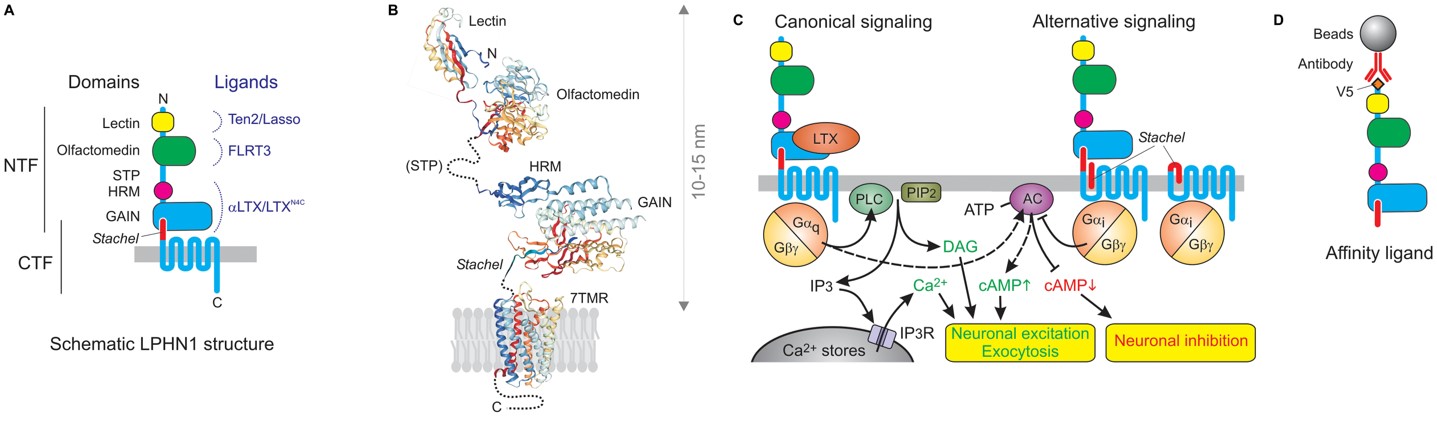 Fig.1 The architecture and signaling functions of ADGRL1.1
ADGRL1 Analysis Services at Creative Biolabs
Creative Biolabs provides a full suite of analytical options, from fundamental expression profiling to complex functional assays, ensuring that every aspect of ADGRL1's biological role is explored. Creative Biolabs also developed high-affinity antibodies targeting ADGRL1 for use in various research applications, including IHC, WB, and ICC, and offers personalized recombinant antibody expression service.
Our expertise allows us to provide detailed insights into receptor activation, ligand binding, and downstream signaling events, empowering your research without the need for complex phenotypic screens. Our experienced team utilizes state-of-the-art technology to deliver fast, accurate, and actionable results. Our services include, but are not limited to:
- Expression Profiling & Gene Sequencing
Analysis of ADGRL1 mRNA and protein levels, and sequencing of the ADGRL1 gene to identify mutations or polymorphisms.
- In Vitro Functional Assays (NTF & CTF)
Detailed analysis of the individual and combined functions of the NTF and CTF fragments in cell-based systems.
- In Vivo Functional Assays (NTF & CTF)
Investigation of ADGRL1 function and its fragments in a living organism to understand their physiological roles.
- Receptor-Ligand Interaction
Comprehensive studies to identify and characterize the specific ligands that bind to ADGRL1 and trigger downstream signaling.
- Signal Pathway Research
Thorough investigation of the cellular signaling pathways activated or inhibited by ADGRL1, providing insights into its mechanism of action.
Service Workflow
Our ADGRL1 analysis service is a streamlined, step-by-step process designed for maximum efficiency and client collaboration.
01Initial Consultation
We begin with a detailed consultation to understand your specific research objectives and requirements. Based on this, we will design a customized ADGRL1 analysis plan tailored to your project.
02Sample Submission
You will provide the necessary starting materials for the analysis, which may include cell lines, tissue samples, compounds, or other biological samples. We will provide detailed instructions to ensure proper handling and shipping.
03Analysis Execution
Our expert team will perform the ADGRL1 analysis using our advanced technologies. We strictly adhere to our established protocols to ensure the data is precise, accurate, and reproducible.
04Data Delivery & Interpretation
The final deliverable is a comprehensive report that includes all raw data, a summary of the analysis, and expert interpretations. This provides you with clear and actionable insights, moving your research forward efficiently.
Applications
Neurodevelopmental Disorders
Cancer Research
The role of ADGRL1 in cancer is multifaceted. Our analysis services can investigate its aberrant expression and signaling in various tumor types, providing insights into its involvement in tumor progression, metastasis, and angiogenesis. This research can lead to the identification of ADGRL1 as a prognostic marker or a novel therapeutic target.
Metabolic and Endocrine Research
Recent findings suggest ADGRL1's involvement in metabolic processes, including glucose and energy homeostasis. By analyzing ADGRL1's function in metabolic tissues, our services can help researchers understand its contribution to diseases like obesity and diabetes, opening doors for new therapeutic strategies.
Service Highlights
- Experienced Scientific Team: Our team consists of expert biologists with years of experience in adhesion GPCR research, ensuring the highest level of scientific rigor and professional interpretation.
- State-of-the-Art Technology: We utilize the latest analytical platforms, including qPCR, next-generation sequencing, and mass spectrometry, to provide precise and sensitive results for your ADGRL1 analysis.
- Customized and Flexible Solutions: Every research project is unique. We offer a highly flexible service model, tailoring our assays and analytical plans to perfectly align with your specific research objectives and budget.
- Comprehensive Reporting: Our detailed reports include not only the data but also an expert-level interpretation and a clear summary of findings, facilitating your research progression and publication efforts.
FAQs
-
Can your services be used for both human and animal model samples?
Yes, our analytical services are adaptable and have been validated for use with a variety of sample types, including both human and various animal model systems. We have extensive experience working with a wide range of species to support diverse research needs.
-
Is it possible to investigate ADGRL1's interaction with a novel ligand?
Yes, our functional studies and screening services are specifically designed to investigate receptor-ligand interactions. We can design custom cell-based assays to screen and validate the binding of novel small molecules or biologics to ADGRL1.
-
Can you analyze post-translational modifications of ADGRL1?
Yes, through our proteomic profiling services, we can employ advanced mass spectrometry techniques to identify and characterize post-translational modifications of the ADGRL1 protein, such as phosphorylation and glycosylation, which are crucial for its function.
-
How do you ensure the quality and reproducibility of your assays?
We adhere to strict quality control protocols for all of our assays. Our services utilize validated reagents and standardized procedures, and we incorporate multiple replicates and controls to ensure the high quality, accuracy, and reproducibility of all the data generated.
-
What types of functional assays are available for ADGRL1?
We offer a variety of custom cell-based functional assays to measure different aspects of ADGRL1 activity. These assays can assess signaling pathway activation (e.g., G protein coupling), ligand-induced changes in cell morphology, and the impact of the receptor on cell adhesion.
-
Can your services help with identifying new therapeutic targets?
Yes, our comprehensive ADGRL1 analysis, including functional studies, can help identify novel therapeutic targets. By understanding how mutations or aberrant expression affect the receptor's function, we can pinpoint specific pathways or domains for drug intervention.
If you cannot find the service you're looking for, contact us today to develop custom solution for specific needs Creative Biolabs.
Reference
- Ushkaryov, Yuri A., Vera Lelianova, and Nickolai V. Vysokov. "Catching latrophilin with LASSO: a universal mechanism for axonal attraction and synapse formation." Frontiers in neuroscience 13 (2019): 257. Distributed under Open Access license CC BY 4.0, without modification. https://doi.org/10.3389/fnins.2019.00257
For Research Use Only.