Quantitative ADIPOR1 expression profiling in target tissues (muscle, liver) confirms the relevance of ADIPOR1 for a therapeutic approach, essential for verifying the target-disease relationship for drug discovery programs in T2DM and NASH.
As a leading analytical CRO, Creative Biolabs delivers proprietary biomarker analysis services that quantitatively measure biological indicators across diverse states, critically informing pharmacological interventions. We specialize in purpose-built biomarker validation, guaranteeing superior precision across singleplex and multiplex platforms. We now offer a comprehensive suite of adiponectin receptor 1 (ADIPOR1) analysis services for research use.
Introduction of ADIPOR1
Adiponectin, an abundantly secreted adipokine, mediates its profound anti-diabetic and anti-atherogenic effects through its primary receptors, ADIPOR1 and ADIPOR2. ADIPOR1 exhibits a ubiquitous expression profile, making it crucial for systemic metabolic control, while ADIPOR2 is predominantly concentrated in hepatic tissues. Structurally, ADIPOR1 is distinct: it features a seven-transmembrane architecture coupled to signaling cascades like AMPK/p38 MAPK, but its N-terminus is positioned intracellularly and its C-terminus extracellularly, differentiating it from classical G-protein coupled receptors.
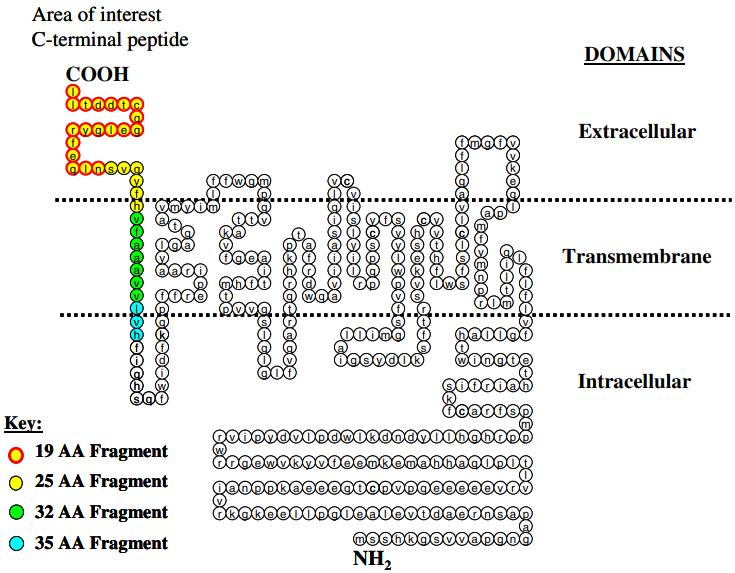 Fig.1 ADIPOR1 structure.1
The translational power of ADIPOR1 is underscored by its role in disease pathogenesis and as a viable biomarker. Studies confirm that ADIPOR1 expression is frequently reduced in insulin-resistant and diabetic states, suggesting that circulating ADIPOR1 fragments may serve as a measurable plasma biomarker for type 2 diabetes mellitus (T2DM) status. Furthermore, genetic investigations link specific polymorphisms, such as the ADIPOR1 rs7539542 variant, directly to increased insulin resistance in T2D patients, and the rs1342387 polymorphism has been associated with elevated risk of colorectal cancer in certain populations.
ADIPOR1 Analysis Services at Creative Biolabs
Creative Biolabs offers sophisticated analytical solutions designed to fully characterize the ADIPOR1 system, from receptor protein expression to functional polymorphism assessment.
- Immunological Detection of Circulating Fragments
We accurately detect and quantify the extracellular C-terminal fragment (CTF) of ADIPOR1 in matrices like human plasma and urine using optimized WB and ELISA techniques.
- Targeted Antibody Development
Leveraging our expertise, we develop and validate high-quality monoclonal and polyclonal antibodies specific for ADIPOR1 and its CTF epitopes across human, mouse, and rat species. This is available for biomarker discovery or as a standalone option.
- Immunohistochemical Analysis
We perform spatial analysis of adiponectin/ADIPOR1 distribution and expression in tissue samples, validating therapeutic target engagement.
- Polymorphism and Expression Profiling
We offer advanced genetic analysis for key ADIPOR1 SNPs (e.g., rs1342387, rs7539542) and quantitative expression via RT-qPCR or RNA-seq to assess transcriptional activity.
- Immuno-Mass Spectrometry (Immuno-MS) Analysis
For unparalleled specificity and structural verification, we utilize Immuno-MS, using immobilized ADIPOR1-CTF antibodies to capture and analyze fragments with high molecular accuracy.
Service Workflow
Our ADIPOR1 Analysis workflow is systematically designed for efficiency and rigor, ensuring high-quality, actionable results tailored to your research goals.
01Initial Consultation & Design
We begin with a detailed consultation to define the research question, target matrix (plasma, urine, tissue), and necessary ADIPOR1 analysis methods (e.g., ELISA, SNP typing).
02Client Material Submission
Clients provide the starting biological materials, such as plasma samples for circulating fragment analysis or genomic DNA for polymorphism screening.
03Platform Execution & Validation
Our expert team executes the agreed-upon ADIPOR1 analysis protocols, ensuring the analytical methods meet predefined acceptance criteria for precision and accuracy prior to running client samples.
04Data Processing & QA/QC
Raw data from immunological assays, sequencing, or mass spectrometry are processed, subjected to rigorous quality assurance and quality control (QA/QC) checks, and normalized against internal standards.
05Final Report Delivery
We deliver a comprehensive final report package, including detailed methodology, raw data, statistical analysis, interpretation of ADIPOR1 expression or functional status, and strategic recommendations for lead advancement.
Applications
Therapeutic Target Validation
Small Molecule Screening
Functional ADIPOR1 assays, such as ceramidase activity and downstream AMPK phosphorylation, are utilized for high-throughput screening (HTS) to identify novel small-molecule ADIPOR1 agonists that bypass the limitations of peptide-based Adiponectin mimetics.
Companion Diagnostic Development
Measurement of circulating ADIPOR1 C-terminal fragments serves as a powerful tool for developing companion diagnostics, allowing for non-invasive monitoring of disease progression and patient stratification for clinical trials.
Genetic Risk Assessment
Analysis of ADIPOR1 polymorphisms (SNPs) offers insights into the genetic risk associated with metabolic dysfunction and certain cancers, providing valuable data for personalized medicine initiatives and patient cohort selection.
Service Highlights
- Precision and Sensitivity: We guarantee industry-leading limits of detection and quantification by applying rigorous, purpose-built assay validation to all ADIPOR1 detection methodologies.
- Integrated Antibody Development: The ability to custom-design high-quality monoclonal and polyclonal antibodies against challenging epitopes like the ADIPOR1 CTF ensures optimal reagent specificity for novel immunoassay development.
- Multi-Modal Data Integration: Our platform seamlessly integrates data from genetic analysis, receptor expression, and functional downstream signaling, providing a holistic and translational view of the ADIPOR1 status.
- Metabolic Disease Expertise: Our years of focus on lipid and glucose regulation mean your ADIPOR1 project benefits from a team with proven strategic insight into clinical relevance and regulatory compliance.
FAQs
-
What is the primary advantage of analyzing the circulating ADIPOR1 CTF over simply measuring plasma adiponectin levels?
Analyzing the ADIPOR1 CTF provides a direct reflection of the receptor shedding and turnover rate rather than just the circulating ligand concentration. This method offers a more precise, downstream biomarker that indicates the status of the receptor system itself, which is often reduced in pathological conditions like T2DM and better reflects receptor availability.
-
How do you ensure the high specificity of the antibodies developed against the ADIPOR1 CTF?
Antibody specificity is ensured by employing rigorous epitope mapping and cross-reactivity testing against related adiponectin receptors (ADIPOR2) and common membrane proteins. We use purified recombinant ADIPOR1 CTF as the immunogen and validate the final monoclonal antibodies across multiple species and application types like WB and ELISA.
-
Can your ADIPOR1 functional assays differentiate between an orthosteric agonist and a positive allosteric modulator (PAM) of the receptor?
Yes, our ADIPOR1 functional battery is designed for this differentiation by combining binding kinetics with specific functional readouts like ceramidase activity. PAMs typically enhance the activity of endogenous adiponectin without directly competing for the orthosteric binding site, which can be distinguished in a concentration-response experiment.
-
Is it possible to adapt your ADIPOR1 analysis services to an HTS format for large compound libraries?
Absolutely, our primary binding assays (fluorescence polarization) and the downstream functional phosphorylation assays (TR-FRET) are explicitly optimized for high-throughput screening applications. We use miniaturized assay formats and automated liquid handling to efficiently process and analyze hundreds of thousands of compounds against the ADIPOR1 target.
-
Can the Immuno-MS approach detect post-translational modifications (PTMs) on the ADIPOR1 CTF?
Yes, the Immuno-Mass Spectrometry platform is particularly well-suited for identifying and characterizing PTMs on the captured ADIPOR1 CTF fragments. This powerful technique provides molecular weight confirmation and structural details, which are critical for understanding fragment stability and functional heterogeneity.
If you are interested in our services at Creative Biolabs, please contact us for more information.
Reference
- Pugia, Michael J., et al. "Adiponectin receptor-1 C-terminal Fragment (CTF) in plasma: putative biomarker for diabetes." Clinical Proteomics 5.3 (2009): 156-162. Distributed under Open Access license CC BY 2.0, without modification. https://doi.org/10.1007/s12014-009-9036-1
For Research Use Only.