Genotyping ADH1B enables stratification of clinical trial cohorts and precise dosage adjustments for drugs whose clearance is influenced by ethanol pathways, maximizing efficacy and mitigating toxicity risks.
Creative Biolabs offers specialized ADH1B analysis for global clients, utilizing a range of technologies. Our available services work perfectly as either a standalone or part of an end-to-end, well-integrated preclinical program.
Introduction of ADH1B
The alcohol dehydrogenase 1B (ADH1B) is renowned for governing the rate of ethanol metabolism, but emerging evidence confirms its role in complex disease pathogenesis. ADH1B-associated pathways are key drivers in tumorigenesis across cancers like Esophageal Squamous Cell Cancer (ESCC) and Colorectal Cancer (CRC). Furthermore, non-coding variants at the ADH1B locus, mediated partially by DNA methylation, contribute to Alzheimer's Disease (AD) risk. ADH1B also strongly influences the immune microenvironment in ovarian cancer, functioning as a critical prognostic biomarker. Besides, targeted proteomics identifies ADH1B as a valuable blood biomarker candidate for monitoring Acute Liver Injury (ALI).
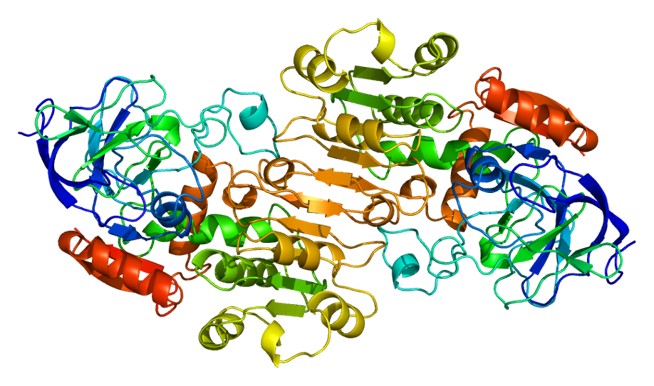 Fig.1 ADH1B structure.Distributed under CC BY-SA 3.0, from Wiki, without modification.
ADH1B Analysis Services at Creative Biolabs
Creative Biolabs offers a meticulously curated suite of singleplex ADH1B analysis services, designed to deliver deep molecular and functional insights by correlating genetic variation with measurable consequences. We offer a comprehensive analysis of gene regulation, prioritizing crucial links to Tumor-Infiltrating Immune Cells (TIICs) and immune checkpoints for highly tailored oncology solutions.
Furthermore, leveraging our deep expertise, we offer anti-ADH1B benchmark inhibitory monoclonal antibodies for use in cell culture, FACS, ELISA, functional assay development, animal modeling, and PK/PD studies.
Our Service Includes but is not limited to:
- Genotyping of ADH1B Polymorphisms
High-fidelity sequencing and Mass Spectrometry Genotyping (MSG) for critical functional variants (e.g., Arg47His).
- Targeted Proteomics Assay
Absolute quantification of the ADH1B protein and its kinetic activity, essential for monitoring liver injury (e.g., ALI).
- Expression Analysis
Quantification of ADH1B mRNA (qPCR) and protein expression (WB, IHC) across various tissues and cell lines.
- Bioinformatic & Co-Expression Analysis
Correlating ADH1B data with TIICs and immune checkpoints for cancer immunotherapy targets.
- ADH1B Quantification
Comprehensive measurement of ADH1B at the genetic, mRNA, and protein levels.
- Protein-Protein Interaction
Mapping ADH1B interaction networks relevant to disease progression.
Service Workflow
Our ADH1B analysis workflow is streamlined for precision and efficiency, executed in the following steps.
01Initial Consultation & Scope Definition
We begin with a Confidential Consultation to fully define the analytical scope. This crucial step determines whether the project requires genotyping, expression analysis, or functional ADH1B studies.
02Starting Material Submission
Clients submit the necessary Starting Materials, which typically include high-quality isolated DNA, fresh or frozen tissue, or plasma samples.
03Execution and Bioinformatic Analysis
Our laboratory enters the Execution Phase, using high-resolution MSG for ADH1B polymorphisms or targeted qPCR/Proteomics for expression. Oncology projects also receive advanced Bioinformatic Correlation of ADH1B data with immune checkpoint markers.
04Final Data Delivery
The service concludes with Final Data Delivery. Clients receive all raw data, comprehensive QC reports, and an interpretive functional report detailing ADH1B variation and overall risk assessment.
Applications
Pharmacogenetic Optimization
Carcinogenesis Risk Prediction
Our ADH1B analysis provides a crucial tool for identifying high-risk individuals for Acetaldehyde-linked cancers like ESCC, guiding tailored preventative screening programs and early intervention strategies.
Addiction and Treatment Response
Defining ADH1B functional status predicts natural aversion (protective alleles) and determines the likelihood of an optimal patient response to specific Alcohol Use Disorder (AUD) pharmacotherapies.
Immuno-Oncology Biomarker
Through co-expression and TIIC analysis, ADH1B is positioned as a novel prognostic or predictive biomarker, especially in ovarian and other cancers, guiding personalized immunotherapy approaches.
Hepatotoxicity Monitoring
Targeted proteomics of the ADH1B protein acts as a sensitive, non-invasive blood biomarker candidate for tracking the severity and progression of Acute Liver Injury (ALI), accelerating translational research.
Service Highlights
- High-Fidelity Genotyping: We deliver zero-error polymorphism reports utilizing our proprietary Mass Spectrometry Genotyping (MSG) platform, ensuring unparalleled precision for key ADH1B variants.
- Integrated Multi-Omics: Beyond DNA, we provide unified reports covering gene expression (RNA), protein quantification (targeted proteomics), and functional activity for a complete molecular picture.
- Oncology-Specific Correlation: Our standard bioinformatics pipeline includes automated correlation of ADH1B expression levels with established TIIC signatures.
- End-to-End Reagent Support: We uniquely offer synthesis of benchmark anti-ADH1B inhibitory monoclonal antibodies alongside analysis, enabling rapid transition to functional validation.
FAQs
-
Which specific ADH1B polymorphisms do you primarily focus on in the standard analysis panel?
Our standard analysis panel primarily focuses on the Arg47His (rs1229984) and Arg370Cys (rs28341) functional polymorphisms due to their established high impact on enzymatic activity and resulting clinical outcomes in metabolism. These two variants are selected because they represent the most common and dramatic kinetic changes, allowing for robust risk stratification across diverse global populations.
-
Can I submit formalin-fixed, paraffin-embedded (FFPE) samples for the ADH1B genotyping service?
Yes, we routinely accept FFPE tissue samples for high-resolution genotyping; however, we strictly require adequate DNA quantity and quality, so a prior consultation regarding the optimal extraction method is strongly recommended. The inevitable fragmentation of DNA in FFPE samples necessitates our high-coverage NGS approach to ensure accurate read mapping and variant calling.
-
How does your analysis differentiate between the ADH1B genotype and actual enzyme expression levels?
We effectively combine ADH1B genotyping results with targeted proteomics assays, typically utilizing highly specific Selected Reaction Monitoring (SRM), to precisely quantify protein levels. This provides a crucial differentiation between the inherent genetic predisposition and the fully realized cellular expression profile, which may be influenced by post-transcriptional regulation.
-
If I only submit tissue samples, can you still perform the protein-protein interaction studies for ADH1B?
Yes, we can perform protein-protein interaction studies, often utilizing immunoprecipitation followed by advanced mass spectrometry, provided the tissue sample yields a sufficient, viable protein concentration. These studies are critical for identifying novel ADH1B regulatory partners or characterizing the structure of the active enzyme complex that ultimately influences its function.
-
Can the anti-ADH1B monoclonal antibodies you develop be used for in vivo animal model studies?
Yes, the inhibitory monoclonal antibodies we develop are rigorously characterized and validated specifically for diverse downstream applications, including in vivo functional and PK/PD animal model development. Validation includes extensive checks for specificity, affinity, neutralizing capacity, and lack of off-target toxicity to ensure robust performance in complex biological systems.
If you cannot find the service you're looking for, contact us today to develop custom solution for specific needsat Creative Biolabs.
For Research Use Only.