
At Creative Biolabs, we take pride in offering an extensive range of high-quality lipid products, specifically tailored to meet the needs of lipid-based delivery systems. Whether you require phospholipids, cholesterol, or other critical ingredients, our team of experts is here to provide you with comprehensive formulation support and professional services to ensure that your products achieve optimal functionality and stability. Trust Creative Biolabs to be your partner in precision and excellence.
Phospholipids and sterols are essential lipid carrier materials for the preparation of liposomes. They are the primary components of biological cell membranes and are naturally occurring substances within the body. These materials exhibit excellent biocompatibility and biodegradability, being non-toxic and non-immunogenic. The lipid composition significantly affects the properties of liposomes, including particle size, fluidity, rigidity, electrical charge, and stability.
There are two types of phospholipids utilized to make liposomes: natural and synthetic. They are further divided into glycerophospholipids and sphingomyelins depending on the alcohol groups that appear in their structures.
Typically, liposomes are composed of glycerophospholipids, which are connected by ester bonds, ether bonds, and amide bonds linking the hydrophilic heads and hydrophobic tails. Depending on the charge of the hydrophilic head groups, phospholipids can be classified into cationic, anionic, and neutral head groups, with the charge of the hydrophilic groups providing stability through electrostatic repulsion.
The hydrophobic tails of phospholipid molecules are usually composed of fatty hydrocarbons and sterols. The nature of the fatty hydrocarbons, including tail length, degree of saturation, and double bonds, significantly influences the properties of the liposomes. For most lipid molecules with hydrocarbon tails, a longer carbon chain correlates with a higher phase transition temperature for the liposomes, while the degree of unsaturation determines the susceptibility of the liposomes to oxidation.
Natural phospholipids, derived from sources such as soybeans, egg yolk, and sunflowers, form the basis of glycerophospholipids. The substitution of H+ on the phosphate group by other groups leads to the formation of more complex glycerophospholipids, including phosphatidic acid (PA), phosphatidylcholine (PC), phosphatidylethanolamine (PE), phosphatidylinositol (PI), phosphatidylserine (PS), and phosphatidylglycerol (PG).
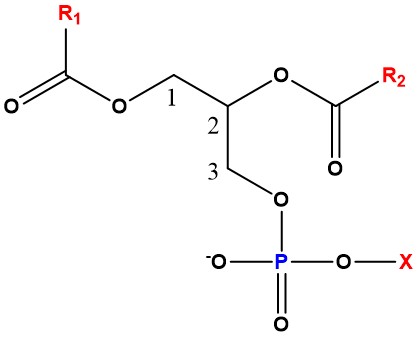 Fig.1 The structural formula of glycerophospholipids.
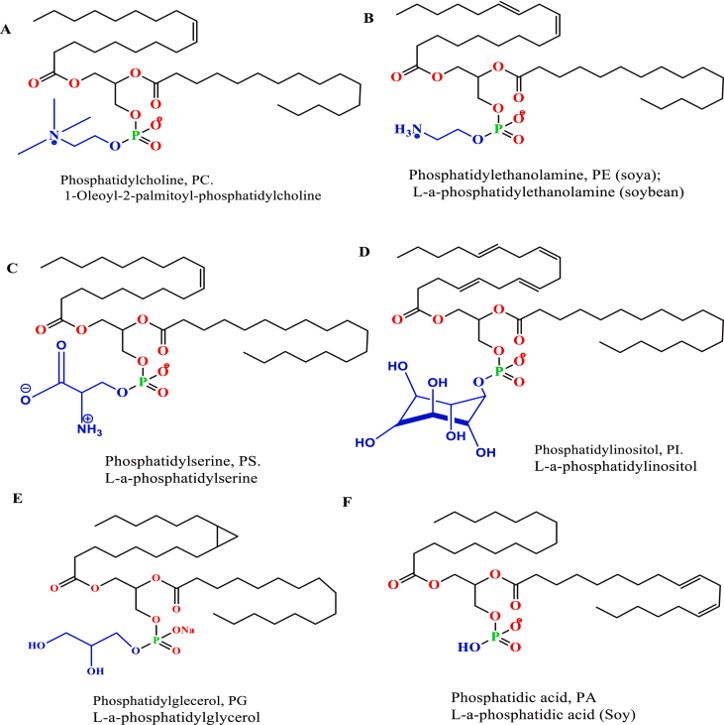 Fig.2 Classification of phospholipids.1, 2
Due to the presence of unsaturated bonds in the fatty acid chains of natural phospholipids, they are prone to oxidation and hydrolysis in the presence of air. This leads to a decrease in the viscosity of the liposomal membrane and an increase in its fluidity, resulting in drug leakage. In contrast, liposomes prepared from synthetic phospholipids exhibit higher stability.
Synthetic phospholipids are formed by chemically modifying the non-polar and polar portions of natural phospholipids. These modifications allow for the generation of a limitless variety of well-defined and classified phospholipids, hence influencing the physicochemical properties of liposomes. Common synthetic phospholipids include dipalmitoylphosphatidylcholine (DPPC), dipalmitoylphosphatidylethanolamine (DPPE), distearoylphosphatidylcholine (DSPC), dioleoylphosphatidylcholine (DOPC), and dioleoylphosphatidylglycerol (DOPG). Synthetic phospholipids are resistant to oxidation and hydrolysis, and liposomes prepared from them exhibit higher stability.
Sterols are hydrophobic lipids with a tetracyclic structure, and their diversity arises from various functional groups attached to these rings. Cholesterol, a common sterol in liposome formulation, typically comprises no more than 30% of the total lipid content. While cholesterol does not form bilayers by itself, it integrates with phospholipids, enhancing bilayer rigidity through its cyclic structure and hydroxyl group interactions. This integration also reduces bilayer polarity and increases water penetration into the phospholipid head groups, expanding the internal aqueous phase and improving the encapsulation efficiency of hydrophilic drugs.
As an expert in lipid delivery systems, Creative Biolabs has its own lipid production platform, offering a variety of lipids to choose from, including PC, PE, PS, PI, PG, PA, and other lipids. You can contact us at any time for instant one-on-one service.
References
 For Research Use Only. Not For Clinical Use
Supports
Online Inquiry

Creative Biolabs is a world-leading liposome provider with extensive experience in liposome preparation, custom formulation development, and characterization.

© 2026 Creative Biolabs. All rights reserved.