
Liposome administration changed the biodistribution of drugs and further improved the therapeutic index of various drugs. The nano drug delivery system has been widely used in various fields, including anti-cancer, anti-fungal, anti-inflammatory drugs and therapeutic gene delivery.
In the preparation of liposomes, membrane extrusion, ultrasound, homogenization and/or freeze-thaw techniques are used to control particle size and size distribution. Therefore, liposomes can be formulated and processed into different sizes, compositions, charges and lamellarity.
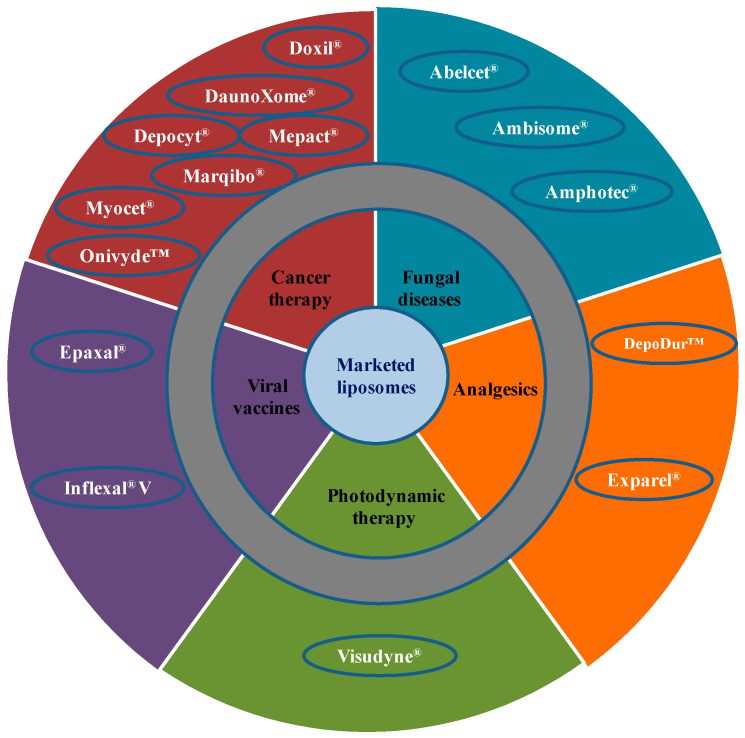 Fig.1 Therapeutic areas covered by liposome-based products.1,2
Liposomes are available in liquid dispersion and solid dosage forms. Emulsion is the main dosage form of liposomes, while solid dosage forms include proliposomes, freeze-dried liposomes, solid dispersions and co-precipitation with phospholipids, etc., which can form a vesicle structure after hydration.
The preclinical development and clinical application of many drugs are still hindered by their low solubility. In fact, the ability to produce drugs in a liquid format remains a major consideration for pediatric drugs. Liquid dosage forms can also offer age-appropriate advantages, they offer flexible doses, and offer a wider choice for those who suffer from dysphagia. With the development of personalized and age-appropriate drugs, it is very ideal to produce this kind of liquid dosage form of drug loaded liposomes.
The liquid dosage form of liposomes has the problems of hydrolysis or oxidative degradation during storage, as well as deposition, aggregation or fusion with other liposomes in the dispersion system. In order to solve these problems, people have proposed a variety of methods, including the use of suitable lipid components, polymer coatings, adding stable lipids to the liposome structure, preparing double liposomes and proliposomes, and other innovative methods, such as lyophilized liposome solution to stabilize liposomes, and reconstitute before use. Among all these methods, the proliposome method is the most promising.
Proliposomes are a new type of carrier-mediated drug release system, which has many advantages compared with conventional liposomes. The stability of proliposomes is far superior to liposomes, making them more suitable for drug delivery. They are a dry, free-flowing granular substance that forms liposome dispersions immediately after contact with water or biological fluids in the body.
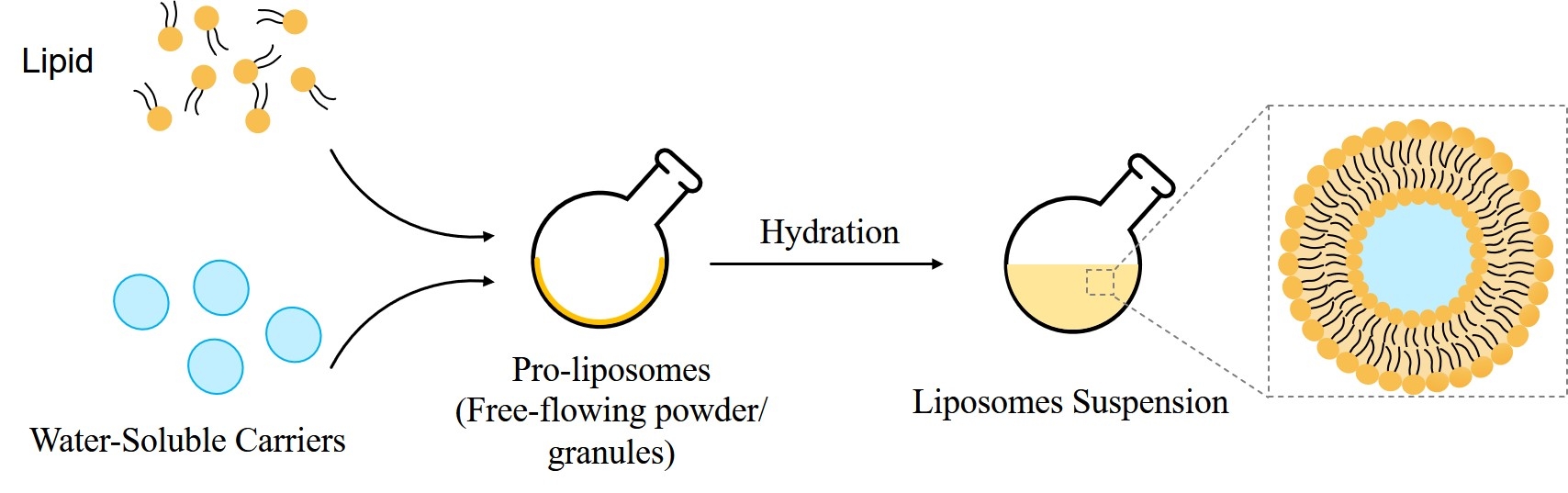 Fig.2 Mechanism of formation of liposomes from proliposome.
Creative Biolabs specializes in the design and development of various formulations of liposomes, and has a deep understanding of freeze-drying technology, which can meet your needs for any dosage form. For more details about our services, please directly contact us.
References
 For Research Use Only. Not For Clinical Use
Supports
Online Inquiry

Creative Biolabs is a world-leading liposome provider with extensive experience in liposome preparation, custom formulation development, and characterization.

© 2026 Creative Biolabs. All rights reserved.