Ionizable Lipid Discovery Service
Creative Biolabs' One-Stop Ionizable Lipid Discovery and LNP Formulation Optimization Platform
Developing highly efficient, non-toxic vectors for genomic medicines remains the paramount challenge in modern drug delivery. Creative Biolabs' Ionizable Lipid Discovery Service is a premier platform dedicated to overcoming complex biological barriers through rational design and engineering. By uniting state-of-the-art computational modeling with automated synthesis and microfluidic formulation, we accelerate the identification of translatable, tissue-specific delivery vehicles. At Creative Biolabs, our deep expertise in lipid biophysics and chemistry empowers researchers with unparalleled capabilities in rational molecular design and structure-activity relationships (SAR) for advanced nucleic acid delivery.
Request a Free Scientific Consultation
Scientific Foundations of Ionizable Lipid Engineering
To design a highly efficacious delivery system, one must navigate the delicate balance of physiological stability, cellular internalization, and intracellular cargo release. First-generation cationic lipids carry a permanent positive charge, resulting in rapid immune clearance and severe cytotoxicity. Creative Biolabs' pH-sensitive amino lipids bypass these limitations through precision protonation kinetic.
The Critical Role of Apparent pKa in Endosomal Escape
One of the greatest challenges in systemic nanomedicine is that standard LNP formulations are rapidly coated by apolipoprotein E (ApoE) in the bloodstream, leading to dominant clearance by hepatic hepatocytes. Overcoming this restriction to achieve extrahepatic tissue tropism requires precise engineering of the apparent dissociation constant (pKa) of the ionizable lipid. The pKa is the single most critical chemical attribute of an ionizable lipid. For systemic therapeutic delivery, the optimal pKa range resides strictly between 6.0 and 6.7.
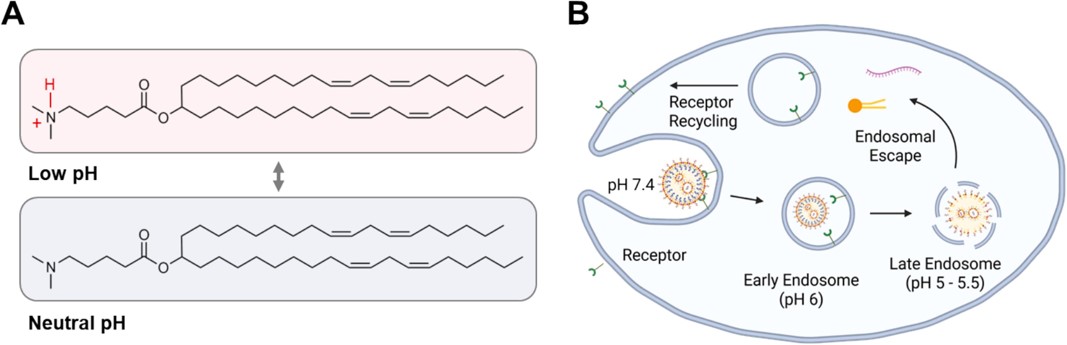 Fig. 1 Ionizable lipids facilitate endosomal escape of LNPs.1
- At Physiological pH (7.4): The tertiary amine headgroup remains uncharged (neutral), allowing the lipid nanoparticle (LNP) to circulate freely with minimal cellular membrane damage or inflammatory cytokine induction.
- At Endosomal pH (5.5-6.0): The low pH within the maturing endosomal compartment triggers protonation of the amine headgroups. This cationic charge state induces electrostatic coupling with anionic lipids (such as bis(monoacylglycero)phosphate, or BMP) present in the inner endosomal leaflet, facilitating membrane fusion and cytoplasmic release.
The Molecular Anatomy of Ionizable Lipids
A functional ionizable lipid is composed of three structurally modifiable regions that directly dictate its pharmacological performance:
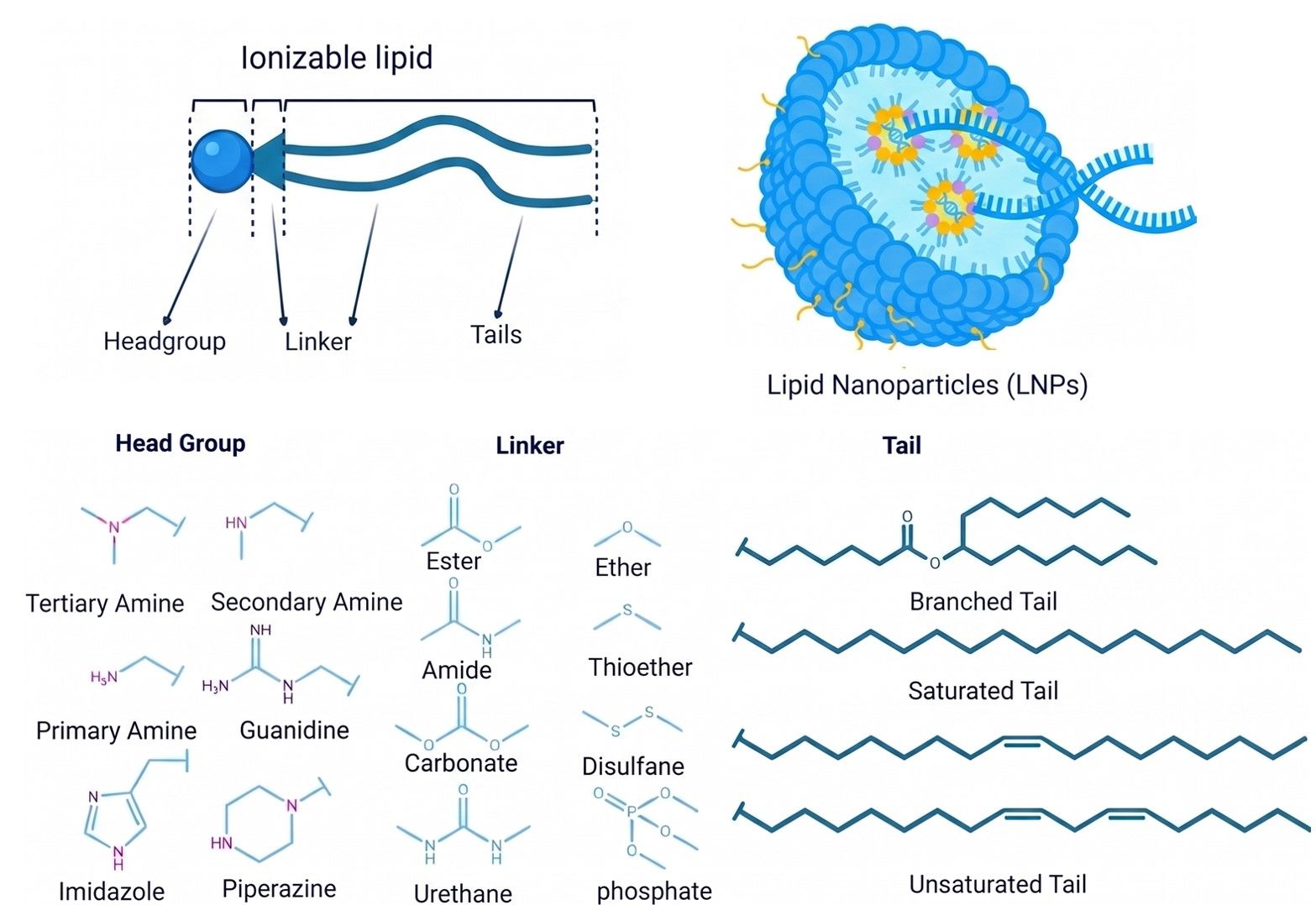 Fig. 2 Chemical structures of the ionizable lipid and three segments of lipids.
The Amine Headgroup
The Amine Headgroup: Typically containing tertiary or secondary amines that determine the protonation profile and regulate molecular interaction with cargo and cellular membranes.
The Hydrophobic Tails
The Hydrophobic Tails: Saturated, unsaturated, or branched alkyl chains that influence lipid packing, self‑assembly, and bilayer fluidity.
The Linker Region
The Linker Region: Chemical linkages (e.g., esters, disulfides, carbamates) connecting the headgroup to the tails. The linker determines the in vivo stability and biodegradability of the lipid.
Tail Branching and Biodegradability: Optimizing the Lipid Tail
The structural architecture of the hydrophobic tail dictates the molecular packaging and cell tolerability of the LNP:
- Tail Branching: Introducing multi-branched or unsaturated tails prevents tight crystalline packing of lipids, lowering the phase-transition temperature. This promotes the formation of the inverted hexagonal phase, boosting endosomal escape efficiency from <2% to over 15%.
- Biodegradability: Integrating ester, disulfide, or carbamate linkers within the hydrophobic tails ensures that once the payload is delivered, the lipid is rapidly metabolized into non-toxic metabolites. This eliminates liver accumulation and chronic tissue toxicity.
The AI-Driven Paradigm: Overcoming Empirical Hurdles in Lipid Design
Creative Biolabs overcomes this challenge by integrating artificial intelligence (AI) and machine learning (ML) early in the design cycle. By using deep learning algorithms to construct quantitative structure-activity relationships (QSAR) in silico, we predict delivery performance, cytotoxicity, and endosomal escape rates prior to wet-lab synthesis. This computational pre-filtering ensures that only high-probability lipid architectures are advanced to physical synthesis.
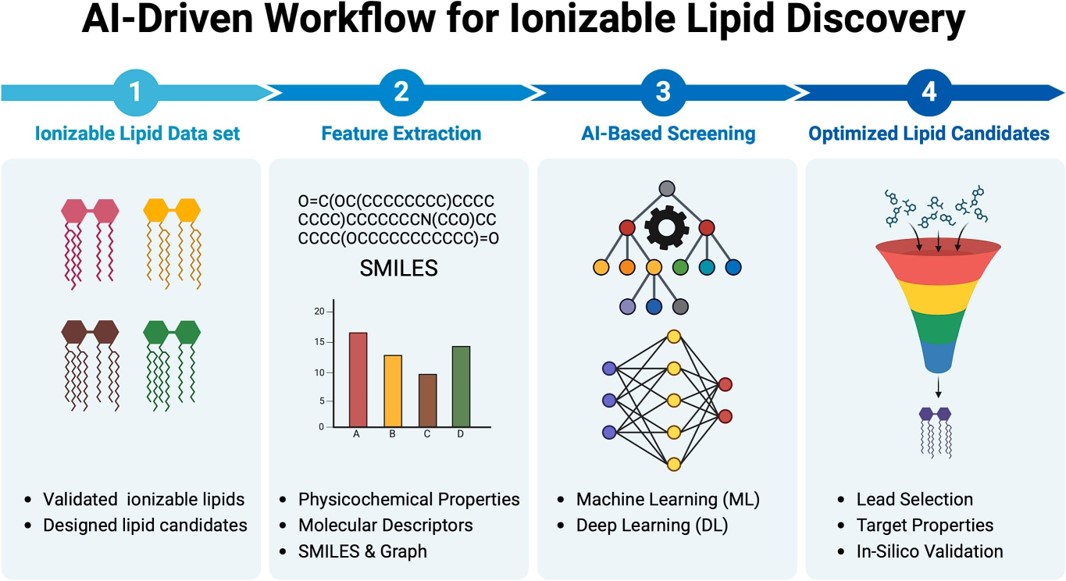 Fig. 3 AI-driven workflow for ionizable lipid discovery.1
This predictive framework also accelerates the modeling of extrahepatic tissue tropism. To bypass default hepatic accumulation, computational analyses evaluate receptor-ligand docking, membrane interaction energies, and LNP surface charge distributions in silico. This computational optimization streamlines the identification of targeted, organ-tropic delivery vehicles.
Table 1. Representative Ionizable Lipids and Targeted In Vivo Applications.1
| Lipid Candidate | Functional Group | Target |
|---|---|---|
| SMART-LNP | Shikimic Acid Conjugation | Dendritic Cells |
| C12-TLRa | Toll-like Receptor Agonist (TLRa) | Immune System |
| ssPalmE | Vitamin E Scaffold Integration | Tumor Microenvironment |
| I97 | Vitamin B5 Scaffold Integration | Spleen / Immune System |
| PAL | Paclitaxel Moiety Conjugation | Tumor |
| RAL2 | TLR7/8 Agonist (Resiquimod) Linkage | Immune System |
| A5-B1-C4.2 | Vinpocetine-Based Core | Brain |
| NT1-O12B | Neurotransmitter-Derived Headgroup | Brain |
| MK16 | BBB-Penetrating Lipid Scaffold | Brain |
| A2-B13 | Berberine-Based Planar Aromatic Scaffold | Brain |
| Type 3-P1-C12 | Piperazine-Bisphosphonate Headgroup | Bone |
Our Ionizable Lipid Discovery & Design Services
Creative Biolabs provides a modular, high-throughput platform engineered to take your delivery vehicle from an in silico hypothesis to a fully validated preclinical candidate.
AI-Powered Computational Molecular Design
Our discovery workflow begins with computer-aided molecular design (CAMD) to pre-screen thousands of virtual lipid candidates before wet-lab synthesis.
- Deep Learning Molecular Properties Prediction: We employ Graph Neural Networks (GNNs) trained on vast proprietary datasets of physicochemical properties to predict apparent pKa, cytotoxicity, and lipid-RNA binding affinity with up to 95% accuracy.
- Generative De Novo Molecular Design: Utilizing Generative Adversarial Networks (GANs) and Reinforcement Learning (RL), our platforms generate entirely novel, tertiary amine headgroups and biodegradable linker configurations designed specifically for targeted extrahepatic delivery.
- Molecular Dynamics (MD) Simulations: We perform atomic-scale MD simulations to model the self-assembly kinetics of multicomponent LNP membranes, predicting lipid bilayer structural stability and the critical temperature of the inverted hexagonal phase transition.
- SAR Profiling: Quantitative Structure-Activity Relationship (QSAR) algorithms correlate tail lengths, branching degrees, and linker positions with predicted in vivo tolerability and endosomal release rates.
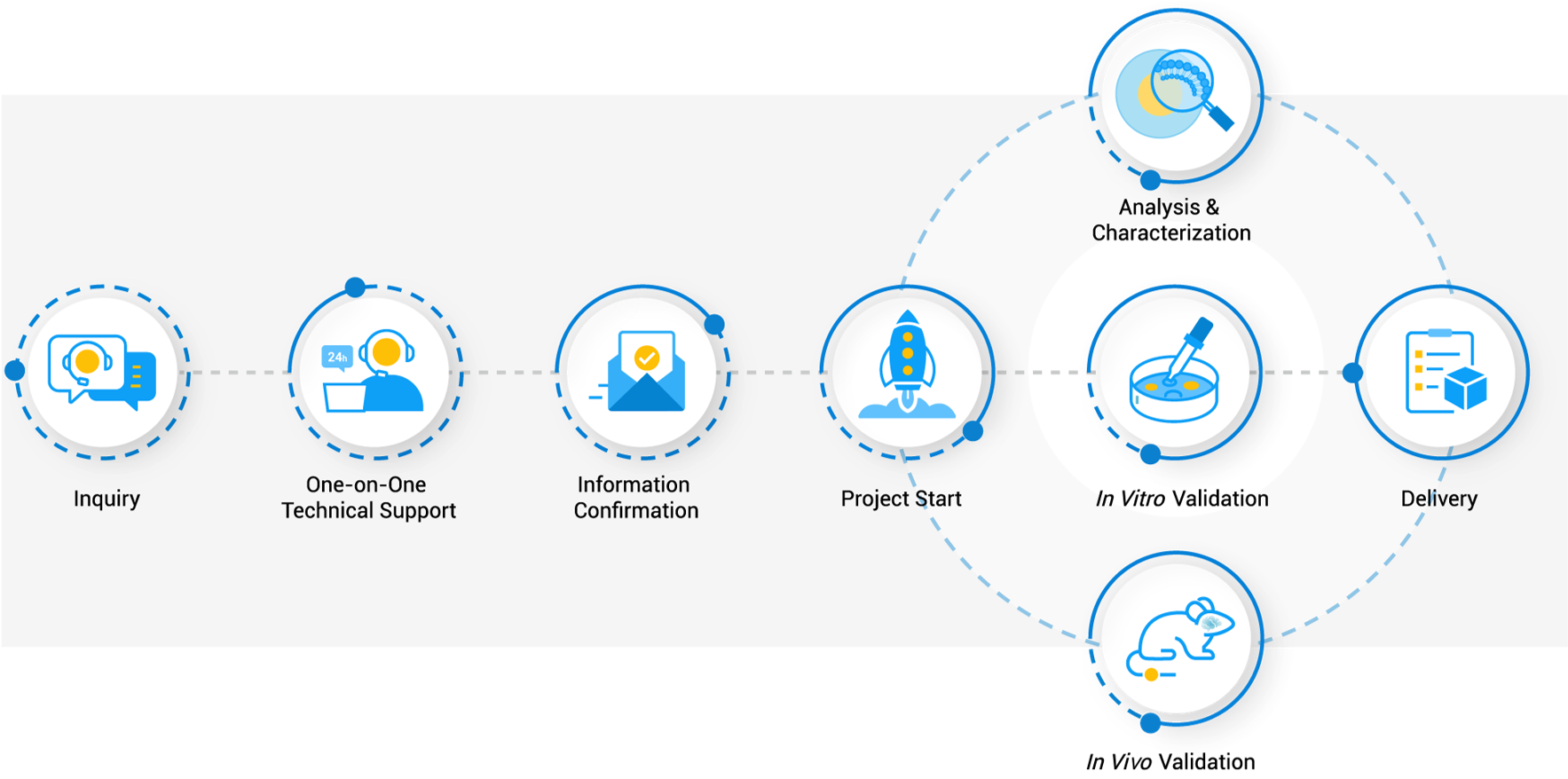
Workflow
Multi-Industry Applications of Our Custom Ionizable Lipids
- Oncology & Rare Disease Therapeutics: Bypassing traditional hepatic sequestration to deliver gene silencing or gene replacement payloads directly to target tumors, lungs, bone marrow, or the central nervous system.
- In Vivo Gene Editing: Delivering Cas9 mRNA, guide RNAs, or base-editor ribonucleoproteins directly to targeted extrahepatic tissues, achieving high clinical editing efficiency with minimal off-target risks.
- Exogenous RNAi Crop Protection: Formulating highly stable, rain-resistant LNPs to deliver double-stranded RNA (dsRNA) directly to agricultural crops, enabling non-transgenic pest control through highly selective gene silencing.
- Live-Cell Biosensing: Formulating non-toxic transfection reagents to deliver molecular beacons, RNA sensors, or fluorescence reporters into delicate primary cells for real-time biological observation.
Why Choose Creative Biolabs?
Creative Biolabs' Ionizable Lipid Discovery Service bridges the gap between chemical novelty and translational success. By integrating rational molecular design, high-purity custom synthesis, automated microfluidic formulation, and rigorous analytical characterization, we empower global researchers with the ultimate platform to overcome delivery barriers and maximize therapeutic efficacy across a multitude of industries.
Proprietary SAR Database
Access thousands of pre-characterized lipid structures, significantly cutting down early-stage design iteration timelines.
Unrivaled Apparent pKa Tuning
Our team can shift lipid apparent pKa, unlocking unmatched extrahepatic tissue tropism (targeting the spleen, lung endothelium, or immune cell subpopulations).
Flawless Batch Consistency
Powered by automated microfluidics, our formulation platforms maintain consistent PDI and size metrics during scale-up, eliminating batch-to-batch variation.
Seamless Molecular-to-Nano Formulation Transition
We co-optimize novel ionizable lipid structures with tailored helper-lipid and PEG ratios. This guarantees immediate nanoparticle assembly viability and prevents precipitation during the water-to-ethanol solvent exchange phase.
Related Services & Products
Related Services
Chemical Synthesis Services
Nucleic Acid Synthesis Services
Related Products
| Product Name | Description | Inquiry |
|---|---|---|
| Lipid-Protein Conjugation Kit (Universal) | High-efficiency kit for covalent conjugation of targeting proteins or antibodies to pre-formulated LNPs. | |
| SM-102 | High-purity benchmark ionizable lipid used widely for mRNA vaccine formulations and transfection screening. | |
| LP01 | High-performance ionizable amino lipid optimized for siRNA delivery and gene silencing applications in vivo. | |
| 5A2-SC8 | Core ionizable lipid featuring a dendrimer-like headgroup, optimized for high endosomal escape efficiency. | |
| DSPE-PEG-Folate | Functionalized PEG-lipid engineered for active folate receptor-targeted delivery to tumor tissues. |
FAQs
How to improve LNP endosomal escape?
Endosomal escape is a critical bottleneck, with typically less than 2% of encapsulated RNA successfully reaching the cytosol. Creative Biolabs addresses this by designing lipids with unsaturated carbon chains (e.g., linoleyl-based) or highly branched tails. These structures encourage the lipid bilayer to transition into an inverted hexagonal phase upon protonation in the endosome, destabilizing the endosomal membrane to release the cargo.
What is the role of helper lipids in LNP formulation?
While ionizable lipids drive cellular internalization and endosomal escape, helper lipids establish the structural integrity of the nanoparticle. Cholesterol acts as a structural filler that controls membrane permeability; neutral helper lipids like DSPC or DOPE stabilize the outer shell and facilitate membrane fusion; and PEG-lipids regulate particle size during formulation while preventing aggregation in biological fluids to extend half-life.
What are the typical purity levels of your synthesized lipids?
Every batch synthesized within our discovery platform undergoes rigorous purification via preparative HPLC, followed by analytical validation using High-Performance Liquid Chromatography (HPLC) coupled with Mass Spectrometry (LC-MS) and Proton NMR (1H-NMR). We guarantee a minimum chemical purity of >95% for all research-grade lipids.
Reference
- Lee, Yeji, et al. "Advances in the rational design of ionizable lipids for mRNA therapeutics." Materials Today (2025). https://doi.org/10.1016/j.mattod.2025.07.028. Distributed under Open Access license CC BY 4.0, without modification.