At Creative Biolabs, we understand that the success of a next-generation therapeutic relies not only on the active pharmaceutical ingredient (API) but, crucially, on its delivery vehicle. As specialists in Lipid-based Drug Delivery Systems, we focus on providing scalable, high-quality solutions that overcome in vivo challenges. Our Anionic Liposome Development Service offers researchers and pharmaceutical developers a superior, low-toxicity platform for encapsulating a wide range of therapeutic and diagnostic agents.
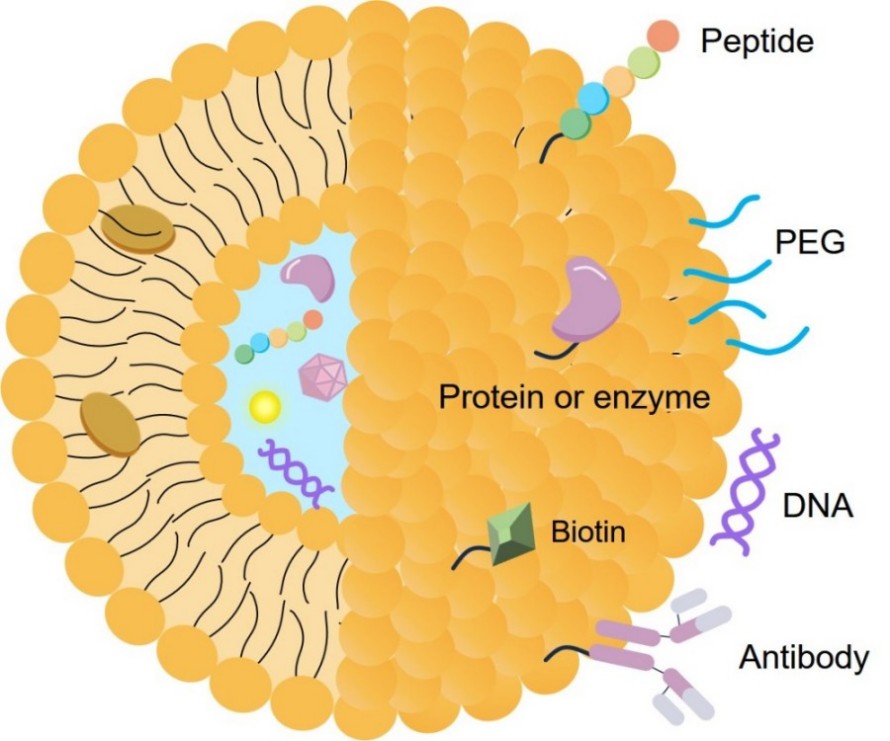
Anionic liposomes are lipid vesicles characterized by a net negative surface charge (Zeta potential) arising from the inclusion of negatively charged lipids such as Phosphatidylglycerol (PG) or Phosphatidylserine (PS). This structural characteristic allows them to efficiently encapsulate both hydrophilic compounds in their aqueous core and hydrophobic molecules within the lipid bilayer, making them exceptionally versatile drug carriers for both small molecules and complex biopharmaceuticals.
Unlike conventional cationic liposomes, which possess a positive charge that leads to higher, often dose-limiting, cytotoxicity and non-specific binding to blood components, anionic liposomes offer a clear safety advantage. The native negative charge minimizes non-specific interaction with negatively charged plasma proteins and cell surfaces. This inherent Reduced Cytotoxicity and electrostatic repulsion contribute to superior stability and prolonged circulation times in vivo, significantly improving the therapeutic index.
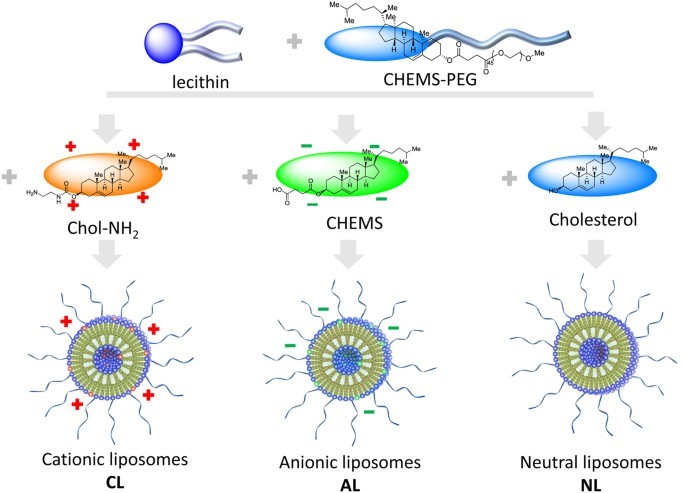 Fig. 1 Anionic, cationic and neutral liposomes formulation. 1
Creative Biolabs meticulously controls the molecular architecture of every liposome. Key components used in our anionic formulations include:
As your dedicated partner in lipid-based drug delivery, Creative Biolabs integrate our deep expertise in lipid chemistry with scalable processes to guarantee high batch-to-batch consistency and performance.
We develop bespoke lipid compositions and molar ratios, specializing in efficient and stable encapsulation of your specific Active Pharmaceutical Ingredient (API), whether small molecule, peptide, or nucleic acid.
Rigorous testing includes precise measurement of particle size, PDI, and Zeta potential. We provide comprehensive data necessary for regulatory submissions and performance validation.
Ensuring your formulation is scalable, we optimize manufacturing processes (e.g., extrusion, microfluidics) for high yield, reproducibility, and production.
We design and validate freeze-drying cycles with optimized Lyoprotectants to ensure exceptional long-term stability and a simplified logistics profile for your final product.
The unique combination of stability, low immunogenicity, and high payload capacity makes our anionic liposomes ideal non-viral vectors for high-impact applications:
Our commitment to scientific excellence and client partnership distinguishes us in the field of lipid-based drug delivery:
Creative Biolabs is committed to delivering state-of-the-art Anionic Liposome Development Services that enhance the safety and effectiveness of your therapeutic programs. By specializing in low-toxicity, long-circulating, and shelf-stable liposomal systems. Ready to advance your drug delivery project? Partner with our expert team to design a customized anionic liposome formulation today.
| Product Name | Description | Inquiry |
|---|---|---|
| DOPG | High-purity anionic lipid widely used for creating stable, low-toxicity liposomes. | Inquiry |
| DSPS | Anionic lipid that aids in specific cellular recognition and is often used in diagnostic applications. | Inquiry |
| DSPE-PEG Lipid | Steric stabilizer for manufacturing long-circulating (PEGylated) liposomes. | Inquiry |
Reference
 For Research Use Only. Not For Clinical Use
Services
Online Inquiry

Creative Biolabs is a world-leading liposome provider with extensive experience in liposome preparation, custom formulation development, and characterization.

© 2026 Creative Biolabs. All rights reserved.