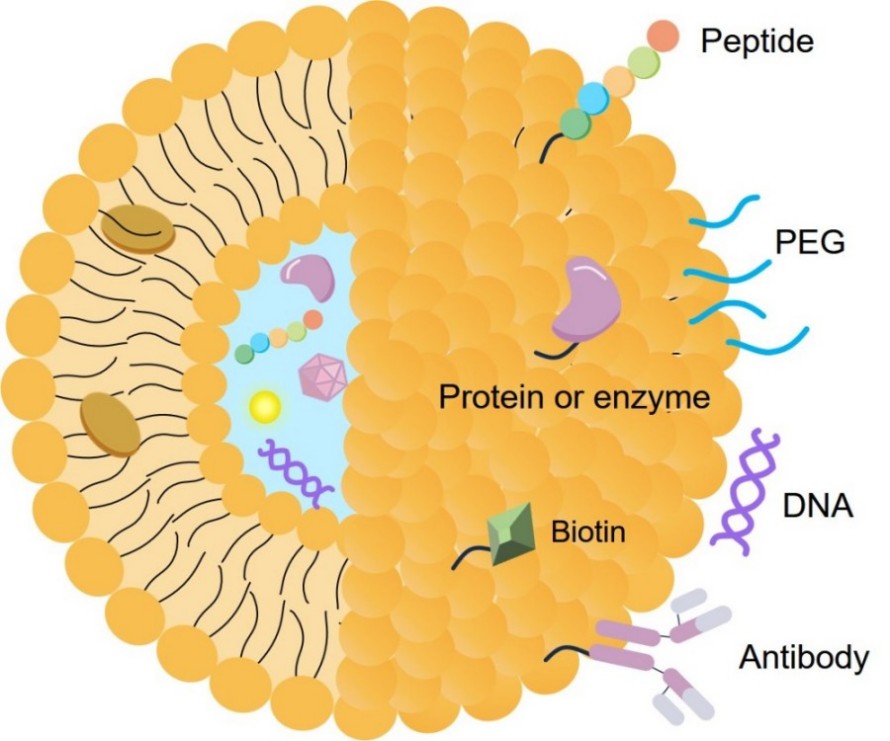
In the era of precision medicine, lipid-based drug delivery systems have revolutionized the therapeutic landscape, enabling the intracellular delivery of genetic payloads that were once considered undeliverable. At the heart of these breakthroughs lies the chemistry of the delivery vehicle itself. Creative Biolabs introduces our premier cationic lipids synthesis service, designed to overcome the critical bottlenecks of stability, toxicity, and endosomal escape efficiency.
While both systems rely on cationic lipids to bind nucleic acids, they differ fundamentally in structure, assembly, and application. Understanding these distinctions is crucial for vector design.
| Feature | Cationic Liposomes | Lipid Nanoparticles (LNPs) |
|---|---|---|
| Microstructure | Contains an aqueous core; resembles a traditional cell membrane structure. | Lipids and nucleic acids form a dense, electron-dense complex in the core. |
| Primary Lipid Type | Permanently Charged Cationic Lipids (e.g., DOTAP, DOTMA): Positive charge at all pH levels. | Ionizable Cationic Lipids: Neutral in circulation (physiologic pH), positive in acidic endosomes. |
| Primary Payload | Ideal for larger DNA molecules; common in in vitro transfection. | RNA (mRNA, siRNA): The gold standard for COVID-19 vaccines and therapeutic RNA delivery. |
| Preparation Method | Thin-film hydration, extrusion. | Microfluidic mixing, ethanol dilution. |
| Key Advantage | Simple formulation; easy to prepare in a lab setting for cell culture studies. | Long circulation half-life; high encapsulation efficiency; superior endosomal escape in vivo. |
The chemical architecture of a cationic lipid dictates the performance of the delivery system. Our synthesis services focus on optimizing three critical structural domains:
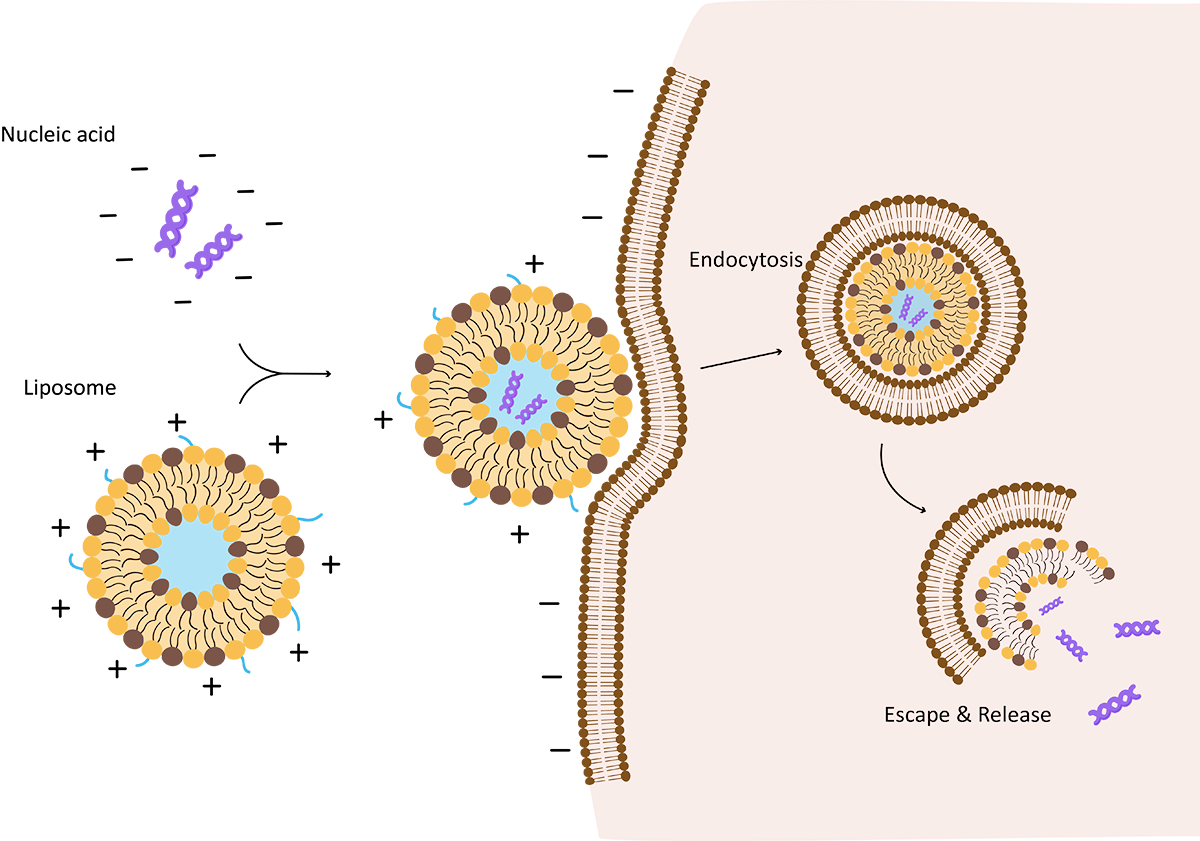 Fig.1 Proposed mechanisms of cationic liposome condensation and uptake
The "Endosomal Escape" paradox is the primary bottleneck in gene delivery. Advanced ionizable lipids utilize the Proton Sponge Effect or membrane fusion mechanisms:
In the rigorous pursuit of efficient gene delivery, choosing the right lipid is paramount. The field has transitioned from first-generation lipids, which focused primarily on electrostatic condensation, to sophisticated third-generation ionizable lipids designed for intracellular trafficking. Understanding the distinct physicochemical profiles of these molecules—from the stable ether linkages of DOTMA to the pH-responsive domains of DLin-MC3-DMA—is essential for rational experimental design.
| Lipid Name | Primary Research Utility | Scientific Rationale & Mechanism |
|---|---|---|
| DOTAP | In vitro transfection (DNA/RNA); Vaccine adjuvants. | Biodegradable ester linkage facilitates metabolic clearance. Constitutive positive charge ensures robust DNA condensation but limits systemic tolerability. |
| DOTMA | In vitro gene delivery; Liposomal stability studies. | Features an ether linkage conferring high chemical stability against hydrolysis. Forms rigid liposomes; non-biodegradable nature restricts in vivo application. |
| DC-Chol | Clinical gene therapy trials; Non-viral vectors. | Cholesterol backbone mimics bio-membrane components, enhancing biocompatibility. Cleavable ester bond reduces cytotoxicity compared to aliphatic analogs. |
| DLin-MC3-DMA | Hepatic siRNA delivery | Optimized pKa (~6.44) enables endosomal escape via the proton sponge effect while maintaining neutral circulation pharmacokinetics. |
| SM-102 | mRNA vaccines; Systemic RNA delivery. | Tertiary amine allows pH-dependent ionization. Branched tail structure enhances membrane fusogenicity; ester linkages promote rapid biodegradation. |
| DODAP | Helper lipid in pH-sensitive liposomes. | Unsaturated ionizable lipid. Reduces surface charge at physiological pH to extend circulation; facilitates hexagonal phase transition at acidic pH. |
Creative Biolabs offers a comprehensive synthesis platform designed to support researchers from early-stage discovery through to clinical development. We do not just synthesize lipids; we optimize them for your specific therapeutic targets to convince you of our capabilities and professionalism.
Our high-purity lipids are currently empowering research across the most dynamic fields of biotechnology:
Creative Biolabs is your premier partner for overcoming the chemical and biological challenges of gene delivery. From the precision synthesis of novel cationic lipids to the scale-up of proven standards, we provide the essential building blocks for the next generation of genetic medicines. Our commitment to quality, speed, and scientific collaboration ensures your research moves forward without delay.
 For Research Use Only. Not For Clinical Use
Services
Online Inquiry

Creative Biolabs is a world-leading liposome provider with extensive experience in liposome preparation, custom formulation development, and characterization.

© 2026 Creative Biolabs. All rights reserved.