Liposome Composition Analysis Service
Background Our Services Workflow Applications Why Choose Us Related Services FAQs
In the rapidly evolving landscape of lipid-based drug delivery systems (LBDDS), the precise chemical composition of a liposome dictates its biological fate. From circulating half-life to cellular uptake, the molar ratio of lipids and the integrity of surface modifications are the fundamental determinants of therapeutic efficacy. However, maintaining this compositional integrity during formulation and storage is a complex challenge. Creative Biolabs bridges the gap between theoretical design and physical reality, leveraging decades of analytical expertise to provide comprehensive characterization solutions that ensure your liposomal formulations meet the highest standards of quality and regulatory compliance.
Fundamentals of Liposomal Characterization
Developing a robust liposomal product requires a deep understanding of how individual lipid components interact to form a functional delivery system. This section outlines the critical science behind lipid composition and its characterization.
Core Building Blocks of Liposomes
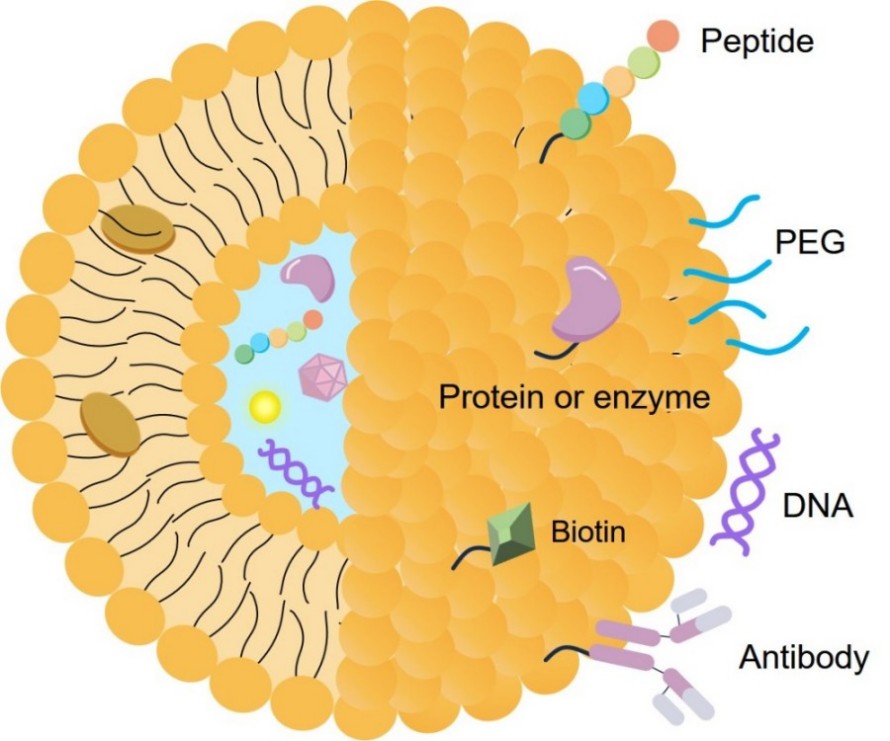
Liposomes are assembled from a diverse array of lipid materials, each serving a distinct structural or functional purpose. Understanding the raw materials is the first step in mastering formulation.
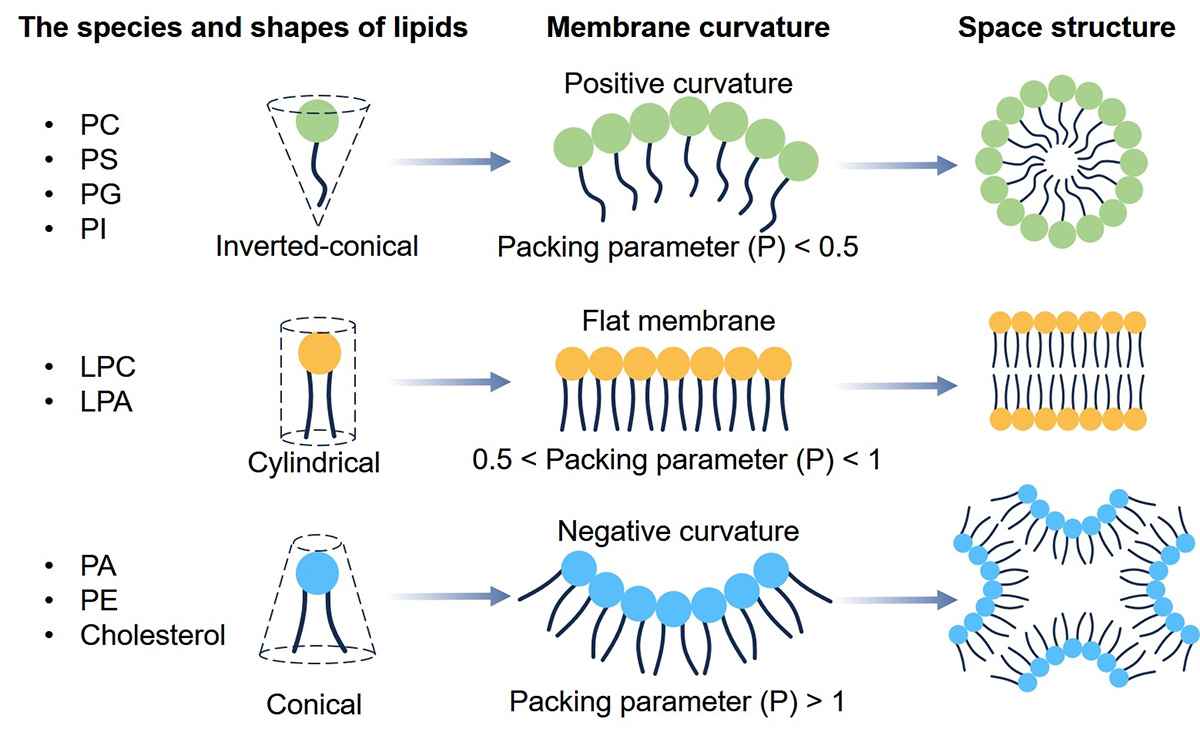 Fig.2 Space structures of different phospholipids.
-
Base Phospholipids: The primary scaffolding of the vesicle. These can be natural (e.g., Egg PC, Soy PC), which are cost-effective but contain mixed fatty acid chains, or synthetic (e.g., DSPC, POPC). Synthetic lipids offer higher purity and defined fatty acid chains, which are critical for reproducible pharmaceutical production and precise control over membrane properties.
-
Sterols: Cholesterol is the most common sterol additive. It acts as a "mortar" within the bilayer, reducing permeability to water-soluble payloads and preventing the leakage of encapsulated drugs.
-
Functional Lipids:
-
PEG-Lipids: Polyethylene glycol-conjugated lipids (e.g., DSPE-PEG2000) create a steric barrier that prevents opsonization and clearance by the immune system, extending circulation time.
-
Cationic Lipids: Positively charged lipids (e.g., DOTAP, ALC-0315) are essential for encapsulating negatively charged nucleic acids (mRNA, siRNA) through electrostatic interactions.
-
Anionic Lipids: Negatively charged lipids (e.g., DSPG, PS) mimic cellular membranes and facilitate macrophage uptake or provide formulation stability.
The Strategic Role of Lipid Selection
The choice of lipids is not merely structural; it is functional. The physicochemical properties of the phospholipid bilayer directly dictate the liposome's behavior in vivo.
-
Phase Transition Temperature (Tm): The "melting" point of the lipid bilayer is a critical design parameter. Lipids with long, saturated acyl chains (e.g., DSPC, DPPC) create rigid bilayers with a high Tm, ideal for sustained drug release and stability in the blood. Conversely, unsaturated lipids (e.g., DOPC) form fluid bilayers with lower Tm, often used for rapid membrane fusion or topical applications.
-
Membrane Fluidity & Permeability: Cholesterol plays a pivotal role as a membrane stabilizer. By filling the molecular voids between phospholipid chains, cholesterol modulates membrane fluidity, significantly reduces permeability to water-soluble drugs, and prevents premature leakage in the presence of serum proteins.
-
Surface Charge & Stealth Properties: The inclusion of charged lipids (e.g., cationic DOTAP for RNA binding) or PEGylated lipids is essential for function. PEGylation creates a hydration shell that effectively masks the liposome from the immune system (Reticuloendothelial System or RES), extending circulation half-life.
Analytical Methodologies for Lipid Profiling
Confirming that the final formulation matches the theoretical design requires high-resolution analytical techniques. Standard methods include:
-
Chromatographic Separation (HPLC/UPLC): The gold standard for separating lipid species based on polarity and headgroup charge. When coupled with detectors like ELSD (Evaporative Light Scattering Detector) or CAD (Charged Aerosol Detector), it allows for universal quantification of lipids that lack UV absorbance.
-
Mass Spectrometry (LC-MS/MS): Provides definitive structural identification. It is indispensable for verifying the molecular weight of synthetic lipids and detecting trace levels of impurities or degradation byproducts.
-
Nuclear Magnetic Resonance (NMR): 31P-NMR is a powerful tool for analyzing the structural organization of phospholipids, distinguishing between lamellar (bilayer) phases and non-lamellar (micellar or hexagonal) phases which indicates vesicle integrity.
Advanced Liposome Composition Profiling Solutions
Creative Biolabs offers a modular suite of analysis services designed to convince regulators and investors of your formulation's quality. We utilize a multi-dimensional platform to characterize every chemical facet of your system.
-
Lipid Quantification: High-precision HPLC-ELSD and LC-MS/MS analysis to determine the exact concentration of PC, PG, PE, Cholesterol, and cationic lipids.
-
Degradation Analysis: Ultra-sensitive detection of hydrolysis products (Lysophospholipids) and oxidative byproducts to assess formulation stability.
-
Surface Chemistry: Verification of PEGylation density and ligand conjugation efficiency (e.g., antibodies, peptides) for active targeting systems.
-
Fatty Acid Profiling: GC-MS derivation to analyze acyl chain saturation levels and distribution.
Workflow
Applications of Liposome Analysis in Modern Research
Our high-resolution composition analysis is pivotal across various stages of drug development:
-
Generic Drug Development: Demonstrating bioequivalence for complex generics by proving qualitative and quantitative sameness.
-
Gene Therapy Optimization: Fine-tuning the ratio of ionizable cationic lipids to helper lipids in Lipid Nanoparticles (LNPs) to maximize mRNA transfection efficiency.
-
Vaccine Stability Studies: Monitoring the chemical stability of adjuvant-containing liposomes under stress conditions (thermal cycling, pH shifts).
-
Targeted Oncology: Verifying the successful conjugation of targeting ligands to the liposome surface to ensure tumor-specific delivery.
Why Choose Creative Biolabs for Composition Analysis?
-
Deep Domain Expertise: With over 20 years in lipid biochemistry, we understand the nuances of membrane thermodynamics and can interpret complex lipidomic data better than generalist CROs.
-
Advanced Instrumentation: Our facility is equipped with state-of-the-art Q-TOF MS, HPLC-CAD, and 31P-NMR systems specifically calibrated for lipid analysis.
-
Customizable Protocols: We do not use a "one-size-fits-all" approach. We adapt extraction and detection methods based on your specific lipid blend and payload.
-
Rapid Turnaround: We offer expedited timelines for critical R&D phases without compromising analytical precision.
At Creative Biolabs, we are dedicated to advancing the field of nanomedicine through precision analytics. Our liposome composition analysis service provides the critical data backbone for your research, ensuring that your lipid-based drug delivery systems are stable, consistent, and effective. By partnering with us, you gain access to a team of experts committed to solving your toughest formulation challenges.
Related Services
FAQs
How much sample do you need for a full composition analysis?
Typically, we require 200–500 µL of liposomal suspension at a concentration of at least 1-5 mg/mL total lipid. For lyophilized powders, 1-2 mg is usually sufficient.
Can you analyze complex Lipid Nanoparticles (LNPs) with ionizable lipids?
Absolutely. We have specialized LC-MS/MS methods developed specifically for separating and quantifying proprietary ionizable lipids used in modern RNA delivery systems.
Can you detect degradation of the payload as well?
While this specific service focuses on lipid composition, we can combine it with our payload analysis services to provide a holistic view of formulation stability.

For Research Use Only. Not For Clinical Use