Custom PEGylated Lipid Synthesis Service
Background Our Services Workflow Applications Why Choose Us Related Services FAQs
In the sophisticated realm of lipid-based drug delivery, the stability and pharmacokinetics of your formulation are often dictated by the quality of a single component: the PEGylated lipid. These specialized excipients are the "stealth" engineers of the nanoparticle world, essential for preventing aggregation and evading immune surveillance. Creative Biolabs offers a premier PEGylated Lipids Synthesis Service, delivering high-purity, custom-engineered lipids that bridge the gap between benchtop discovery and clinical reality. As a leader in lipid chemistry, Creative Biolabs combines precision synthesis with deep formulation expertise to ensure your liposome and Lipid Nanoparticles (LNPs) achieve optimal bioavailability and therapeutic impact.
Understanding PEGylated Lipids in Nanomedicine
Comprehensive Portfolio of PEG-Lipid Conjugates
PEGylated lipids serve as the critical interface between a lipid nanoparticle and the complex biological environment. Acting as the "stealth" coating of the formulation, they are amphiphilic conjugates designed with three distinct functional domains, each playing a vital role in the particle's lifecycle:
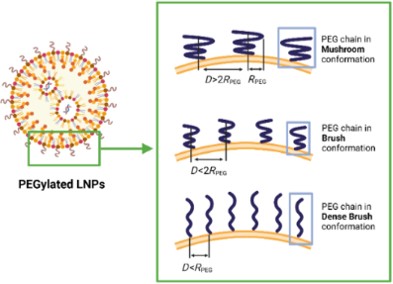 Fig. 1 Structural conformations of PEG on lipid nanoparticle surfaces.1,3
-
The Hydrophilic PEG Polymer: Typically consisting of polyethylene glycol (MW 1000–5000 Da), this domain extends outward from the particle surface into the aqueous medium. It creates a dense hydration shell that provides steric stabilization, physically preventing the adsorption of serum proteins (opsonins) and inhibiting recognition by the immune system (RES).
-
The Chemical Linker: The bridge connecting the polymer to the lipid anchor. This region defines the stability of the conjugate. While standard carbamate linkages offer robustness, cleavable linkers (e.g., ester, hydrazone, or disulfide bonds) can be engineered to degrade in response to specific stimuli (such as endosomal pH), facilitating the release of the PEG coat to aid cellular uptake.
-
The Hydrophobic Lipid Anchor: Composed of fatty acid chains (such as dimyristoyl or distearoyl) or sterols, this domain anchors the molecule into the lipid bilayer. The length and saturation of these chains dictate the "shedding rate"—how rapidly the PEG-lipid diffuses out of the LNP. Short anchors (e.g., C14 in DMG) allow for rapid shedding to promote transfection, while long anchors (e.g., C18 in DSPE) ensure prolonged circulation.
By precisely tuning these three components, researchers can engineer the surface properties of their delivery systems to match their specific therapeutic goals.
Common Categories of PEGylated Lipids
Functionalized PEG-Lipids
Lipids bearing reactive terminal groups (Maleimide, NHS, Amine, Azide, DBCO) used for bioconjugation with ligands, antibodies, or peptides.
Cleavable PEG-Lipids
Designed with sensitive linkers (pH-sensitive, reduction-sensitive) that detach the PEG chain in response to environmental stimuli, facilitating endosomal escape.
Branched PEG-Lipids
Feature multi-arm PEG structures to increase surface coverage density and steric hindrance.
Cholesterol-PEG Conjugates
Use cholesterol as the hydrophobic anchor, offering different membrane insertion dynamics compared to phospholipid anchors.
Advanced PEG-Engineered Nanocarrier Systems
PEGylated nanoparticles refer to any nanoscale drug delivery system that has been surface-engineered with PEG chains to improve its physicochemical and biological properties. This "PEGylation" process is a gold standard in nanomedicine for overcoming biological barriers.
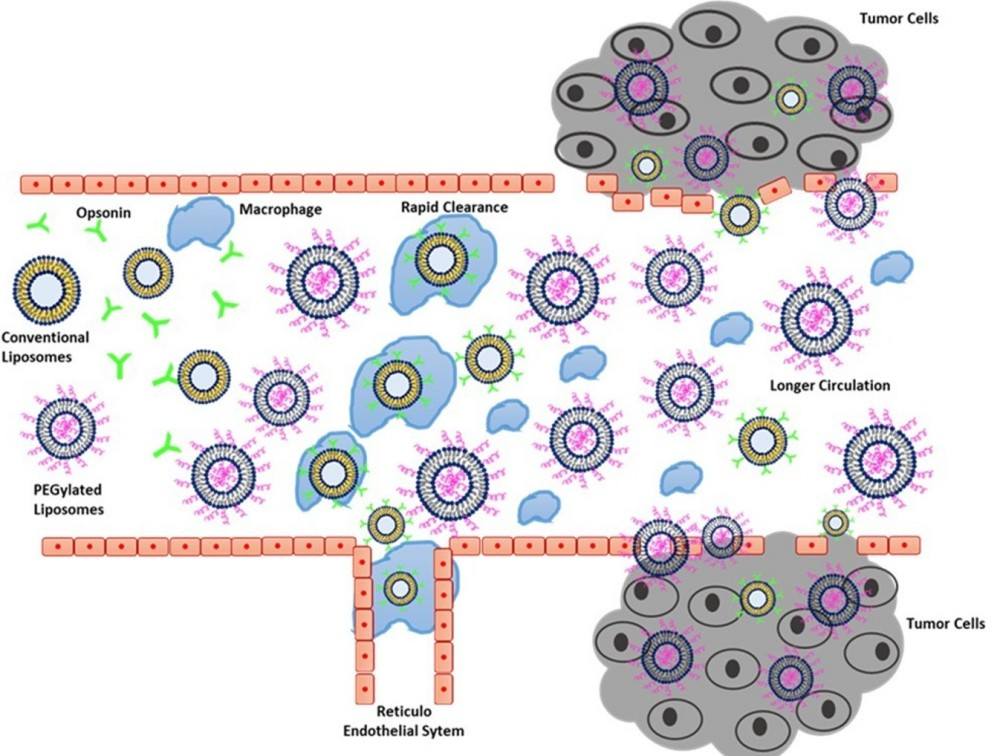 Fig. 2 Conventional vs long circulating liposomes and its effect on macrophage clearance.2,3
|
Nanoparticle Type
|
Description
|
Key Characteristics
|
|
PEGylated Liposomes
|
Vesicular structures with a lipid bilayer surface modified by PEG-lipids.
|
High drug loading (hydrophilic & hydrophobic); clinically proven.
|
|
Lipid Nanoparticles (LNPs)
|
Solid lipid core structures stabilized by a surfactant layer including PEG-lipids.
|
Ideal for nucleic acid delivery (mRNA, siRNA); key technology for COVID-19 vaccines.
|
|
PEGylated Micelles
|
Self-assembled colloidal particles formed from amphiphilic block copolymers or lipid conjugates.
|
Small size (<100nm); excellent for solubilizing hydrophobic drugs.
|
|
PEGylated Nanoemulsions
|
Oil-in-water dispersions stabilized by PEG-surfactants.
|
High stability; used for delivering lipophilic active pharmaceutical ingredients (APIs).
|
Strategic Biological Functions of PEG-Lipids
The incorporation of PEG-lipids serves multiple critical functions in the lifecycle of a nanoparticle, determining its fate from injection to cellular uptake:
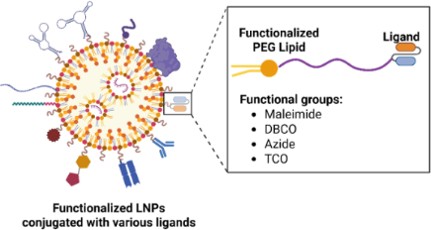 Fig. 3 Functionalized PEG lipids incorporated into LNPs to enable surface conjugation of diverse ligands for receptor-mediated targeted delivery.1,3
-
Ligand Coupling for Active Targeting Functionalized PEG-lipids act as anchors for attaching targeting moieties (such as monoclonal antibodies, peptides, or aptamers). This transforms a passive vehicle into an active targeting system capable of homing in on specific cell surface receptors (e.g., HER2 on cancer cells).
-
Steric Stabilization and the Stealth Effect The PEG chains form a hydration shell around the nanoparticle, creating a steric barrier. This prevents the adsorption of serum proteins (opsonins) that typically mark particles for clearance, thereby evading the Reticuloendothelial System (RES).
-
Prolonging Systemic Circulation By reducing immune clearance, PEG-lipids significantly increase the plasma half-life of the therapeutic, increasing the probability of accumulation in target tissues (such as tumors) via the Enhanced Permeability and Retention (EPR) effect.
-
Preventing Aggregation PEG-lipids provide repulsive forces between nanoparticles, preventing them from fusing or aggregating during storage and administration, which ensures a consistent particle size distribution.
-
Regulating Cellular Uptake and Endosomal Escape The density and chain length of PEG-lipids modulate how the particle interacts with cell membranes. "Sheddable" PEG-lipids can be designed to drop off after circulation, revealing the core lipid to facilitate cellular uptake and payload release.
Custom Synthesis and Molecular Engineering Capabilities
Creative Biolabs provides a "turnkey" solution for lipid synthesis, moving beyond standard catalog items to offer bespoke chemical engineering. We focus on enabling your specific delivery mechanism, whether it requires rapid shedding, permanent shielding, or active targeting.
-
Custom Linker Chemistry: Design of cleavable (pH-sensitive, reductive-sensitive) linkers to resolve the stability-uptake paradox.
-
Diverse Lipid Anchors: Synthesis of DMG, DSPE, DOPE, and novel proprietary lipid backbones.
-
Functionalization: Terminal modification with Maleimide, NHS, Azide, DBCO, or Biotin for ligand conjugation.
-
LNP Formulation Service: Full-service encapsulation of RNA/DNA payloads using our high-quality lipids into ready-to-use nanoparticles.
-
Liposome Extrusion & Sizing: Generation of uniform liposomes with precise size control (50nm-200nm) for research applications.
-
Analytical Characterization: Comprehensive testing of lipid nanoparticles, including size (DLS), Zeta potential, and encapsulation efficiency (EE%).
Workflow
Enabling Breakthroughs in Genomic and Precision Medicine
-
Next-Generation mRNA Vaccines Optimizing the "shedding" rate of PEG-lipids to balance systemic stability with efficient intracellular protein expression.
-
Targeted Gene Editing via CRISPR/Cas9 Using functionalized PEG-lipids to conjugate targeting ligands (e.g., antibodies or aptamers), directing large RNP payloads to specific tissue types.
-
Oncology & Chemotherapeutic Delivery Enhancing the circulation time of liposomal chemotherapy (e.g., Doxorubicin) to maximize accumulation in tumor microenvironments.
-
Advanced Diagnostic Imaging Stabilizing contrast agent-loaded liposomes for prolonged imaging windows and higher resolution in MRI or CT scans.
Why Choose Creative Biolabs?
-
Precision Purity: We implement rigorous purification protocols to remove impurities like N-oxides, ensuring minimized immunogenicity.
-
Analytical Rigor: Every batch is tested via HPLC and LC-MS to confirm structure, ratio, and polydispersity.
-
Flexibility: We offer both standard catalog lipids and fully custom molecular designs to fit your IP strategy.
-
Speed to Market: Optimized synthetic routes allow us to deliver complex lipids faster than industry averages.
At Creative Biolabs, we understand that the efficacy of your therapeutic depends on the integrity of your delivery system. Our PEGylated Lipids Synthesis Service combines cutting-edge chemistry with a deep understanding of biological barriers, providing you with the high-quality tools needed to innovate. Whether you need standard excipients or novel, IP-generating molecules, we are your trusted partner in drug delivery excellence.
Related Services
FAQs
What purity levels can Creative Biolabs achieve?
Standard research-grade lipids are provided at ≥95% purity. For cGMP or sensitive applications, we can achieve ≥99% purity using advanced purification techniques to remove trace impurities.
Can you synthesize PEG-lipids with cleavable linkers?
Yes. We specialize in designing pH-sensitive, disulfide, and enzyme-cleavable linkers that allow the PEG chain to detach inside the cell, facilitating endosomal escape.
How do you control batch-to-batch consistency?
We use strictly controlled starting materials and validated synthetic routes. Every batch undergoes identical QC protocols (NMR, HPLC, MS) to ensure the polydispersity and lipid-to-PEG ratio remain constant.
What is the typical lead time for a custom synthesis project?
Simple modifications typically take 2-4 weeks. Complex custom linkers or novel lipid backbones may take 4-6 weeks depending on the chemistry involved.
References
-
Gao, Peiyang. "PEGylated lipids in lipid nanoparticle delivery dynamics and therapeutic innovation." Beilstein Journal of Nanotechnology 16.1 (2025): 1914-1930. https://doi.org/10.3762/bjnano.16.133.
-
Kalyanram, Poornima, Anu Puri, and Anju Gupta. "Understanding the stealth properties of PEGylated lipids: A mini-review." International Journal of Lipids 1.2 (2020): 1-20. https://doi.org/10.14302/issn.2835-513X.ijl-20-3457.
-
Distributed under Open Access license CC BY 4.0, without modification.

For Research Use Only. Not For Clinical Use