Lipid-Based Drug Delivery Systems in Poliomyelitis Treatment
Background Poliovirus (PV) Challenges Creative Biolabs' Solutions Workflow Published Data Related Services Resources
Are you currently facing challenges in achieving targeted delivery of therapeutics, overcoming biological barriers, or ensuring stability of sensitive agents in the context of viral infections like poliomyelitis? Creative Biolabs' lipid-based delivery systems could be your solution. Our advanced liposome and lipid nanoparticle (LNP) encapsulation technologies can help boost drug efficacy, reduce off-target effects, and optimize the delivery of vaccines and antiviral agents. We're here to help you overcome these hurdles in poliomyelitis.
Background of Poliomyelitis
Poliomyelitis, commonly known as polio, is a highly infectious disease caused by the poliovirus (PV). It mainly impacts younger kids and spreads by the respiratory and faecal–oral routes. Upon infecting, the virus replicates in the gastrointestinal or respiratory epithelium, and then spreads to other organs and tissues through the bloodstream and lymphatic system. After PV reaches the central nervous system (CNS) such as the spinal cord, it can damage motor neurons and cause acute paralytic poliomyelitis, leading to inflammation and damage to motor neurons. This damage can lead to muscle weakness and paralysis. In some severe cases, it can even result in respiratory failure or death.
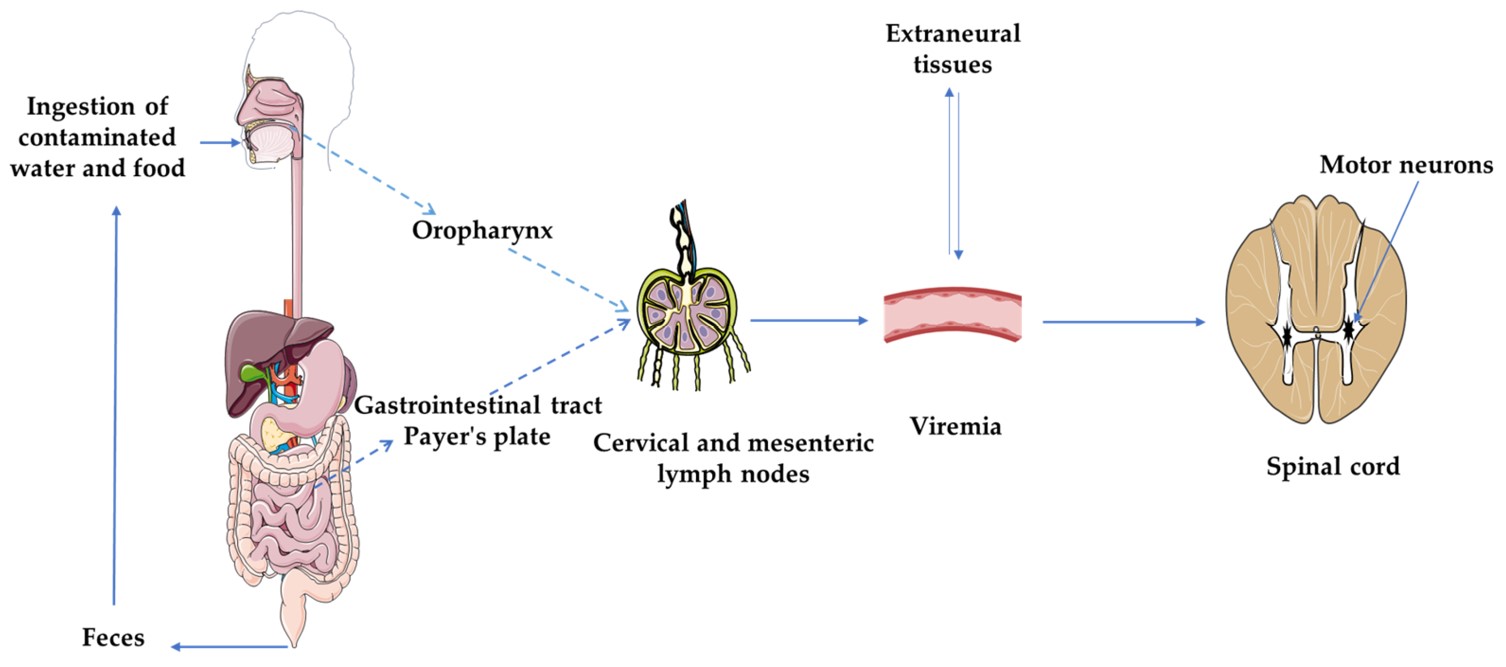 Fig. 1 Pathogenesis of poliomyelitis.1,4
Understanding Poliovirus
The PV, which causes poliomyelitis, is a highly contagious human enterovirus from the Picornaviridae family. There are three main types of wild PV: WPV1, WPV2, and WPV3. The virus has a simple structure with a protein capsid that houses the single-stranded positive-sense RNA genome of about 7.4 kb. This capsid is made up of 60 protomers, each composed of four viral proteins: VP1, VP2, VP3, and VP4. These proteins form a symmetrical, 20-sided structure that shields the viral RNA and helps the virus enter host cells. The virus enters cells by attaching to specific receptors, like the CD155 receptor, found on various cells including neurons. Once inside, the virus takes over the host cell's machinery to copy its RNA and produce viral proteins, leading to the accumulation and release of new virus particles that go on to infect other cells. This rapid process of replication and cell destruction in motor neurons is what causes the paralysis typically seen in poliomyelitis.
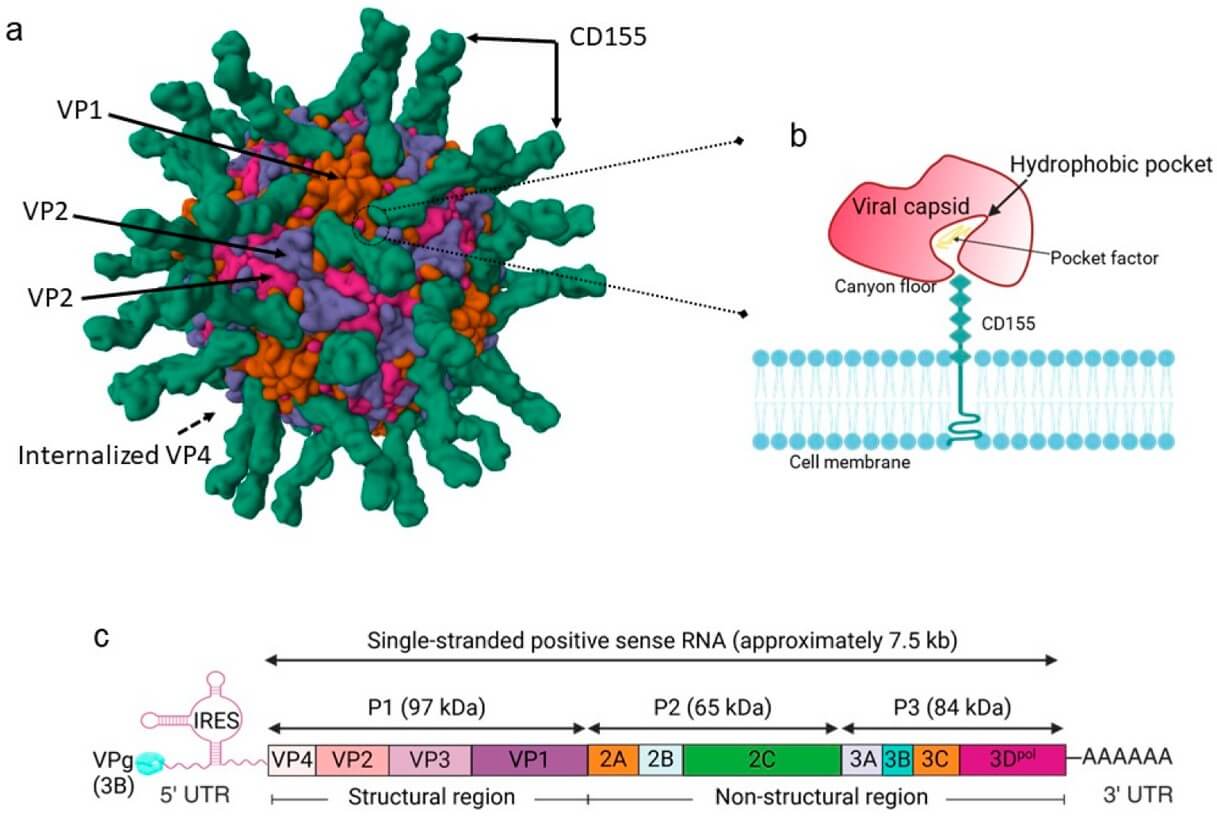 Fig. 2 PV structure and viral genome and polyprotein organization.2,4
Challenges in Poliomyelitis Treatment
Despite decades of research, several significant challenges hinder the development of effective therapeutic strategies for poliomyelitis.
-
Overcoming the Blood-Brain Barrier (BBB): The BBB protects the CNS but also restricts the entry of most therapeutic compounds, making it difficult to achieve effective drug concentrations in the spinal cord and brain where motor neurons reside.
-
Neuronal Targeting: Even if drugs reach the CNS, delivering them specifically to the affected motor neurons requires sophisticated targeting strategies.
-
Viral Variability: While the three serotypes are the main concern, genetic drift and shift can occur, potentially affecting vaccine efficacy and drug susceptibility in research contexts.
-
Drug Stability & Toxicity: Potential therapeutic agents may be unstable or toxic at the required concentrations, especially when delivered systemically.
Addressing these challenges is critical for advancing research and potentially developing treatments.
How Creative Biolabs' Lipid-Based Drug Delivery Systems Can Assist Your Project
At Creative Biolabs, our lipid-based drug delivery systems offer a sophisticated platform to overcome the inherent challenges in delivering therapeutic agents for conditions like poliomyelitis. Our expertise in liposomes, LNPs, and other nanoparticle systems enables precise control over drug release, enhanced stability of encapsulated molecules, and improved targeting capabilities.
-
Targeted Delivery to the Nervous System: We engineer delivery systems to potentially cross biological barriers, including the blood-brain barrier, which is crucial for delivering antiviral agents or gene therapies directly to infected neurons, minimizing systemic exposure and associated side effects.
-
Enhanced Therapeutic Efficacy: By encapsulating active pharmaceutical ingredients (APIs), our systems can improve drug solubility and bioavailability, ensuring more of the therapeutic agent reaches its intended site of action, leading to potentially higher efficacy at lower doses.
-
BBB Penetration: The BBB is a major obstacle for treating CNS infections like poliomyelitis. Our lipid-based drug delivery systems are engineered with properties that allow them to interact with BBB components, facilitating their passage into the CNS.
-
Improved Vaccine Stability and Immunogenicity: For prophylactic applications, lipid-based drug delivery systems (such as liposome and LNP) can serve as advanced adjuvant systems for vaccines, enhancing antigen presentation and stability, leading to more robust and long-lasting immune responses.
-
Customized Formulations: We work closely with you to design and optimize lipid-based drug delivery systems specific to their therapeutic molecules and target profiles, ensuring a bespoke solution that meets unique project requirements.
-
Small Molecule-Based Antiviral Agents: Creative Biolabs has extensive experience in developing delivery systems for small molecule-based antiviral agents. These agents can specifically target viral replication processes, such as inhibiting viral proteases or polymerases.
|
Drug Type
|
Small Molecule-Based Antiviral Agents
|
Characteristics
|
|
Capsid-Binding Agents
|
Pleconaril
|
High affinity for viral capsid, broad-spectrum antiviral activity, effective in inhibiting PV replication in vitro and in vivo.
|
|
Pirodavir
|
Inhibits replication of PV, less effective against serotype 1 PV.
|
|
Protease 3C Inhibitors
|
Rupintrivir
|
Irreversible pan-3C protease inhibitor, broad in vitro antiviral activities against enteroviruses and echoviruses.
|
|
Imocitrelvir
|
Improved pharmacokinetic properties, good oral bioavailability, active against pocapavir-resistant variants.
|
|
Protein 2C Inhibitors
|
Guanidine hydrochloride
|
Reversible 2C inhibitor, it undermines PV replication by preventing 2C and its precursor P2 from binding to membranes.
|
|
Protein 3A Inhibitors
|
Enviroxime
|
A benzimidazole derivative, it blocks replication of three PV serotypes by targeting at the 3A coding region.
|
|
Polymerase 3Dpol Inhibitors
|
Ribavirin
|
Nucleoside inhibitor, acts as ambiguous purine base inhibitor, resulting in lethal mutagenesis and blocking progeny virus generation.
|
Workflow for Lipid-Based Drug Delivery Systems Development for Poliomyelitis
Published Data
This article explores the mechanism by which poliovirus, the causative agent of poliomyelitis, induces significant membrane rearrangements within infected cells. It reveals that the poliovirus 3AB protein, a single viral protein, is sufficient to induce the formation of double-membraned liposomes by invaginating purified single-membraned liposomes and intracellular membranes. This phenomenon closely mimics the double-membraned vesicles observed during actual poliovirus infection, which serve as the site for viral RNA replication. The study provides compelling data supporting this membrane remodeling.
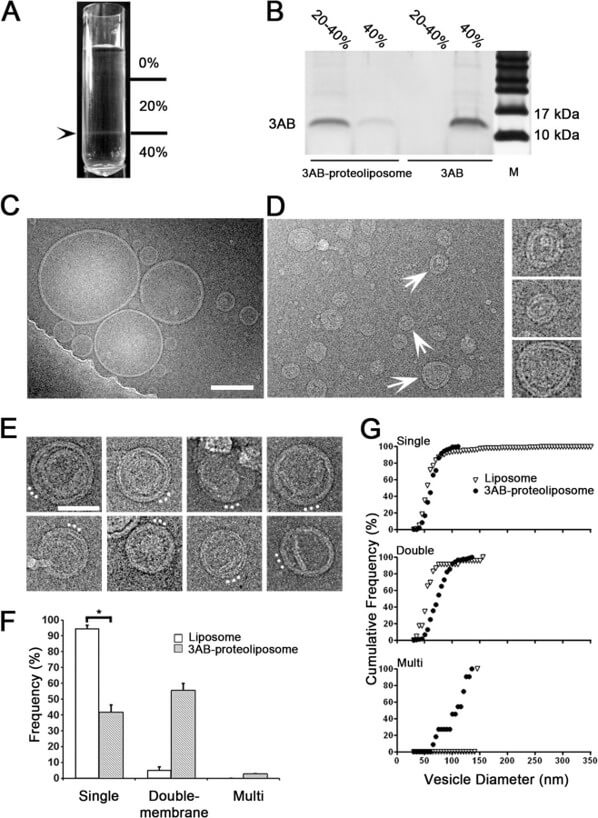 Fig. 3 Effect of 3AB protein on reconstitution of synthetic liposomes by direct mixing and dialysis.2,3
Creative Biolabs stands as a leader in innovative drug delivery solutions, with over two decades of dedicated expertise in the field of biochemistry and biopharmaceutical development. Our lipid-based drug delivery systems are not merely a service; they are a testament to our commitment to scientific excellence and client success. We invite you to explore the potential of our lipid-based drug delivery systems and contact us to discuss how we can collaborate on your poliomyelitis research project. Explore our products and services today and see how we can support your research goals.
Related Services
Resources
Podcast
References
-
Mbani, Chaldam Jespère, et al. "The fight against poliovirus is not over." Microorganisms 11.5 (2023): 1323. doi:10.3390/microorganisms11051323.
-
Xie, Hang, et al. "Antiviral Development for the Polio Endgame: Current Progress and Future Directions." Pathogens 13.11 (2024): 969. doi:10.3390/pathogens13110969.
-
Wang, Jing, et al. "Double-membraned liposomes sculpted by poliovirus 3AB protein." Journal of Biological Chemistry 288.38 (2013): 27287-27298. doi:10.1074/jbc.M113.498899.
-
Distributed under Open Access license CC BY 4.0, without modification.

For Research Use Only. Not For Clinical Use