
Measles Virus-Based Oncolytic Cancer Vaccine Preclinical Design Services
Creative Biolabs delivers a fully integrated preclinical platform for designing and engineering measles virus (MeV)-based vaccines for cancer immunotherapy. MeV vaccine strains—derived from the extensively characterized Edmonston lineage and related attenuated variants—possess a unique combination of features that make them exceptionally suited for oncolytic virotherapy and tumor antigen delivery: a well-documented half-century safety record from over one billion vaccinated individuals, inherent tumor selectivity driven by defects in the antiviral interferon (IFN) pathway, cytoplasmic RNA replication with zero risk of genomic integration, and a versatile reverse genetics system enabling transgene insertion up to 6 kb of additional coding capacity. Our service encompasses the complete preclinical development arc, spanning the two principal MeV-based vaccination strategies—live replicating oncolytic MeV that mediates direct tumor lysis while releasing tumor-associated antigens in situ, and non-replicating or single-cycle MeV vectors engineered to deliver heterologous tumor antigens to professional antigen-presenting cells. From MeV backbone engineering and receptor retargeting through production scale-up, in vitro potency characterization, and in vivo efficacy assessment in syngeneic and xenograft tumor models, our multidisciplinary team provides an end-to-end solution tailored to your cancer indication and translational objectives.
Why Measles Virus? The Built-In Advantages of an Oncolytic Vaccine Platform
MeV: A Paramyxovirus with Unrivaled Safety Credentials
Measles virus is a non-segmented, negative-sense, single-stranded RNA virus of the Paramyxoviridae family. Its 16 kb genome encodes six structural proteins (N, P, M, F, H, L) and two non-structural proteins (C, V). The MeV Edmonston vaccine strain and its derivatives—including Schwarz, Moraten, Zagreb, and CAM-70—have been administered to over one billion people worldwide, establishing the most extensive human safety dataset of any live-attenuated viral platform. Critically, this safety record extends across diverse immunocompromised populations, providing a unique regulatory foundation for cancer-directed applications. MeV enters target cells via three known receptors—CD46 (ubiquitous on nucleated cells, overexpressed in many cancers), SLAM/CD150 (immune cells), and nectin-4/PVRL4 (epithelial cells, frequently upregulated in carcinomas)—creating a natural tropism profile that overlaps significantly with malignant tissue.
MeV can be deployed either as a live replicating oncolytic virus that selectively lyses tumor cells while releasing tumor antigens for cross-priming, or as a replication-defective antigen-delivery vector engineered for targeted expression of heterologous tumor-associated or neoantigen cassettes in professional antigen-presenting cells.
- Core Preclinical Challenges We Address:
- Neutralizing anti-MeV antibodies from prior vaccination limiting systemic delivery.
- Engineering MeV envelope glycoproteins (H/F) to retarget tumor-specific receptors.
- Balancing oncolytic potency with genetic stability for multi-transgene vectors.
- Quantifying MeV-induced immunogenic cell death (ICD) and antigen spread in vivo.
MeV vs. Other Oncolytic Viral Platforms: Where MeV Excels
| Key Attribute | Other Oncolytic Viruses (HSV-1, Adenovirus, Vaccinia) | Measles Virus (MeV) Vaccine Strains |
|---|---|---|
| Human Safety Record | Limited populations; HSV-1 and VACV can cause disease in immunocompromised. | >1 billion doses; 50-year pediatric vaccination history. |
| Genomic Integration Risk | Adenovirus: low but theoretical; HSV-1: episomal latency in neurons. | Zero integration risk: cytoplasmic RNA only. |
| Inherent Tumor Selectivity | Relies heavily on engineered promoters or deletion of virulence genes. | Natural selectivity via IFN-defective tumor pathway. |
| Transgene Capacity & Stability | HSV-1: ~30 kb (but complex); Adenovirus: ~8 kb (gutless variants larger but harder to produce). | ~6 kb additional; highly stable with no recombination. |
End-to-End MeV Vaccine Engineering Service Modules
Our preclinical MeV vaccine services are organized into six interconnected modules, each customizable to your cancer antigen targets, viral backbone preferences, and in vivo model requirements. Choose the full pipeline or select individual modules to complement your existing workflow.
MeV Backbone & Modality Selection
Strategic evaluation and backbone selection matched to your tumor indication and therapeutic goal.
- Strain Screening: Comparative analysis of Edmonston, Schwarz, Moraten, and Hu191 backbones.
- Modality Decision: Oncolytic replicating virus vs. replication-defective antigen-delivery vector.
- Receptor Strategy: Native tropism exploitation (CD46/SLAM/nectin-4) vs. engineered retargeting.
- Biosafety Assessment: Pre-existing immunity profiling and risk stratification for the target indication.
Reverse Genetics & Recombinant MeV Construction
Full spectrum genetic engineering using established MeV reverse genetics systems for customized vaccine design.
- Full-Length cDNA Cloning: Assembly of MeV antigenomic plasmids with desired modifications.
- Transgene Cassette Design: Codon-optimized tumor antigen, cytokine, or reporter gene insertion.
- Envelope Engineering: H/F glycoprotein modification for retargeting, stealth, or fusogenic activity tuning.
- Virus Rescue: Co-transfection with helper plasmids (N, P, L) in qualified producer cell lines.
MeV Propagation, Purification & Titration
Scalable production of high-titer MeV stocks with rigorous quality control throughout the process.
- Cell Substrate Selection: Vero, MRC-5, or tumor cell line-based propagation optimization.
- Upstream Process: Multi-step amplification from rescue seed to bulk production harvest.
- Downstream Purification: Tangential flow filtration, sucrose cushion, or iodixanol gradient ultracentrifugation.
- Titer Determination: TCID50 by limiting dilution on Vero-SLAM cells with syncytium enumeration.
In Vitro Oncolytic & Expression Validation
Comprehensive characterization of oncolytic potency, transgene expression, and tumor cell tropism.
- Cytotoxicity Profiling: MTS/MTS-based viability assays across a panel of cancer cell lines.
- Syncytium Quantitation: Imaging-based measurement of MeV F-protein-mediated cell-cell fusion.
- Transgene Expression: Flow cytometry and ELISA quantification of encoded antigens or cytokines.
- Replication Kinetics: Single-step and multi-step growth curves across permissive and semi-permissive lines.
Immunogenicity & ICD Assessment
Multi-parametric evaluation of MeV-induced antitumor immunity and immunogenic cell death markers.
- ICD Biomarker Panel: Surface calreticulin, HMGB1 release, ATP secretion, and HSP70/90 exposure.
- DC Maturation: Co-culture assays measuring CD80/86 upregulation and IL-12 secretion.
- T Cell Priming: Antigen-specific ELISpot and intracellular cytokine staining (IFN-γ, granzyme B).
- Innate Activation: Type I IFN, ISG expression, and NK cell activation profiling.
In Vivo Efficacy & Biodistribution
Preclinical tumor model testing with comprehensive pharmacokinetic and pharmacodynamic readouts.
- Xenograft Models: Subcutaneous and orthotopic human tumor xenografts in immunodeficient hosts.
- Syngeneic Models: Immunocompetent murine tumor models for assessing vaccine-induced immunity.
- Biodistribution: qRT-PCR-based tissue viral load quantification and organ tropism mapping.
- Survival & Pathology: Kaplan-Meier analysis, tumor-infiltrating lymphocyte (TIL) profiling, and histopathology.
Streamlined MeV Vaccine Preclinical Development Workflow
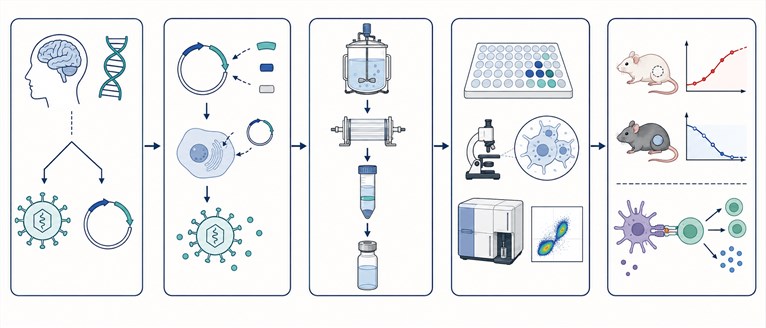
Phase 1 — MeV Backbone Selection & Antigen Strategy Design
We begin by evaluating your tumor target profile and selecting the optimal MeV vaccine strain (Edmonston B, Schwarz, Moraten, or Hu191 lineage). The modality choice—live replicating oncolytic MeV vs. replication-defective antigen-delivery vector—is guided by your tumor's CD46/nectin-4 expression status, the host's anti-MeV serostatus, and the desired immune mechanism (direct lysis vs. antigen cross-presentation). At this stage we also design the transgene expression cassette layout, including promoter placement, additional transcription units (ATUs), and co-stimulatory co-expression strategies.
Core Enabling Technologies for MeV Vaccine Engineering
Why Choose Creative Biolabs for MeV Vaccine Development?
Our team has hands-on experience with the full spectrum of MeV vaccine strains (Edmonston, Schwarz, Moraten, Hu191) and established reverse genetics protocols for virus rescue, transgene insertion, and envelope retargeting.
Unlike platforms focused on a single modality, we support both live replicating oncolytic MeV and replication-defective antigen-delivery vectors, allowing you to compare strategies head-to-head or combine complementary approaches.
From viral genome sequence verification through ICD biomarker quantification and in vivo tumor model testing, we deliver a thoroughly characterized MeV vaccine candidate with a comprehensive data package ready for translational decision-making.
Our six service modules are independently selectable. Whether you need only H/F envelope retargeting for an existing MeV backbone or the full pipeline from antigen design through in vivo efficacy, we adapt to your project stage.
Research Insight: MeV Oncolytic Virotherapy Drives Durable Antitumor Immunity
Key Findings from Preclinical MeV Cancer Vaccine Studies
A growing body of literature underscores the dual value of MeV as both a direct oncolytic agent and a versatile vaccine vector platform. Engineered MeV vaccine strains have demonstrated robust antitumor activity across solid and hematologic malignancies, with evidence of durable immunologic memory.
-
Comprehensive Oncolytic Mechanism: Engeland and Ungerechts (2021) reviewed the multifaceted antitumor activity of oncolytic MeV, documenting that direct tumor lysis is complemented by MeV-induced immunogenic cell death, which releases damage-associated molecular patterns (DAMPs) and tumor antigens that prime dendritic cells, creating an in situ vaccination effect.1
-
Neutralization-Evading MeV Design: Muñoz-Alía et al. (2021) engineered MeV-Stealth, a fully retargeted oncolytic MeV in which the H and F glycoproteins were replaced with CDV counterparts bearing a CD46-specific scFv. This construct resisted neutralization by measles-immune human serum while maintaining potent oncolysis, addressing the central barrier of anti-MeV pre-existing immunity.2
-
MeV as a Universal Vaccine Platform: Ebenig et al. (2022) systematically characterized the versatility of live-attenuated MeV as a recombinant vaccine vector, demonstrating its capacity to stably accommodate diverse heterologous antigens—from viral glycoproteins to tumor-associated antigens—while inducing robust humoral and cellular immunity, supported by decades of pediatric safety data.3
-
Oncolytic rMV-Hu191 Triggers Pyroptosis: Wu et al. (2023) demonstrated that the recombinant MeV Hu191 strain exerts a potent oncolytic effect against esophageal squamous cell carcinoma via caspase-3/GSDME-mediated pyroptosis, a highly immunogenic form of cell death that releases pro-inflammatory cytokines and tumor antigens, thereby amplifying the downstream antitumor immune response.4
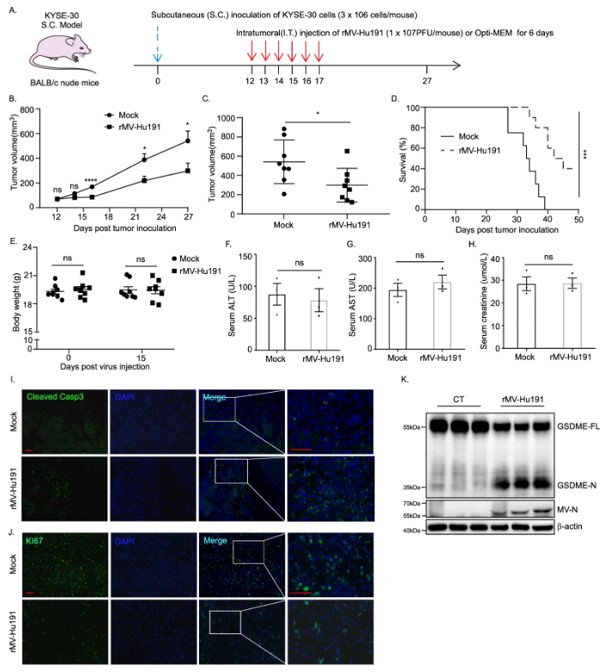
Fig.1 rMV-Hu191 induces tumor regression in an ESCC xenograft mouse model.3,5