
p16INK4A Cancer Vaccine Construction for HPV-Driven Tumors
Creative Biolabs offers a dedicated preclinical platform for the development of p16INK4A-based cancer vaccines, targeting one of the most paradoxical yet promising tumor-associated antigens in oncology. Encoded by the CDKN2A gene, p16INK4A is a cyclin-dependent kinase inhibitor that regulates the G1-S cell cycle checkpoint. While inactivated in approximately half of all human cancers through deletion, mutation, or promoter hypermethylation, p16INK4A becomes strikingly overexpressed in HPV-associated malignancies—including cervical, oropharyngeal, and anal carcinomas—where it serves as a well-validated surrogate biomarker. This overexpression is driven by the functional inactivation of the retinoblastoma protein (pRb) by HPV E7 oncoprotein, leading to a compensatory feedback loop. Importantly, spontaneous humoral and cellular immune responses against p16INK4A have been documented in patients with HPV-associated cancers but not in healthy individuals, providing a compelling immunological rationale for vaccine development. Our platform addresses the unique challenges of targeting a self-antigen—breakthrough of immune tolerance, epitope optimization for broad HLA coverage, and formulation strategies that amplify immunogenicity without provoking autoimmunity—delivering preclinical candidates tailored for HPV-driven and p16INK4A-overexpressing tumor indications.
Why p16INK4A Is a Compelling Vaccine Target
A Self-Antigen with Tumor-Restricted Immunogenicity
Unlike neoantigens that require individualized discovery, p16INK4A is a shared tumor-associated antigen expressed across multiple HPV-driven cancer types. Its near-absence in normal adult tissues minimizes the risk of on-target, off-tumor toxicity. In high-risk HPV-related cancers, p16INK4A overexpression is not merely correlative—it reflects the disruption of a central tumor-suppressive pathway, making antigen loss through immune escape less likely without compromising tumor fitness.
Oncogene-induced senescence (OIS) is a potent barrier to malignant transformation, and p16INK4A is a key effector of this program. Restoring or exploiting p16INK4A-mediated senescence in preclinical models has demonstrated the capacity to halt uncontrolled proliferation, reinforcing the therapeutic logic of p16INK4A-directed vaccines.
- Core Preclinical Challenges We Address:
- Breaking immune tolerance to a self-antigen via heteroclitic epitope design.
- Achieving dual CD4+ and CD8+ T cell activation across diverse HLA haplotypes.
- Selecting vaccine platforms that preserve p16INK4A antigen conformation.
- Quantifying antigen-specific T cell responses in vitro and in vivo with functional readouts.
Neoantigen vs. p16INK4A Shared Antigen Vaccine Strategy
| Key Comparison | Personalized Neoantigen Vaccines | p16INK4A Shared Antigen Vaccines |
|---|---|---|
| Patient Coverage | Individualized per patient; limited scalability. | Off-the-shelf for all HPV+ p16INK4A-overexpressing cancers. |
| Antigen Discovery Timeline | Requires WES/RNA-seq per patient; weeks to months. | Pre-identified target; no per-patient sequencing needed. |
| Immune Tolerance Risk | Low (foreign neoepitopes). | Manageable with heteroclitic peptides and adjuvant optimization. |
| Antigen Loss Escape | Neoantigen loss variants documented. | p16INK4A loss disrupts OIS barrier, reducing tumor fitness. |
End-to-End p16INK4A Cancer Vaccine Service Packages
Our preclinical services are structured into modular, customizable packages. All modules can be fully tailored—from epitope selection criteria to vaccine platform choice and adjuvant composition—to match your research objectives and target indication.
Epitope Mapping & Selection
Systematic identification of immunodominant p16INK4A epitopes with broad HLA coverage.
- In Silico Prediction: HLA class I and class II binding prediction across common alleles.
- Heteroclitic Design: Modified epitopes with enhanced MHC affinity to break self-tolerance.
- Conservation Analysis: Epitope selection based on sequence conservation across p16INK4A isoforms.
- Tumor Selectivity Screen: Confirmation of epitope presentation preferentially on p16INK4A-overexpressing tumors.
Vaccine Construct Design & Synthesis
Multi-platform construct engineering optimized for p16INK4A antigen delivery and processing.
- Peptide Vaccines: Synthetic long peptide (SLP) pools spanning immunodominant regions.
- DNA/RNA Vaccines: Codon-optimized constructs with enhanced expression and stability.
- Vector-Based Vaccines: Recombinant viral vectors encoding p16INK4A epitope strings.
- DC-Based Vaccines: Dendritic cell loading with p16INK4A peptides or mRNA.
Adjuvant Screening & Formulation
Strategic adjuvant pairing to overcome self-tolerance and drive robust Th1-polarized immunity.
- Adjuvant Library: TLR agonists, saponin-based adjuvants, and emulsion platforms.
- Combinatorial Screening: Multi-adjuvant synergy testing in murine immunization models.
- Delivery Optimization: Nanoparticle encapsulation and emulsion formulation for enhanced antigen uptake.
- Stability Testing: Accelerated and real-time stability assessment of final formulations.
Immunogenicity & Potency Evaluation
Multi-level immune profiling to validate functional anti-p16INK4A T cell responses.
- Cellular Immunity: ELISpot (IFN-γ), intracellular cytokine staining, and proliferation assays.
- Humoral Immunity: Anti-p16INK4A antibody titer and isotype profiling.
- Cytotoxicity: Antigen-specific CTL killing assays against p16INK4A-expressing target cells.
- In Vivo Efficacy: Tumor challenge and regression studies in syngeneic and humanized models.
Combination Strategy Design
Rational design of vaccine-plus-checkpoint inhibitor regimens for synergistic efficacy.
- ICI Pairing: Anti-PD-1/PD-L1 combination with p16INK4A vaccination in murine models.
- Scheduling Optimization: Sequential vs. concurrent dosing regimen evaluation.
- TME Profiling: TIL density, cytokine milieu, and checkpoint expression analysis post-treatment.
- Resistance Modeling: Assessment of immune escape mechanisms in combination settings.
QC & IND-Enabling Data
Comprehensive characterization and data packages for translational advancement.
- Identity & Purity: Mass spectrometry, HPLC, and endotoxin testing for peptide/protein constructs.
- Potency Assays: Qualified functional assays correlating immunogenicity with dose-response.
- Stability Programs: ICH-compliant real-time and accelerated stability studies.
- Documentation: CMC data packages and pre-IND briefing materials.
Preclinical p16INK4A Cancer Vaccine Development Workflow
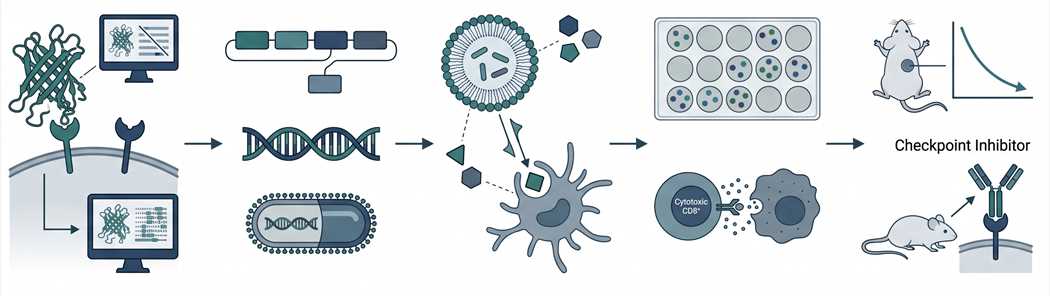
Phase 1 — p16INK4A Epitope Discovery & Selection
We perform comprehensive in silico epitope prediction covering HLA class I and class II supertypes, followed by in vitro validation using p16INK4A-overexpressing cell lines and donor PBMCs. Heteroclitic epitope variants are designed to enhance MHC binding affinity and break immune tolerance to this self-antigen, while tumor selectivity is confirmed through differential expression profiling.
Enabling Technologies for p16INK4A Vaccine Development
Why Choose Creative Biolabs?
Our team brings focused experience in targeting self-antigens with documented immunogenicity in cancer patients, applying heteroclitic design and adjuvant strategies specifically validated for overcoming immune tolerance.
We offer construct design across peptide, nucleic acid, vector-based, and dendritic cell platforms, enabling side-by-side comparison and selection of the optimal delivery system for your p16INK4A vaccine candidate.
Every p16INK4A vaccine project includes the option to design and evaluate checkpoint inhibitor combination regimens, reflecting the growing evidence that p16INK4A status predicts immunotherapy response.
From epitope mapping through in vivo efficacy with comprehensive immunogenicity profiling, we deliver integrated data packages with full traceability for translational decision-making.
Research Insight: p16INK4A Expression and Prognostic Dynamics in Laryngeal Carcinoma
Translational Findings on p16INK4A as an HPV-Independent Tumor Antigen
A landmark clinical study of 97 laryngeal squamous cell carcinoma (LSCC) patients highlights the critical relevance of p16INK4A as a major, HPV-independent shared tumor antigen with highly contextual prognostic value. This provides a robust therapeutic rationale for p16INK4A-targeted cancer vaccines to overcome tolerance and treat high-risk recurrences.
-
Widespread HPV-Independent Antigen Expression: The study demonstrated that while high-risk HPV DNA was present in only 8.75% of cases and active HPV transcription (E6/E7 mRNA) was completely absent (0%), p16INK4A overexpression was highly prevalent in up to 48.42% of tumors (IRS > 4). This confirms that p16INK4A is widely deregulated independently of HPV in LSCC, validating its potential as a broadly applicable shared self-antigen for off-the-shelf therapeutic vaccines.1
-
Context-Dependent Prognostic Value: In patients undergoing primary surgery, p16INK4A overexpression (IRS > 4) was strongly associated with a favorable prognosis, predicting significantly better overall survival (OS, p = 0.015) and relapse-free survival (RFS, p = 0.049). This supports the protective role of the p16-mediated senescence pathway in primary malignancies.1
-
Critical Therapeutic Target in Salvage Settings: Conversely, in patients undergoing salvage surgery after prior radiotherapy, p16INK4A overexpression was associated with a significantly worse overall survival (OS, p = 0.038). This striking divergence identifies post-irradiation, p16-overexpressing recurrent tumors as an ultra-high-risk population, highlighting an urgent clinical need for p16-targeted cancer vaccines to clear resistant tumor niches.1
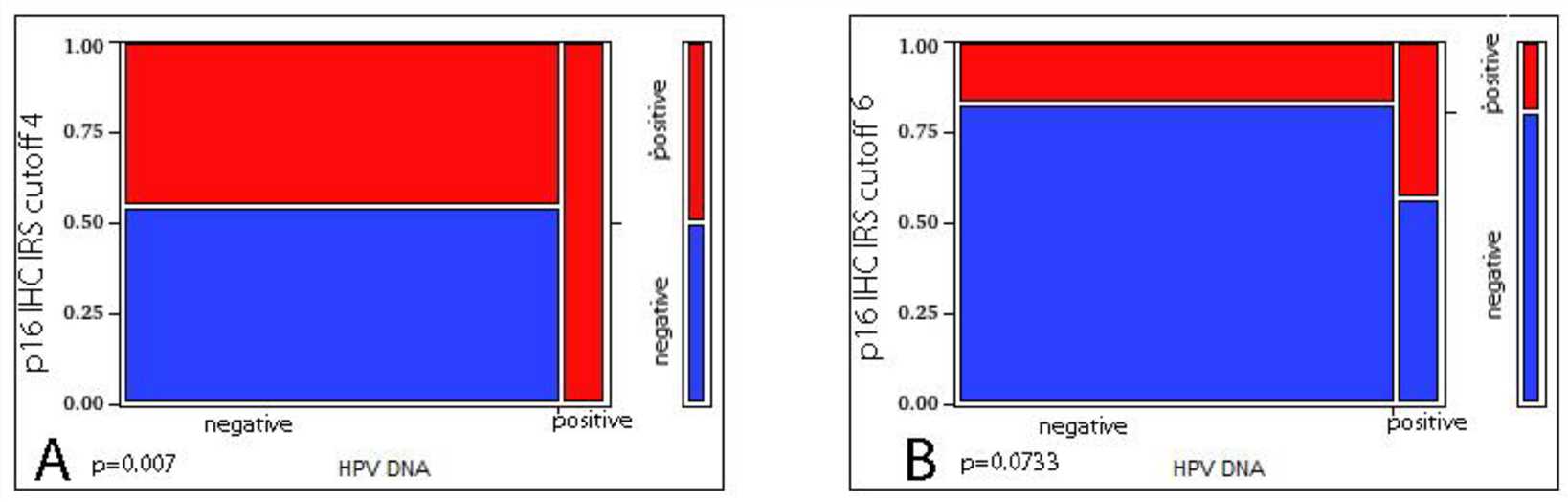
Fig.1 Correlation analysis of p16 IHC and HPV DNA.1, 2