
Lentivirus-Based Cancer Vaccine Design: Preclinical LV Vector Engineering
Creative Biolabs provides a comprehensive preclinical platform for the rational design of lentivirus (LV)-based cancer vaccines, leveraging the unique biology of lentiviral vectors—stable genomic integration, efficient transduction of both dividing and non-dividing cells, and sustained transgene expression—to power three distinct immunotherapy strategies: dendritic cell (DC) engineering, whole tumor cell modification, and artificial antigen-presenting cell (aAPC) generation. Unlike adenoviral or plasmid-based approaches that yield transient expression, lentiviral vectors enable durable antigen presentation and tunable co-stimulatory signaling, making them exceptionally suited for vaccines requiring long-lived immune priming. Our team supports every phase of LV-based cancer vaccine development, from backbone selection and transgene cassette optimization to pseudotyping, potency assessment, and in vivo efficacy studies in syngeneic or humanized mouse models.
Why Lentiviral Vectors Excel in Cancer Vaccine Engineering
Gene Delivery with Lasting Impact
Lentiviruses belong to the Retroviridae family and possess a defining advantage over most viral vectors: the ability to translocate their pre-integration complex across an intact nuclear membrane, permitting efficient transduction of quiescent, non-dividing cells such as mature DCs and resting lymphocytes. This property, combined with a packaging capacity of approximately 8–10 kb and low pre-existing seroprevalence in human populations, positions LV vectors as a preferred platform for cancer vaccines that require sustained antigen expression and multi-gene delivery. Modern third-generation self-inactivating (SIN) vectors further enhance safety by deleting the U3 region of the long terminal repeat, rendering the integrated provirus transcriptionally inert beyond the internal promoter-driven transgene.
Lentiviral vectors can be deployed as (1) DC transduction tools to load tumor antigens onto professional APCs, (2) whole tumor cell engineering platforms to convert autologous or allogeneic cancer cells into immunogenic vaccines, and (3) aAPC generation vehicles to express co-stimulatory molecules and cytokines on leukemia or engineered cell lines for ex vivo T cell expansion.
- Core Preclinical Challenges We Address:
- Selecting the optimal envelope pseudotype (VSV-G, measles virus H/F, or engineered variants) for target cell tropism.
- Balancing transduction efficiency against vector-associated genotoxicity in DC and tumor cell platforms.
- Designing polycistronic cassettes for co-delivery of tumor antigens with co-stimulatory molecules (CD80, GM-CSF).
- Quantifying vaccine-elicited antitumor immunity in vitro and in vivo using standardized immunological readouts.
Lentivirus Vectors vs. Conventional Vaccine Platforms
| Key Comparison | Conventional Adenoviral / DNA Vaccines | Lentivirus-Based Cancer Vaccines |
|---|---|---|
| Transduction of Non-Dividing Cells | Limited or absent; require active nuclear membrane breakdown during mitosis. | Active nuclear import; efficient transduction of quiescent DCs and T cells. |
| Antigen Expression Duration | Transient (days to weeks); episomal or rapid clearance. | Stable chromosomal integration for sustained, multi-month transgene expression. |
| Pre-Existing Vector Immunity | High seroprevalence (Ad5: >60%); neutralizing antibodies blunt vaccine response. | Low baseline anti-vector immunity; amenable to heterologous prime-boost regimens. |
| Multi-Gene Cargo Capacity | Limited; single transgene or small fusion constructs. | Polycistronic cassettes via 2A peptides deliver antigen + co-stimulatory genes. |
End-to-End Lentivirus-Based Cancer Vaccine Service Packages
Our preclinical services are organized into six modular packages, each configurable to your target indication and vector strategy. All modules support full customization—from glycoprotein pseudotyping to integrase-competent versus integrase-deficient backbone selection—ensuring that your lentiviral vaccine construct is optimized for safety, potency, and manufacturability.
Vector Backbone & Tropism Design
Strategic selection of LV backbone generation, envelope glycoprotein, and promoter architecture to match the target cell type and therapeutic strategy.
- Generation Selection: Second-generation vs. third-generation SIN vectors with optional integrase-deficient (IDLV) or non-integrating (NILV) configurations.
- Envelope Pseudotyping: VSV-G for broad tropism; engineered measles virus H/F or Sindbis virus glycoproteins for DC-restricted entry.
- Promoter Engineering: Constitutive (CMV, EF1α) or cell type-specific (CD11c, MHC-II) promoters for controlled transgene expression.
- Safety-by-Design: SIN LTR deletion, insulator elements, and chromatin-opening modules to minimize insertional genotoxicity.
Transgene Cassette Construction
Multi-gene expression cassette design and cloning, including codon optimization and immunogenicity-enhancing sequence modifications.
- Antigen Selection: Cloning of full-length tumor antigens, CTL epitope minigenes, or neoantigen concatenamers.
- Co-Stimulatory Payloads: Co-expression of CD80, CD86, CD40L, GM-CSF, or IL-12 via 2A self-cleaving peptide linkers.
- Codon Optimization: Species-matched codon adaptation to maximize transgene output in the target host.
- Reporter Integration: Optional GFP, luciferase, or surface marker cassettes for transduction tracking.
LV Particle Production & Titration
High-titer lentiviral particle production via transient transfection of suspension-adapted HEK293-based packaging systems with rigorous quality control.
- Scalable Production: Multi-plasmid transient transfection in adherent or suspension cultures up to multi-liter scale.
- Concentration Methods: Ultracentrifugation, tangential flow filtration (TFF), or PEG precipitation for high-titer stocks.
- Titration: Functional titration (TU/mL via flow cytometry) and physical titration (p24 ELISA, RT-qPCR for viral RNA).
- Quality Release: Sterility, endotoxin, mycoplasma, and replication-competent lentivirus (RCL) screening.
Target Cell Transduction & Engineering
Optimized LV transduction protocols for DCs, tumor cells, and artificial APC platforms with real-time monitoring of transduction efficiency and cell viability.
- DC Transduction: MOI optimization for monocyte-derived DCs and bone marrow-derived DCs, including spinoculation and polybrene/protamine sulfate enhancement.
- Tumor Cell Modification: Stable transduction of autologous or allogeneic tumor lines for whole-cell vaccine production, with irradiation-based proliferation arrest.
- aAPC Generation: LV-mediated delivery of CD80, CD86, and 4-1BBL into K562 or engineered feeder lines for ex vivo T cell expansion.
- Viability & Phenotype QC: Flow cytometric assessment of transduction efficiency, surface marker expression, and apoptosis.
Immunogenicity & Potency Assessment
Comprehensive preclinical evaluation of vaccine-induced immune activation using a panel of established immunological assays.
- T Cell Activation: IFN-γ ELISpot, intracellular cytokine staining (ICS), and tetramer staining for antigen-specific CD8+ T cells.
- DC Maturation Markers: Flow cytometry for CD80, CD83, CD86, HLA-DR, and CCR7 upregulation post-LV transduction.
- Cytotoxicity Assays: Chromium-51 release or real-time impedance-based killing assays against antigen-positive tumor targets.
- Multiplex Cytokine Analysis: MSD profiling of Th1/Th2/Th17 polarization in vaccine-draining lymph nodes.
In Vivo Efficacy & Safety Profiling
Rigorous preclinical efficacy testing in tumor-bearing models with integrated safety endpoints to support translational decision-making.
- Syngeneic Models: Prophylactic and therapeutic vaccination in B16-F10, CT26, or other tumor models matched to transgene antigen.
- Humanized Models: Testing human DC-based LV vaccines in NSG or NOG mice reconstituted with human PBMCs or CD34+ HSCs.
- Tumor Surveillance: Longitudinal tumor volume measurement, bioluminescence imaging, and survival analysis.
- Safety Endpoints: Body weight monitoring, serum chemistry panels, organ histopathology, and vector biodistribution by qPCR.
Lentivirus-Based Cancer Vaccine Development Workflow

Phase 1 — Vector Backbone Selection & Envelope Pseudotyping
Our team selects the optimal lentiviral backbone generation (second-gen, third-gen SIN, or integrase-deficient IDLV) and envelope glycoprotein (VSV-G, MV-H/F, or Sindbis-based) based on the target cell type, desired integration status, and safety profile required for your cancer vaccine application.
Enabling Technologies for Lentivirus Vaccine Engineering
Why Choose Creative Biolabs?
We cover all three clinically validated lentiviral cancer vaccine strategies—DC transduction, whole tumor cell modification, and aAPC generation—under one roof, reducing the need for multi-vendor coordination.
Our team routinely designs and produces third-gen SIN vectors, IDLVs, and pseudotyped particles across VSV-G, MV, and Sindbis envelopes, offering full flexibility in vector tropism and safety profile.
From transgene cassette design through LV production, target cell transduction, and in vivo tumor efficacy studies, we deliver a seamless workflow with a single point of contact.
Every LV batch undergoes replication-competent lentivirus screening, sterility, endotoxin, and mycoplasma testing, providing the quality documentation required for translational research.
Research Insight: Lentiviral Vectors Reshape Cancer Vaccine Design
Evidence from Preclinical & Translational Studies
Lentiviral vectors have evolved from gene therapy tools into versatile cancer vaccine platforms, with a growing body of preclinical evidence supporting their use across DC-based, whole-cell, and aAPC strategies. Below are key takeaways from recent open-access research.
-
LV-DC Vaccines Elicit Potent Antitumor Immunity: Zheng et al. demonstrated that a lentiviral DC vaccine encoding Claudin-18.2 triggered robust CD8+ T cell responses and suppressed gastric cancer growth in preclinical models, highlighting LV-transduced DCs as a viable platform for targeting tumor-associated antigens.1
-
Optimized LV Backbones Improve Neoantigen-Specific T Cell Breadth: Vesin et al. showed that a rationally designed non-integrative lentiviral backbone encoding multiple neoantigens induced diverse polyfunctional T cell immunity capable of counteracting tumor heterogeneity in preclinical settings.2
-
LV Vectors Are Broadly Effective Vaccine Platforms: Nemirov et al. comprehensively reviewed lentiviral vectors as vaccine platforms, documenting their capacity to induce durable humoral and cellular immunity across infectious disease and cancer models, with VSV-G-pseudotyped LVs emerging as the most widely validated format.3
-
Non-Integrating LVs Reduce Genotoxicity While Retaining Potency: Gurumoorthy et al. cataloged the clinical trajectory of NILVs, showing that integrase-deficient and SIN-configured vectors maintain sufficient transgene expression for immunotherapeutic applications while eliminating the risk of insertional oncogenesis.4
-
LV Structural Biology Informs Rational Vaccine Design: Lebedeva et al. characterized the structural determinants of lentiviral particle integrity, providing a molecular framework for optimizing envelope incorporation, capsid stability, and vector manufacturing conditions.5
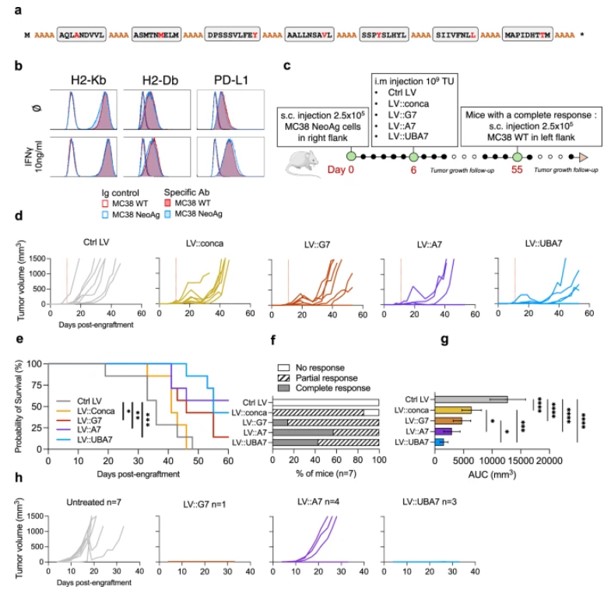
Fig.1 Antitumor efficacy of LV vaccines expressing optimized poly-neoepitopes.2,6