Peptide & Protein-Based Vaccine Construction with Custom Modification
Peptide and protein-based vaccines represent one of the most versatile strategies in cancer immunotherapy, transforming tumor-associated antigens (TAAs) or tumor-specific neoantigens into precisely defined immunogens capable of directing T-cell responses against malignant cells. Creative Biolabs offers a fully integrated preclinical platform for designing, synthesizing, and evaluating peptide and protein vaccine candidates—from minimal CTL epitopes and synthetic long peptides (SLPs) to full-length recombinant tumor antigens. Our approach combines computational epitope prediction with in vitro and in vivo immunogenicity validation, ensuring that each vaccine construct is optimized for MHC presentation, T-cell activation, and delivery system compatibility. Whether you need short peptide cocktails for defined HLA alleles, multi-epitope SLP strings targeting both CD4+ and CD8+ pathways, or formulated protein subunits with adjuvant pairing, our team delivers customized solutions that bridge the gap between antigen discovery and functional immune proof-of-concept.
Why Peptide & Protein Vaccines Remain Essential for Cancer Immunotherapy
Precision at the Molecular Level
Unlike whole-cell or lysate-based approaches, peptide and protein vaccines allow researchers to define the exact antigenic determinants delivered to the immune system. Short peptides (8–10mer for MHC class I, 13–25mer for MHC class II) can be selected to engage specific T-cell receptors, while synthetic long peptides (25–45mer) undergo natural antigen processing by professional APCs, simultaneously presenting both CD8+ and CD4+ epitopes. Protein subunit vaccines extend this concept by offering the full antigenic repertoire of a TAA, processed through multiple presentation pathways for broader immune coverage.
Synthetic long peptides require endogenous processing by dendritic cells rather than direct MHC binding, which means they exclusively activate professional APCs and avoid tolerance induction by non-professional antigen-presenting cells—a well-documented limitation of minimal epitope vaccines.
- Core Preclinical Challenges We Address:
- Identifying immunodominant epitopes with broad HLA population coverage.
- Overcoming weak immunogenicity of self-derived TAA peptides via adjuvant optimization.
- Selecting delivery vehicles that preserve peptide stability and enhance APC uptake.
- Demonstrating functional T-cell responses in vitro and anti-tumor efficacy in vivo.
Peptide vs. Protein Vaccine Formats: Choosing the Right Approach
| Key Comparison | Short Peptide Vaccines (8–25mer) | SLP & Protein Subunit Vaccines |
|---|---|---|
| Antigen Processing | Direct MHC binding; no processing required. | Natural APC processing via endosomal/proteasomal pathways. |
| CD4+/CD8+ Co-activation | Typically restricted to single MHC class. | Contains both class I and class II epitopes for coordinated response. |
| Tolerance Risk | May bind non-professional APCs, inducing tolerance. | Exclusive activation of professional APCs reduces tolerance induction. |
| Manufacturing Complexity | Straightforward solid-phase peptide synthesis. | SLP synthesis or recombinant protein expression with flexible formulation. |
End-to-End Peptide & Protein Vaccine Service Packages
Our preclinical services span the complete vaccine development pipeline. Every module can be tailored to your antigen targets, HLA restrictions, and therapeutic indication—from single-epitope peptides to multi-antigen protein formulations.
Epitope Discovery & HLA Coverage Analysis
Computational and experimental identification of immunodominant T-cell epitopes with population-wide HLA relevance.
- In Silico Prediction: MHC class I and class II binding prediction using validated algorithms for epitope ranking.
- HLA Coverage Modeling: Population coverage analysis to ensure >80% global allele representation.
- Peptide Elution: Direct MHC ligand isolation and identification by mass spectrometry.
- CTL Epitope Mapping: Overlapping peptide library screening for functional T-cell epitope definition.
Peptide & Protein Construct Design
Rational design of vaccine constructs optimized for processing, presentation, and immunogenic potency.
- SLP Engineering: Design of 25–45mer synthetic long peptides spanning both CD4+ and CD8+ epitopes.
- Multi-Epitope Strings: Concatenated epitope constructs with optimized linkers (AAY, GPGPG) for proper processing.
- Protein Subunit Design: Recombinant antigen engineering with enhanced solubility and stability features.
- Modified Amino Acids: Incorporation of non-natural residues to enhance peptide stability and binding affinity.
Synthesis & Vehicle Assembly
High-purity peptide synthesis and recombinant protein production with compatible delivery system integration.
- Peptide Synthesis: Solid-phase peptide synthesis with HPLC purification and analytical confirmation.
- Recombinant Expression: Protein production in bacterial, yeast, or mammalian expression systems.
- Delivery Vehicles: Formulation with liposomes, ISCOMs, oil-based emulsions, or nanoparticle carriers.
- Vector Construction: Recombinant viral or DNA vector assembly for encoded peptide/protein delivery.
Adjuvant Screening & Formulation Optimization
Systematic evaluation of adjuvant and delivery combinations to maximize immunogenicity for each vaccine format.
- Adjuvant Library: Screening of TLR agonists, saponin-based adjuvants, mineral salts, and emulsion platforms.
- Combinatorial Testing: Matrix evaluation of antigen–adjuvant–delivery system combinations.
- Stability Assessment: Peptide integrity and formulation stability under storage and physiological conditions.
- Release Kinetics: Antigen release profiling from delivery vehicles to guide dosing schedules.
Immunogenicity & Efficacy Evaluation
Multi-level assessment of vaccine-induced immune responses and anti-tumor activity in preclinical models.
- Cellular Immunity: ELISpot, intracellular cytokine staining, and testramer analysis for T-cell quantification.
- Humoral Response: Antibody titer measurement and functional neutralization assays.
- In Vivo Efficacy: Tumor challenge and survival studies in syngeneic or humanized mouse models.
- Immune Profiling: Tumor-infiltrating lymphocyte analysis and cytokine multiplex assays.
QC & Data Package
Comprehensive quality control and documentation to support your translational research program.
- Identity & Purity: HPLC, mass spectrometry, and SDS-PAGE confirmation for each batch.
- Potency Assays: Functional T-cell activation readouts as mechanism-based potency indicators.
- Stability Studies: Accelerated and real-time stability programs for peptide and protein products.
- Data Compilation: Integrated reports with full traceability from epitope selection through efficacy data.
Preclinical Peptide & Protein Vaccine Development Workflow
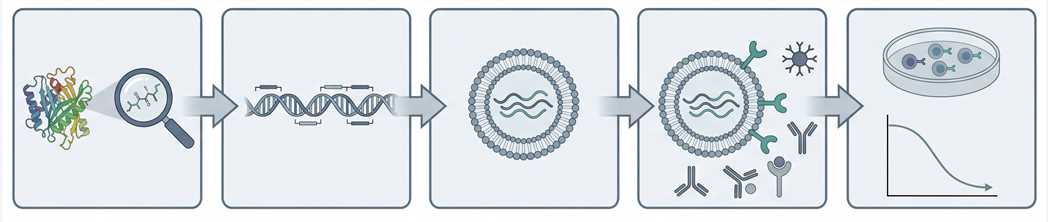
Phase 1 — Epitope Identification & Prioritization
We begin with computational screening of target antigen sequences to predict MHC class I and class II binding epitopes. Candidates are ranked by predicted binding affinity, conservation across antigen variants, and HLA population coverage. For protein subunit vaccines, full-length TAAs are evaluated for immunodominant regions. Direct MHC peptide elution and mass spectrometry can be applied to confirm naturally presented epitopes.
Enabling Technologies for Potent Peptide & Protein Vaccines
Why Choose Creative Biolabs?
From minimal 8mer peptides to full-length recombinant proteins, we cover every vaccine format—short peptides, SLPs, multi-epitope constructs, and subunit proteins—under one integrated platform.
Our epitope selection combines in silico prediction with direct MHC ligand isolation and functional T-cell assays, ensuring only biologically verified epitopes advance into vaccine constructs.
Access to a broad panel of adjuvants (TLR agonists, saponins, mineral salts, emulsions) and delivery vehicles (ISCOMs, liposomes, nanoparticles) enables systematic optimization for each antigen.
Every study is designed with translational relevance in mind—from HLA coverage modeling to functional potency assays—providing data packages that support progression toward IND-enabling studies.
Research Insight: Recombinant SARS-CoV-2 RBD Protein Vaccine and Protective Immunity
Key Findings from the Recombinant Spike RBD Vaccine Study
Developing highly effective subunit vaccines targeting key viral domains is critical for controlling global pandemics. Recent breakthrough research engineered and evaluated a recombinant vaccine candidate containing residues 319–545 of the SARS-CoV-2 spike protein's receptor-binding domain (RBD), demonstrating outstanding safety, immunogenicity, and protective efficacy in multiple animal models.
-
Potent and Rapid Humoral Response with Alum Adjuvant: The recombinant RBD protein (residues 319–545), expressed in insect cells, was densely glycosylated with three N-glycosylation and ten O-glycosylation sites. When formulated with a simple aluminium hydroxide adjuvant, a single dose induced robust RBD-specific IgG and IgM responses in mice, rabbits, and non-human primates as early as 7 to 14 days post-injection.
-
Effective ACE2 Receptor Blocking & Virus Neutralization: Sera from immunized animals demonstrated high-affinity binding and successfully blocked the interaction between the viral RBD and the host cell receptor ACE2. The immune sera exhibited strong, dose-dependent neutralizing activity against both SARS-CoV-2 pseudovirus and live virus in vitro, providing complete protection of cells.
-
In Vivo Sterilizing Protection in Non-Human Primates: Vaccination with 20 μg or 40 μg doses of the RBD vaccine provided complete sterilizing protection in non-human primates (Macaca mulatta) challenged with live SARS-CoV-2. Immunized monkeys showed no viral replication (no subgenomic RNA) in lung tissues, throat swabs, or anal swabs, and were fully spared from typical COVID-19-like interstitial pneumonia.
-
CD4+ T-Cell Dependency & Safe Adoptive Serum Protection: Mechanistic analysis using various knockout mouse lines revealed that the induction of protective antibodies depends on several immune pathways and CD4+ T helper lymphocytes (but not CD8+ T cells). Passive transfer of immune sera alone successfully protected recipient mice from live virus challenge without causing antibody-dependent enhancement (ADE) or lung immunopathology.
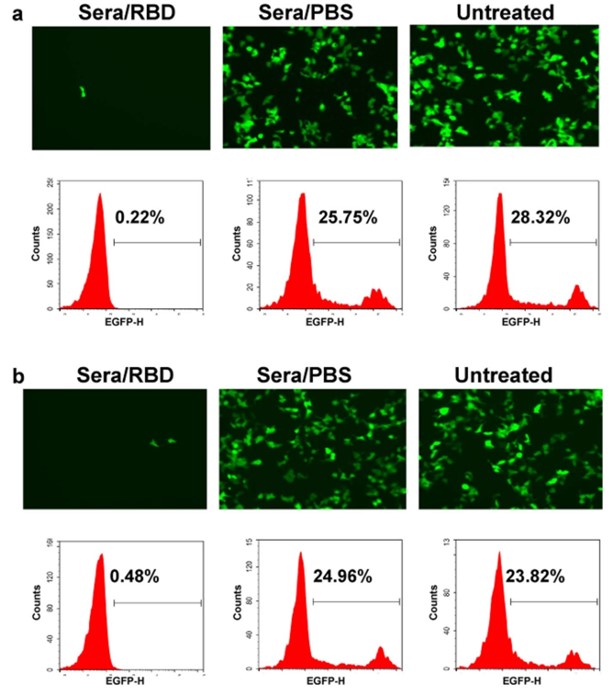
Fig.1 Neutralization activity of mouse and rabbit sera against SARS-CoV-2 pseudovirus infection.1, 2