Preclinical Platform for Salmonella Cancer Vaccine Engineering
Creative Biolabs offers a specialized, end-to-end preclinical platform for the engineering and application of attenuated Salmonella as a live bacterial vector for cancer immunotherapy. Salmonella enterica possesses an intrinsic ability to preferentially colonize solid tumors at ratios exceeding 10,000:1 versus healthy tissue, driven by chemotaxis toward metabolites released within the necrotic tumor core, along with an innate capacity to survive and replicate inside professional antigen-presenting cells (APCs) including dendritic cells and macrophages. By engineering the bacterium’s type III secretion systems (T3SS encoded by Salmonella pathogenicity islands SPI1 and SPI2) for targeted delivery of tumor-associated antigens (TAAs), our team converts this natural tumor tropism into a programmable vaccine chassis that simultaneously achieves in situ antigen production, danger signal amplification, and cytosolic MHC-I-restricted cross-presentation. From rational attenuation strategy design and multi-copy expression cassette optimization to comprehensive immunogenicity and biodistribution profiling in syngeneic murine models, we provide a complete preclinical solution that addresses the core bottlenecks of TAA vaccine development—including poor antigen immunogenicity, insufficient innate immune activation, and inadequate T cell priming within the tumor microenvironment.
Why Salmonella enterica Is a Superior Live Vector for Cancer Vaccines
From Natural Pathogen to Precision Vaccine Chassis
Belonging to the Enterobacteriaceae family, Salmonella is a Gram-negative, facultatively anaerobic, and facultatively intracellular bacterium. Its ability to actively invade and survive within phagocytic and non-phagocytic cells—including macrophages, dendritic cells, neutrophils, M cells, and epithelial cells—depends on two distinct Type III Secretion Systems (T3SS) encoded by the SPI1 and SPI2 pathogenicity islands. Critically, Salmonella can escape the phagolysosome and access the host cell cytosol, routing expressed TAAs directly into the MHC class I antigen presentation pathway. This cytosolic delivery capacity is a key functional advantage over extracellular bacterial vaccine platforms. Furthermore, the bacterium’s gram-negative envelope—rich in lipopolysaccharide (LPS), flagellin, and CpG-rich DNA—provides a potent built-in adjuvant effect via simultaneous engagement of TLR4, TLR5, and TLR9, creating a polyvalent innate immune stimulus that directly counters the immunosuppressive signals dominant within the tumor microenvironment.
Unlike peptide-, mRNA-, or DC-based approaches, live attenuated Salmonella serves simultaneously as a tumor-targeting delivery vehicle, an in situ antigen biofactory, and a self-adjuvanted innate immune activator—achieving all three functions within a single, genetically programmable chassis.
- Core Preclinical Challenges We Address:
- Rational attenuation design: balancing safety with tumor colonization fitness.
- Optimizing T3SS-mediated secretion of heterologous TAA fusion proteins.
- Enhancing tumor colonization density and intratumoral distribution homogeneity.
- Quantifying antigen-specific CD8+ T cell priming in vivo without antibiotic marker interference.
Salmonella Vector vs Other Bacterial Platforms for Cancer Vaccines
| Key Feature | Listeria monocytogenes | Salmonella enterica |
|---|---|---|
| Intracellular Niche | Obligate cytosolic; rapid escape from phagosome. | SCV and cytosolic localization; dual antigen routing. |
| Tumor Tropism | Primarily hepatic and splenic tropism. | Robust, broad solid-tumor colonization (>10,000:1). |
| Antigen Secretion System | ActA-mediated surface display and secretion. | T3SS needle apparatus: direct cytosolic injection of TAAs. |
| Innate Adjuvant Profile | LLO-mediated inflammasome activation. | Multi-TLR activation (TLR4, TLR5, TLR9); polyvalent adjuvant. |
End-to-End Salmonella Vaccine Engineering Service Modules
Our preclinical services are structured into flexible, modular packages. Every module can be independently selected or combined, and all attenuation strategies, antigen cassettes, and secretion systems are fully customizable to match your target indication and immunological objectives.
Strain Engineering & Attenuation Strategy
Rational design of safe yet immunogenic Salmonella chassis with optimized tumor fitness.
- Strain Selection: S. Typhimurium, S. Enteritidis, or serovar-specific chassis.
- Attenuation Profiling: Auxotrophic (aroA, purA), regulatory (phoP/phoQ, ΔppGpp), and virulence gene deletion (ΔSPI2).
- Safety Validation: LD50 determination, organ clearance kinetics, plasmid retention stability.
- Antibiotic-Free Selection: Stable plasmid maintenance systems without antibiotic resistance markers.
TAA Expression Cassette Construction
Design and optimization of multi-copy or chromosomal expression systems for heterologous TAAs.
- Antigen Selection: Cloning of validated TAAs into secretion-competent fusion constructs.
- Promoter Engineering: Constitutive vs. inducible promoters for tunable antigen expression levels.
- Multi-Antigen Cassettes: Polycistronic designs encoding full-length or multi-epitope TAAs in a single vector.
- Plasmid Copy Optimization: Adjusting copy number for balanced antigen expression and metabolic fitness.
T3SS Engineering & Secretion Optimization
Harnessing SPI1/SPI2-encoded secretion machinery for targeted cytosolic antigen delivery.
- T3SS Effector Fusion: Fusing TAAs to SopE, SptP, or SseJ secretion signals for SPI1/SPI2 routing.
- Secretion Kinetics: Quantifying antigen secretion rates by western blot and ELISA of culture supernatants.
- Flagellar T3SS: Exploiting the flagellar export apparatus for extracellular antigen delivery.
- Type I Secretion: Alternative T1SS-based secretion for antigens incompatible with T3SS folding.
Bacterial Production & Quality Control
Scalable culture and rigorous QC for live-attenuated Salmonella vaccine lots.
- Fermentation Scale-Up: Optimized growth conditions for high-density bacterial culture.
- Viability Enumeration: CFU counting, growth curve profiling, and dose-formulation calibration.
- Genetic Stability: Passaging stability assays confirming antigen expression cassette retention.
- Endotoxin Profiling: LPS characterization and purity assessment for research-grade formulations.
In Vitro Immunogenicity Characterization
Comprehensive in vitro assessment of vaccine-induced innate and adaptive immune activation.
- Infection Assays: Quantifying invasion efficiency and intracellular survival in macrophage and DC lines.
- Antigen Presentation: MHC-I peptide elution and T cell activation assays using reporter lines.
- DC Maturation: Flow cytometry for CD80, CD86, MHC-II, and cytokine secretion profiling.
- Cytotoxicity: Chromium-release or LDH-based killing of antigen-pulsed target cells.
In Vivo Efficacy & Biodistribution
Rigorous tumor model evaluation with pharmacokinetic, immunological, and safety endpoints.
- Tumor Models: Syngeneic (CT26, B16F10, 4T1) and xenograft models with bacterial dosing routes.
- Biodistribution: CFU enumeration in tumor, liver, spleen, and blood at serial time points.
- Immune Profiling: Multiparametric flow cytometry of tumor-infiltrating lymphocytes and cytokine panels.
- Therapeutic Endpoints: Tumor growth kinetics, survival analysis, and rechallenge protection assessment.
Salmonella-Based Cancer Vaccine Development Workflow
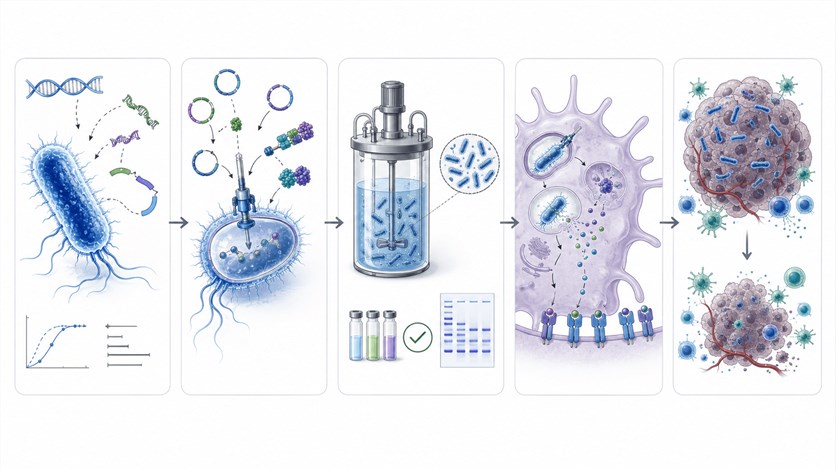
Phase 1 — Rational Attenuation & Strain Engineering
We design a tailored attenuation strategy by combining auxotrophic mutations (aroA, purA) with regulatory gene deletions (phoP/phoQ, ΔppGpp) to achieve the optimal balance between safety and tumor colonization fitness. Each engineered strain undergoes LD50 determination and organ clearance kinetic profiling in murine models.
Enabling Technologies for Salmonella-Based Cancer Vaccines
Why Choose Creative Biolabs?
Our team possesses extensive hands-on experience with Salmonella T3SS biology, SPI1/SPI2 regulation, and attenuation strategy design—ensuring genetically rational engineering rather than trial-and-error approaches.
We support both live-attenuated oncolytic Salmonella and T3SS-dependent TAA-delivery vector configurations within the same platform, allowing side-by-side comparison of therapeutic modalities.
Our chassis engineering incorporates stable plasmid maintenance mechanisms that eliminate antibiotic resistance markers, addressing a critical translational barrier for live bacterial products.
From intracellular fitness assays and MHC-I peptide elution to syngeneic tumor efficacy and biodistribution, we deliver a single-source data package suitable for grant applications and IND-enabling studies.
Research Insight: Salmonella Vector Engineering for Cancer Immunotherapy
Key Findings from Recent Preclinical Research
Live-attenuated Salmonella vectors are among the most extensively studied bacterial platforms for cancer immunotherapy, with a growing body of preclinical evidence supporting their tumor selectivity, gene delivery capacity, and immune-activating properties.
-
Broad Tumor Selectivity: Attenuated ΔppGpp S. Typhimurium achieves intratumoral bacterial densities exceeding 1 × 10¹⁰ CFU/g within 3 days of intravenous administration, with tumor-to-normal-tissue ratios surpassing 10,000:1 across multiple solid tumor types including colon, breast, and melanoma models.1
-
T3SS as a Vaccine Delivery Conduit: Recombinant S. enterica engineered to secrete TAA-effector fusions through the SPI1 and SPI2 T3SS induces robust antigen-specific CD8+ T cell responses and protective antitumor immunity in syngeneic murine models including fibrosarcoma and melanoma.2
-
Dual-Drug Payload Engineering: Engineered S. Typhimurium secreting the pore-forming cytolysin ClyA together with the TLR5 agonist flagellin B (FlaB) achieved complete tumor regression in 75% of CT26 tumor-bearing mice, with durable immune memory protecting against rechallenge 90 days post-cure.
-
Natural Adjuvant Integration: Salmonella LPS, flagellin, and CpG DNA engage TLR4, TLR5, and TLR9 simultaneously, generating a polyvalent innate immune activation signature that reprograms the tumor microenvironment from immunosuppressive to inflammatory—characterized by increased M1 macrophage polarization and reduced Treg infiltration.3
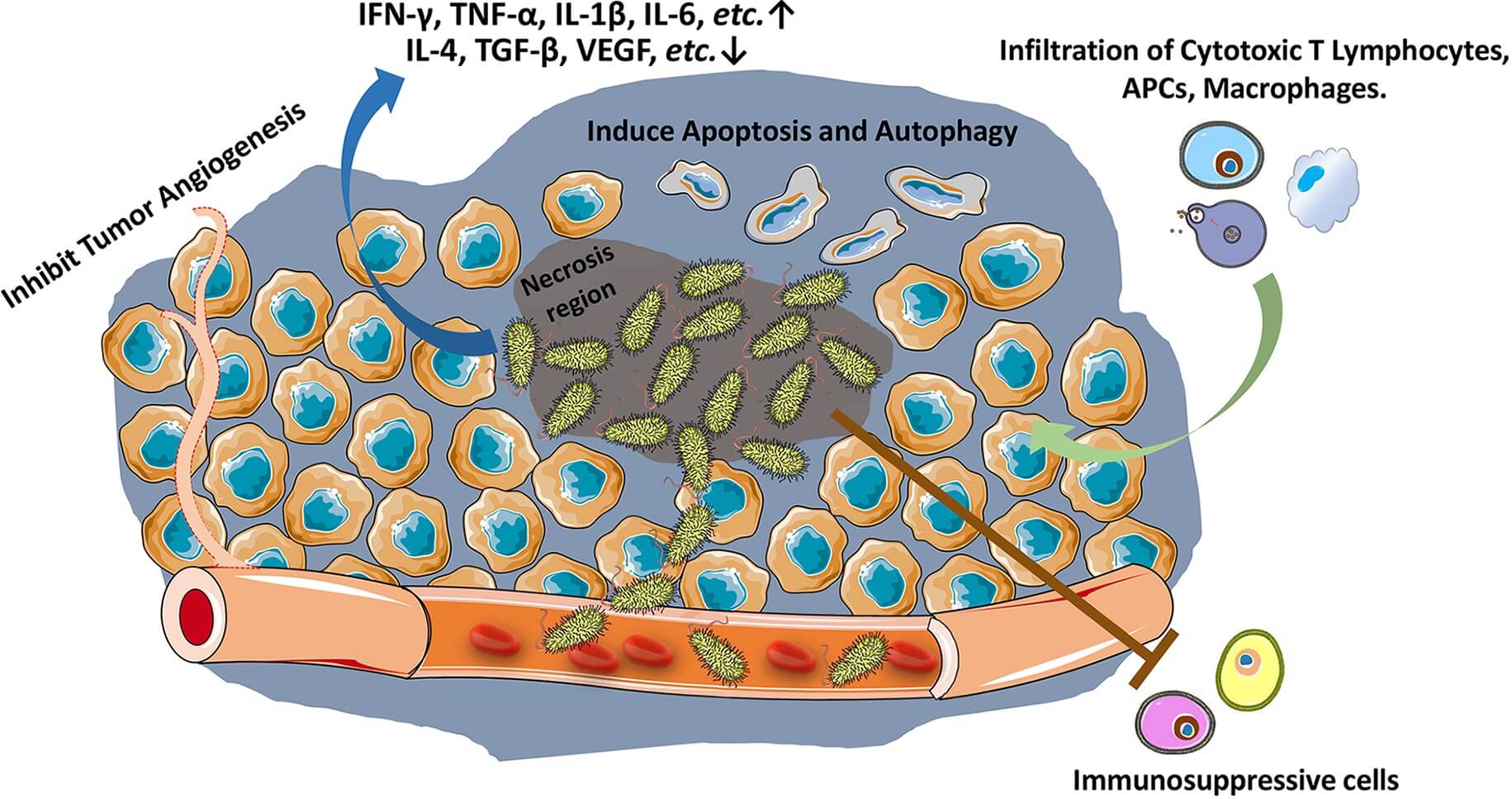
Fig.1 Salmonella elicits host anti-tumor immune responses.3,4