
Preclinical Globo H-KLH Cancer Vaccine Development Services
Creative Biolabs delivers a specialized preclinical platform for the design of Globo H-KLH Conjugated Cancer Vaccines, harnessing tumor-associated carbohydrate antigen (TACA) chemistry to overcome the inherently weak immunogenicity of glycan epitopes. Globo H, a hexasaccharide overexpressed on the surface of epithelial carcinomas including breast, ovarian, prostate, and lung cancers, represents one of the most extensively validated TACA targets. By covalently conjugating synthetic Globo H to the high-molecular-weight carrier protein keyhole limpet hemocyanin (KLH), our platform converts a T-cell-independent carbohydrate antigen into a T-cell-dependent immunogen capable of eliciting antigen-specific IgM and IgG responses, isotype switching, and durable immunological memory. We integrate chemoenzymatic synthesis, site-selective bioconjugation, adjuvant screening, and quantitative serological profiling into a single end-to-end workflow, enabling researchers to advance Globo H-based vaccine candidates from design through immunogenicity validation entirely within the preclinical space.
Globo H as a Carbohydrate Target for Cancer Vaccination
Aberrant Glycosylation Defines the Tumor Surface
Tumor cells exhibit profoundly altered glycosylation patterns compared with their normal counterparts. These aberrant glycan structures—collectively termed tumor-associated carbohydrate antigens—serve as selective immunological handles because they are both cancer-enriched and accessible on the cell surface. Globo H (Fucα1→2Galβ1→3GalNAcβ1→3Galα1→4Galβ1→4Glc) is a member of the globo-series glycosphingolipid family. Its expression has been documented in breast, ovarian, prostate, gastric, and non-small-cell lung carcinomas, while it is restricted to the luminal border of normal secretory epithelia, a site largely inaccessible to circulating antibodies. This differential exposure makes Globo H an attractive target for active immunotherapy.
As a pure carbohydrate, Globo H engages B-cell receptors but fails to recruit T-cell help, yielding a weak, short-lived IgM response without memory. Covalent conjugation to KLH provides the peptide epitopes necessary for MHC class II-restricted CD4+ T-cell activation, driving class switching to IgG and the formation of long-lived plasma cells and memory B cells.
- Preclinical Challenges We Address:
- Achieving high-purity, scalable synthesis of the Globo H hexasaccharide.
- Overcoming weak carbohydrate immunogenicity through optimized carrier conjugation.
- Minimizing carrier-induced epitope suppression (CIES) through epitope ratio optimization.
- Quantifying both anti-Globo H IgM and IgG responses in vitro and in vivo.
KLH Protein Carrier vs. Non-Protein Carrier Strategies for TACA Vaccines
| Key Comparison | Non-Protein Carriers (MPLA, Qβ VLP) | KLH Protein Carrier Conjugate |
|---|---|---|
| T-Cell Help Recruitment | Variable; may require co-administered peptide epitopes. | Robust CD4+ T-cell activation via abundant MHC class II peptide epitopes. |
| Antibody Isotype Profile | Often IgG-biased; may limit IgM-mediated complement activation. | Broad IgM + IgG profile; adjustable through adjuvant selection. |
| Carrier-Induced Epitope Suppression | Minimal to absent; carbohydrate remains the immunodominant epitope. | Mitigated through epitope density optimization and glycan:carrier ratio control. |
| Conjugation Chemistry Flexibility | Depends on carrier-specific functional groups. | Multiple reactive lysine residues enable tunable hapten loading density. |
End-to-End Globo H-KLH Vaccine Preclinical Service Modules
Our preclinical services are structured as flexible, modular packages. Every module can be customized—from the synthetic route for Globo H to the choice of conjugation chemistry and adjuvant—to align with your target indication and immunological goals.
Target Validation & Project Design
Confirming Globo H expression in your model and designing the optimal preclinical strategy.
- Expression Profiling: Immunohistochemistry and flow cytometry for Globo H on target cell lines.
- Indication Assessment: Literature- and database-driven feasibility analysis for your cancer type.
- Route Design: Tailored immunization schedule, dosing, and adjuvant selection plan.
- Risk Mitigation: Parallel-track contingency plans for low immunogenicity scenarios.
Globo H Antigen Synthesis & Characterization
High-purity Globo H hexasaccharide production with full analytical characterization.
- Chemoenzymatic Synthesis: Programmed one-pot assembly of the Globo H hexasaccharide backbone.
- Linker Installation: Introduction of a terminal functionalized linker for downstream conjugation.
- Quality Control: NMR, mass spectrometry, and HPLC purity assessment (>95%).
- Scale Flexibility: Milligram to multi-gram synthesis to support iterative preclinical studies.
Carrier Conjugation & Hapten Loading
Optimized KLH conjugation with systematic hapten density screening.
- Chemistry Selection: Active ester, thioether, or squarate coupling depending on linker design.
- Loading Optimization: Systematic titration of Globo H-to-KLH molar ratio; monitoring by MALDI-TOF.
- Conjugate Purification: Size-exclusion chromatography to remove unconjugated hapten.
- Stability Testing: Accelerated stability studies under storage and handling conditions.
Adjuvant Screening & Formulation
Identifying the adjuvant that maximally enhances anti-Globo H antibody titers.
- Adjuvant Panel: Screening of saponin-based, oil-in-water emulsion, and TLR agonist adjuvants.
- Dose-Ranging: Antigen and adjuvant dose optimization for maximal seroconversion.
- Route Comparison: Subcutaneous vs. intramuscular vs. intraperitoneal administration.
- Formulation Stability: Short-term and long-term stability of the adjuvanted vaccine.
Immunogenicity & Efficacy Evaluation
Quantitative serological profiling and in vivo proof-of-concept studies.
- ELISA Titration: Anti-Globo H IgM and IgG endpoint titer determination by glycan microarray or ELISA.
- Isotype Analysis: IgG subclass distribution (IgG1, IgG2a, IgG2b, IgG3) as a proxy for Th1/Th2 bias.
- Surface Binding: Flow cytometry confirmation that immune sera bind native Globo H on tumor cells.
- In Vivo POC: Tumor challenge studies in Globo H-positive syngeneic or xenograft models.
Quality Control & Data Package
Comprehensive analytical and serological data packages for publication and grant support.
- Conjugate Characterization: SDS-PAGE, SEC-HPLC, and carbohydrate-to-protein ratio analysis.
- Endotoxin Testing: LAL assay to confirm endotoxin levels suitable for animal studies.
- Batch Records: Full documentation of synthesis, conjugation, and formulation parameters.
- Report Assembly: Integrated report with raw data, statistical analysis, and data interpretation.
Globo H-KLH Conjugate Vaccine Preclinical Development Workflow
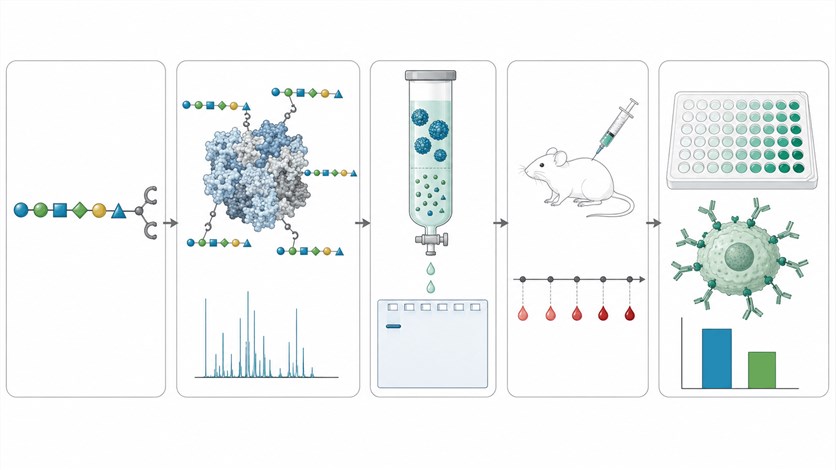
Phase 1 — Chemoenzymatic Globo H Synthesis & Linker Installation
We assemble the Globo H hexasaccharide using programmed one-pot chemoenzymatic glycosylation, achieving regio- and stereochemical fidelity at each glycosidic linkage. A bifunctional linker terminating in a primary amine or thiol-reactive group is installed at the reducing end for downstream conjugation.
Enabling Technologies for Globo H-KLH Vaccine Development
Why Choose Creative Biolabs?
Our team combines synthetic organic chemistry and enzymology to deliver complex oligosaccharides at the purity and scale required for rigorous preclinical studies.
We have extensive hands-on experience with KLH and a panel of immunological adjuvants, enabling rapid, data-driven formulation optimization.
From glycan ELISA to flow cytometry and glycan microarrays, our serological profiling generates actionable data on both the magnitude and quality of the humoral response.
Synthesis, conjugation, formulation, immunization, and serology are managed as one integrated workflow, eliminating hand-off delays and data fragmentation.
Research Insight: Carrier Diversity in TACA Conjugate Vaccine Design
Evolving Strategies from Protein Carriers to Next-Generation Platforms
The choice of carrier fundamentally shapes the immunological outcome of a TACA conjugate vaccine. While KLH remains the most clinically validated carrier for Globo H, recent advances in carrier chemistry have introduced alternatives ranging from bacteriophage virus-like particles to purely synthetic scaffolds.
-
KLH as the Benchmark Carrier: The large size (~4-8 MDa) and abundant T-cell epitopes of KLH ensure robust CD4+ help. However, its structural complexity and batch-to-batch variability motivate ongoing efforts to develop better-defined alternatives.
-
Virus-Like Particles for IgG Bias: Conjugating Globo H to bacteriophage Qβ VLPs has been shown to shift the antibody response toward IgG dominance, an advantage for effector functions such as antibody-dependent cellular cytotoxicity.
-
Fully Synthetic Multivalent Constructs: Dendrimer and polymer scaffolds displaying multiple copies of Globo H can mimic the multivalent presentation of natural glycocalyx while eliminating carrier protein immunodominance entirely.
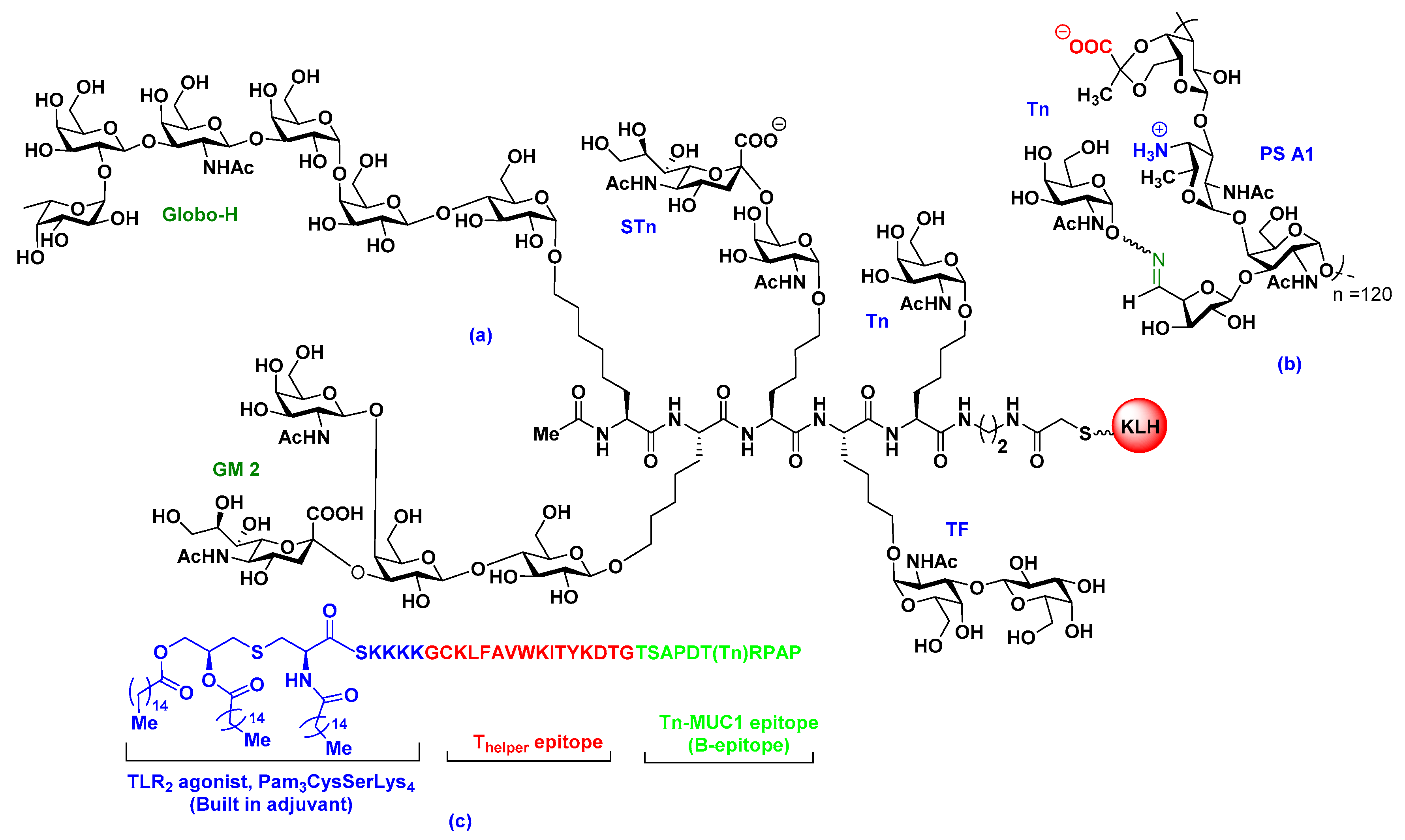
Fig.1 Schematic overview of recent progress in TACA-based antitumor vaccine research2,5