NDV Cancer Vaccine Design: Preclinical Oncolytic Virus & Oncolysate Services
Creative Biolabs offers an integrated preclinical platform for the design and development of Newcastle Disease Virus (NDV)-Based Cancer Vaccines, capitalizing on this avian paramyxovirus's unique combination of inherent tumor selectivity, potent interferon-driven immunostimulation, and negligible pre-existing immunity in the human population. With a single-stranded, negative-sense RNA genome of approximately 16 kb that replicates exclusively in the cytoplasm without a DNA intermediate, NDV carries zero risk of host genome integration — a distinguishing advantage over integrating viral vector platforms. Our service portfolio spans the complete vaccine development pipeline, from reverse genetics-based vector engineering and recombinant antigen cassette design through large-scale viral production, oncolysate-based and direct NDV vaccine formulation, and comprehensive in vitro and in vivo immunogenicity assessment. Whether your program calls for a live attenuated oncolytic strain, a recombinant vector co-expressing tumor antigens and immunomodulators, or an autologous NDV oncolysate vaccine, our team delivers customized solutions that align with the specific biology of your target indication.
Why NDV Stands Apart in the Oncolytic Vaccine Landscape
A Self-Amplifying Immune Trigger Without Integration Risk
NDV's cytoplasmic replication cycle is the foundation of its safety and versatility. The viral RNA-dependent RNA polymerase transcribes and replicates the genome entirely outside the nucleus, eliminating any possibility of chromosomal insertion. Tumor cells with defective type I interferon and apoptotic signaling pathways are selectively permissive to NDV replication, while normal cells mount an effective antiviral response that clears the virus. This inherent tropism creates a built-in safety mechanism that distinguishes NDV from vectors requiring extensive attenuation or tumor-specific promoter engineering. Moreover, NDV's exceptionally low homologous RNA recombination rate ensures that transgenes inserted into the viral genome remain stable across multiple passages — a critical requirement for scalable vaccine production.1,3
NDV-based cancer vaccines can be deployed in two distinct formats: (1) Direct NDV vaccines, in which the live or inactivated virus is administered systemically or intratumorally as an oncolytic immunostimulant, optionally armed with recombinant tumor antigens or cytokine transgenes; and (2) NDV oncolysate vaccines, in which tumor cells are infected ex vivo with NDV, irradiated to prevent proliferation, and re-infused as a personalized whole-cell vaccine carrying the patient's own tumor antigen repertoire alongside virus-encoded danger signals.
- Core Preclinical Challenges We Address:
- Selecting optimal NDV strains (lentogenic vs. mesogenic) for oncolytic potency versus safety balance.
- Engineering recombinant NDV to co-express tumor antigens and immunomodulatory cytokines.
- Standardizing oncolysate preparation protocols for reproducible tumor antigen loading and vaccine potency.
- Quantifying NDV-induced immunogenic cell death and tumor-specific T cell activation.
NDV vs. Other Oncolytic Virus Platforms for Cancer Vaccination
| Key Comparison | Other Oncolytic Viral Vectors (HSV-1, Adenovirus, Vaccinia) | NDV-Based Cancer Vaccines |
|---|---|---|
| Pre-existing Human Immunity | High seroprevalence (40–90%) can neutralize vector before tumor delivery. | ~96% human seronegativity; no neutralizing antibodies to impede delivery. |
| Genomic Integration Risk | Some integrate (HSV-1 latency); adenovirus carries low but non-zero insertional risk. | Strictly cytoplasmic replication; zero DNA phase, zero integration. |
| Inherent Tumor Selectivity | Requires extensive genetic engineering (deletions, tumor-specific promoters). | Inherent tropism for IFN-defective tumor cells; no genetic retargeting required. |
| Transgene Capacity & Stability | Capacity varies (HSV-1: large; Ad: moderate). Insert stability depends on platform. | Accepts large inserts; extremely low homologous recombination maintains multi-passage transgene fidelity. |
End-to-End NDV Cancer Vaccine Development Service Modules
Our preclinical services are organized into six flexible, modular packages. Each module operates independently or as part of a seamless, integrated workflow — fully customizable to your target indication, strain preference, and vaccine modality (live attenuated, recombinant, or oncolysate).
NDV Strain Selection & Vector Strategy
Rational selection of the backbone strain and delivery format based on target tumor biology.
- Strain Profiling: Lentogenic (LaSota, B1, Ulster) vs. mesogenic strains evaluated for oncolytic potency and safety in your target cell line.
- Modality Decision: Live oncolytic NDV, recombinant transgene-expressing vector, or oncolysate vaccine format selection.
- Route Optimization: Intratumoral, intravenous, or intraperitoneal administration feasibility studies.
- Risk Assessment: Pre-existing NDV antibody screening and vector neutralization profiling.
Recombinant NDV Construction & Transgene Cassette Design
Reverse genetics-based engineering of the NDV genome to express tumor antigens and immunomodulators.
- Full-Length cDNA Cloning: Assembly of antigenomic cDNA in appropriate plasmid vectors for rescue.
- Cassette Optimization: Strategic placement of tumor antigen, cytokine (IL-2, IL-12, GM-CSF), and co-stimulatory genes between NDV transcription units.
- Transcription Regulation: Tuning gene expression levels through transcription start/stop signal engineering.
- Rescue & Recovery: Co-transfection with helper plasmids encoding NP, P, and L proteins for recombinant NDV rescue.
Virus Amplification, Purification & Titration
Scalable propagation of NDV in embryonated chicken eggs or qualified cell lines with rigorous quality control.
- Egg-Based Production: Optimized inoculation and harvesting from specific-pathogen-free (SPF) embryonated eggs.
- Cell-Based Production: Large-scale culture in qualified avian or mammalian cell substrates for process consistency.
- Purification: Sucrose gradient ultracentrifugation or tangential flow filtration for high-purity viral preparations.
- Characterization: HA titer, TCID50/PFU quantification, sterility, and mycoplasma testing per batch.
Oncolysate & Whole-Cell Vaccine Preparation
Standardized protocols for generating NDV-infected tumor cell vaccines with maximized immunogenicity.
- Infection Optimization: MOI titration for each tumor line to achieve productive infection without premature lysis.
- Irradiation Standardization: Gamma or X-ray irradiation dose calibration to abrogate proliferation while preserving antigen integrity.
- ICD Confirmation: Flow cytometric detection of calreticulin exposure, HMGB1 release, and ATP secretion as hallmarks of immunogenic cell death.
- Formulation Stability: Short-term storage condition optimization for vaccine viability and hemagglutination activity.
Immunogenicity & Anti-Tumor Efficacy Assessment
Comprehensive in vitro and in vivo evaluation of vaccine-induced immune activation and tumor control.
- Innate Activation: Type I IFN, chemokine (RANTES, IP-10), and DC maturation marker profiling.
- Adaptive Response: ELISpot (IFN-γ), intracellular cytokine staining, and tetramer-based tumor-specific CD8+ T cell quantification.
- In Vivo Efficacy: Syngeneic and xenograft tumor models with tumor volume tracking and survival analysis.
- Abscopal Effect: Bilateral tumor models to assess systemic antitumor immunity induced by local NDV vaccination.
Safety Profiling & Toxicology Assessment
Preclinical safety evaluation addressing biodistribution, shedding, and off-target effects of NDV vaccine candidates.
- Biodistribution: qRT-PCR-based viral RNA quantification in major organs following administration.
- Shedding Analysis: Monitoring of infectious virus release in feces, urine, and saliva in animal models.
- Toxicology: Body weight, hematology, and serum biochemistry panels over a defined observation period.
- Neurotropism Screening: Assessment of potential CNS involvement, particularly for mesogenic strains.
5-Phase NDV Cancer Vaccine Development Workflow

Phase 1 — Strain Selection & Vaccine Modality Decision
We profile candidate NDV strains (lentogenic LaSota, B1 strains vs. mesogenic strains) against your tumor cell lines to determine the optimal balance of oncolytic potency and safety. Simultaneously, we finalize the vaccine format — live oncolytic virus, recombinant armed vector, or autologous oncolysate — based on the therapeutic goal, tumor type, and preclinical model requirements.
Core Technology Platforms for NDV Vaccine Engineering
Why Choose Creative Biolabs for NDV Vaccine Development?
Our team brings extensive hands-on experience with paramyxovirus reverse genetics, spanning strain characterization, recombinant construction, and production scale-up for preclinical applications.
We develop both live NDV oncolytic vaccines and NDV oncolysate vaccines in parallel, enabling head-to-head comparison and data-driven modality selection for your target indication.
From biodistribution and shedding analysis through multi-parameter immune profiling and survival studies, we deliver a comprehensive data package suitable for translational decision-making.
Every service module — from strain selection to in vivo efficacy — can be engaged independently, allowing you to fill specific gaps in your existing development program without committing to a full pipeline.
Research Insight: Recombinant NDV as a Next-Generation Oncolytic Vaccine Platform
Key Findings Across the NDV Vaccine Literature
NDV has been extensively studied as both a direct oncolytic agent and a versatile vaccine vector. Its cytoplasmic replication, broad tumor tropism, and ability to break immune tolerance through powerful type I interferon and chemokine induction make it uniquely suited for cancer immunotherapy applications.
-
NDV as a Vaccine Vector and Oncolytic Agent: A 2024 comprehensive review in Viruses detailed NDV's modular genome organization, which allows the insertion of foreign genes between well-defined transcription units. The review cataloged dozens of recombinant NDV constructs expressing tumor antigens (e.g., HPV E7, CEA), cytokines (GM-CSF, IL-12, IL-2), and immune checkpoint inhibitors, with many demonstrating potent tumor regression in preclinical models.1
-
Immunogenic Cell Death Induction: Research published in Biomedicines (2024) demonstrated that NDV infection of colorectal cancer cells robustly triggers hallmarks of immunogenic cell death — surface calreticulin exposure, extracellular ATP release, and HMGB1 secretion — converting dying tumor cells into an endogenous vaccine that primes dendritic cell maturation and tumor-specific T cell responses.2
-
Molecular Mechanisms of Tumor Selectivity: A 2022 review in Frontiers in Molecular Biosciences elucidated the molecular basis for NDV's tumor-specific replication: cancer cells harbor defective type I interferon signaling and impaired apoptotic pathways, creating a permissive environment for NDV while healthy cells rapidly clear the infection through intact antiviral responses.3
-
Engineered NDV in Modern Vaccinology: As thoroughly reviewed in Viruses (2020), NDV possesses a set of attributes that make it an exceptional vaccine vector: a modular, non-segmented RNA genome with a defined transcription gradient enabling predictable transgene expression levels; extremely low recombination rates ensuring insertional stability; and a lack of pre-existing immunity in the human population, allowing repeated homologous boosting.4
-
Recombinant NDV in Cancer Therapy — Recent Advances: A 2025 review in Frontiers in Immunology summarized the latest strategies for enhancing NDV's antitumor efficacy, including armed rNDV expressing immune co-stimulatory molecules, bispecific T-cell engagers, and combination approaches with immune checkpoint blockade that overcome the immunosuppressive tumor microenvironment.5
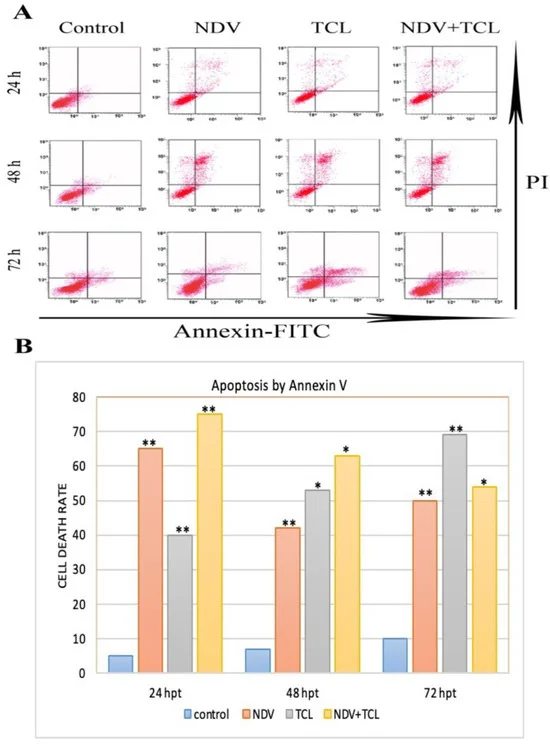
Fig.1 NDV-induced apoptosis and immunogenic cell death in colon cancer cells.2,6