
Preclinical Globo H-MPLA Self-Adjuvanting Vaccine Development
Creative Biolabs provides an integrated preclinical platform for the development of fully synthetic, self-adjuvanting glycoconjugate cancer vaccines centered on the tumor-associated carbohydrate antigen (TACA) Globo H conjugated to monophosphoryl lipid A (MPLA). Unlike traditional protein carrier–based glycoconjugates that require external adjuvants and suffer from inconsistent T-cell priming, the Globo H–MPLA conjugate represents a single-molecule vaccine architecture in which the MPLA moiety serves simultaneously as a structurally defined carrier scaffold and a Toll-like receptor 4 (TLR4)-targeting built-in immunostimulant. By eliminating the need for separate adjuvant formulation, this approach yields a homogeneous, well-characterized product that triggers coordinated humoral and T-cell-mediated immunity against Globo H-expressing tumors. Our end-to-end service spans carbohydrate antigen synthesis, MPLA derivatization, site-selective bioconjugation, comprehensive preclinical immunogenicity evaluation, and serological functional validation—all designed to accelerate the translation of next-generation carbohydrate-based cancer vaccine candidates into robust preclinical data packages.
Building a Self-Adjuvanting Carbohydrate Vaccine Against Tumor Glycoepitopes
Why Globo H-MPLA Instead of Protein-Carrier Glycoconjugates?
Globo H is a hexasaccharide antigen aberrantly overexpressed on the surface of epithelial tumors, including breast, ovarian, and prostate cancers, making it an attractive target for carbohydrate-based cancer immunotherapy. Traditional vaccine approaches covalently attach Globo H to large carrier proteins such as keyhole limpet hemocyanin (KLH) to convert the inherently T-cell-independent glycan into a T-cell-dependent antigen. However, protein carriers introduce several limitations: they generate carrier-specific immunodominant B-cell responses that can suppress anti-glycan antibody production—a phenomenon known as carrier-induced epitope suppression (CIES); they produce heterogeneous conjugates with variable hapten loading density that complicate batch-to-batch quality control; and they still require co-administration of a separate immunostimulatory adjuvant, adding formulation complexity. The Globo H–MPLA design resolves all three problems simultaneously by replacing the protein carrier with a chemically defined, low-molecular-weight TLR4 agonist that functions as both carrier and adjuvant in a single covalent entity.
MPLA is a detoxified monophosphoryl derivative of lipid A from Neisseria meningitidis. Upon conjugation to Globo H, the MPLA domain engages TLR4 on antigen-presenting cells, triggering MyD88- and TRIF-dependent signaling cascades that drive NF-κB activation and the secretion of pro-inflammatory cytokines (TNF-α, IL-6, IL-1β) and type I interferons (IFN-β). This innate activation, physically linked to the glycan antigen, creates a localized maturation signal that enhances antigen uptake, dendritic cell activation, and cross-presentation—resulting in robust IgG antibody responses and T-cell help without any external adjuvant.
- Core Preclinical Challenges We Address:
- Eliminating carrier-induced epitope suppression (CIES) to maximize anti-glycan IgG titers.
- Achieving chemically homogeneous conjugate products with defined hapten-to-adjuvant stoichiometry.
- Engineering single-component vaccines that eliminate separate adjuvant formulation steps.
- Quantifying complement-dependent cytotoxicity (CDC) against Globo H+ tumor cells in vitro.
Globo H-MPLA vs. Traditional Protein-Carrier Glycoconjugates
| Key Comparison | Globo H-KLH Conjugate | Globo H-MPLA Conjugate |
|---|---|---|
| Carrier Type | Large protein (KLH, ~4.5 MDa); heterogeneous and poorly defined. | Small-molecule MPLA (~1.7 kDa); chemically defined, homogeneous batch profile. |
| Adjuvant Requirement | External adjuvant (e.g., saponin-based) required; adds formulation variability. | Built-in self-adjuvant via TLR4 agonism; single-component formulation. |
| Anti-Glycan Antibody Specificity | Dominant anti-carrier response; CIES limits anti-glycan IgG output. | No carrier competition; immune response focused on the Globo H epitope. |
| Quality Control Complexity | Heterogeneous hapten loading; difficult to standardize across batches. | Defined 1:1 stoichiometry; routine characterization by MALDI-TOF and HPLC. |
End-to-End Globo H-MPLA Vaccine Development Service Modules
Our preclinical services are structured into flexible, modular packages. We understand that every conjugate design is unique; therefore, all modules can be fully customized—from glycan synthesis route selection to the conjugation chemistry used—to align with your target indication and immune response goals.
Target Validation & Conjugate Design Strategy
Feasibility assessment and blueprint design for Globo H-MPLA conjugate vaccine candidates.
- Glycotarget Profiling: Quantification of Globo H surface expression on client-specified tumor cell lines.
- Antigen Accessibility Analysis: Confirmation of Globo H epitope exposure on the target cell glycocalyx.
- Conjugate Architecture Design: Selection of linker length, spacer chemistry, and MPLA attachment site.
- Feasibility Roadmap: Tailored preclinical timeline with defined go/no-go milestones.
Carbohydrate Antigen & MPLA Synthesis
Chemical and chemoenzymatic production of high-purity Globo H hexasaccharide and MPLA building blocks.
- Glycan Assembly: Multi-step Globo H hexasaccharide synthesis via chemoenzymatic glycosylation.
- MPLA Derivatization: Production of monophosphoryl lipid A from N. meningitidis lipid A with controlled phosphorylation.
- Linker Installation: Regioselective introduction of amine-reactive or thiol-reactive functional handles.
- Intermediate QC: NMR, HR-MS, and HPLC confirmation of each synthetic intermediate.
Site-Selective Bioconjugation & Purification
Chemoselective coupling of Globo H to MPLA with precise 1:1 stoichiometry and rigorous purification.
- Conjugation Chemistry: Active ester, squarate, or thioether bond formation between glycan linker and MPLA.
- Reaction Monitoring: Real-time tracking by analytical RP-HPLC and TLC to maximize conversion yield.
- Purification Strategy: Preparative HPLC or size-exclusion chromatography to isolate pure conjugate.
- Structural Confirmation: MALDI-TOF mass spectrometry and 2D-NMR for conjugate identity and purity.
Preclinical Immunogenicity & Antibody Profiling
Comprehensive evaluation of Globo H-specific humoral responses following conjugate immunization.
- Immunization Schedule: Optimized prime-boost regimen with no external adjuvant (self-adjuvant validation).
- Glycan ELISA: Quantitative measurement of anti-Globo H total IgG and IgG subclass titers.
- Isotype Analysis: IgG1/IgG2a/IgG2b subclass profiling to infer Th1 vs. Th2 bias.
- Kinetic Monitoring: Longitudinal serum antibody titer tracking at multiple time points post-immunization.
Functional Antibody & Cytotoxicity Validation
Determining whether vaccine-induced antibodies can bind and kill Globo H-positive tumor cells.
- Cell-Surface Binding: Flow cytometry confirmation of immune sera binding to MCF-7 and other Globo H+ lines.
- CDC Assay: Complement-dependent cytotoxicity readout using tumor target cells and immune sera.
- ADCC Evaluation: Antibody-dependent cellular cytotoxicity with effector cell populations.
- Specificity Controls: Binding comparison against Globo H-negative cell lines to confirm epitope selectivity.
QC Characterization & Preclinical Data Package
Complete analytical data set and documentation for grant applications and regulatory preparation.
- Conjugate Characterization: Full analytical report (HPLC purity, MALDI-TOF mass, NMR assignment).
- Stability Assessment: Short-term storage stability under recommended formulation conditions.
- Data Compilation: Organized electronic lab notebook and comprehensive study report.
- Consultation: One-on-one data review meeting and recommendations for subsequent in vivo efficacy studies.
Preclinical Globo H-MPLA Conjugate Vaccine Development Workflow
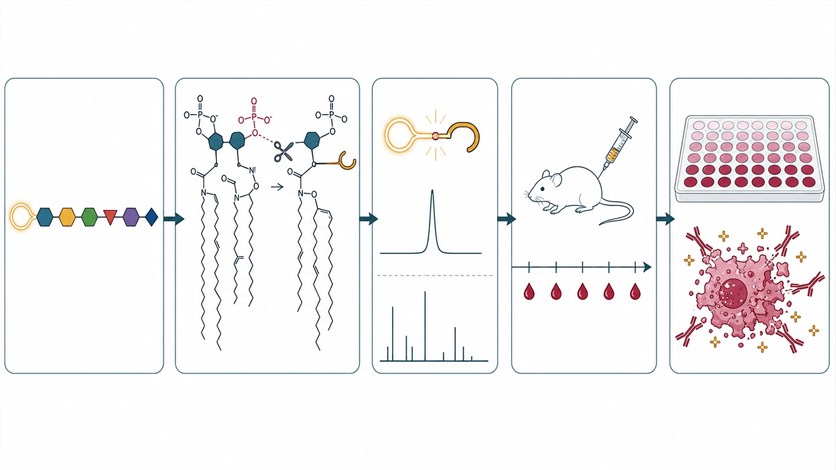
Phase 1 — Chemoenzymatic Globo H Hexasaccharide Synthesis
We assemble the Globo H hexasaccharide antigen via a combination of chemical glycosylation and enzymatic elongation. Each glycosidic bond formation is monitored by TLC and HPLC. The final product is characterized by high-resolution mass spectrometry and 2D-NMR to confirm the complete hexasaccharide structure with correct anomeric configurations. A linker handle is installed at the reducing end for subsequent conjugation.
Enabling Technologies for Self-Adjuvanting Glycoconjugate Vaccines
Why Choose Creative Biolabs?
Our team includes synthetic carbohydrate chemists with decades of experience in complex glycan total synthesis, including multi-step hexasaccharide assembly and stereocontrolled glycosylation.
We have successfully applied the MPLA built-in adjuvant strategy across multiple TACA targets, including Globo H, GM2, and other clinically relevant glycoepitopes.
From linker chemistry and spacer length to MPLA derivatization level, every parameter is tailored to your specific antigen and immunological objectives.
Every synthetic intermediate and final conjugate is characterized by NMR, HR-MS, and HPLC, providing a rigorous analytical data package suitable for publication and regulatory documentation.
Research Insight: Fully Synthetic Globo H-MPLA Elicits T-Cell-Dependent Antitumor Immunity
Key Findings from Fully Synthetic Glycoconjugate Vaccine Studies
Pioneering work has demonstrated that covalent Globo H-MPLA conjugates function as single-component self-adjuvanting vaccines capable of eliciting robust, T-cell-dependent IgG responses without any co-administered adjuvant. The TLR4 signaling cascade triggered by the MPLA domain—with its downstream production of TNF-α, IL-6, IL-1β, and type I IFNs—creates a local innate activation signal that simultaneously enhances antigen-presenting cell maturation and B-cell priming against the covalently linked glycan epitope.
-
Self-Adjuvant Efficacy: Globo H-MPLA conjugate induced significantly higher anti-Globo H IgG titers than the corresponding KLH conjugate, with antibody responses detectable after a single immunization and peak titers reached by day 35—faster kinetics than the protein-carrier counterpart.
-
T-Cell Dependence: The IgG subclass profile (predominantly IgG1 with detectable IgG2a/IgG2b) confirmed T-cell-dependent class switching, distinguishing the conjugate from T-cell-independent carbohydrate antigens that produce only weak IgM responses.
-
Tumor Cell Recognition & Killing: Immune sera from Globo H-MPLA-immunized mice bound specifically to MCF-7 breast cancer cells and mediated potent complement-dependent cytotoxicity, while showing negligible binding to Globo H-negative control cells, confirming epitope specificity.
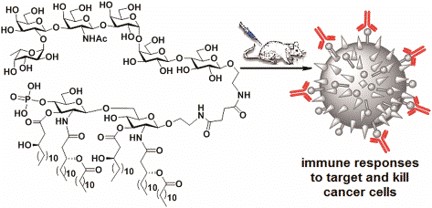
Fig.1 Synthetic self-adjuvanting MPLA–globo H conjugate induces potent anti-breast cancer T cell immunity.1,5