
hTERT-Targeted Cancer Vaccine Construction & Vector Optimization Services
Telomerase Reverse Transcriptase (TERT) is recognized as a near-universal tumor-associated antigen (TAA), overexpressed in more than 85% of human malignancies while remaining virtually silent in healthy somatic tissues. This highly restricted expression profile makes human TERT (hTERT) an exceptionally attractive target for broad-spectrum immunotherapy. However, translating hTERT into an effective therapeutic vaccine is historically hampered by central immunological tolerance. High-affinity CD8 + T cells targeting dominant hTERT epitopes are typically deleted in the thymus, leaving behind a repertoire of low-affinity T cells that fail to respond to standard vaccine formulations.
To overcome this barrier, Creative Biolabs has established an advanced preclinical hTERT-targeted cancer vaccine construction & vector optimization platform. Our solutions leverage the "optimized cryptic peptide" paradigm, introducing strategic amino acid substitutions (such as the tyrosine modification in the optimized TERT572Y variant) to bypass self-tolerance and generate high-affinity cytotoxic T lymphocytes (CTLs) that aggressively cross-react with the native, wild-type TERT572Y antigen on cancer cells. We provide end-to-end preclinical services, extending from bioinformatic epitope engineering and recombinant plasmid/viral vector construction to exhaustive in vitro presentation validation and in vivo immunogenicity profiling using state-of-the-art humanized HLA-A*0201 transgenic mouse models.
Bypassing Immunological Self-Tolerance via hTERT Cryptic Epitopes
The Cryptic Peptide Structural Strategy
Cryptic peptides are sub-dominant epitopes with a low natural binding affinity for MHC molecules. Because they are weakly presented under physiological conditions, they escape central tolerance deletion mechanisms. By structurally altering the anchor residues of these cryptic peptides (e.g., replacing position 1 residues with tyrosine to construct TERT572Y, we dramatically stabilize their binding to HLA-A*0201 complexes. Once formulated, these modified immunogens prime high-frequency, highly cytolytic CD8 + T-cell populations that effectively target wild-type TERT572Y targets on tumors.
Our platform specializes in design strategies that optimize both peptide-MHC-I stability and T-cell receptor (TCR) binding kinetics, ensuring robust immunological memory and targeted cytotoxicity without triggering autoimmune pathology in non-tumor tissues.
- Core Preclinical Challenges We Address:
- Identifying and ranking sub-dominant cryptic hTERT peptide targets.
- Engineering anchor residue substitutions to maximize HLA binding energy.
- Optimizing recombinant viral and non-viral vector expression cassettes.
- Validating TCR cross-reactivity between variants and wild-type sequences.
Immunological Comparison: hTERT Cryptic Peptides vs. Traditional Antigen Platforms
| Key Parameter | Traditional Tumor-Associated Antigens | Optimized hTERT Cryptic Peptides |
|---|---|---|
| MHC-I Complex Stability | Low to moderate; unstable off-rates leading to poor presentation. | Highly stabilized via targeted anchor amino acid substitutions. |
| Thymic Deletion Susceptibility | High; high-affinity T-cell clones are deleted via central tolerance. | Escapes deletion, permitting activation of responsive native T cells. |
| T-cell Activation Threshold | Requires extreme adjuvant priming; prone to anergy induction. | Low activation threshold; triggers direct, robust immune responses. |
| Target Broadness across Tumors | Often restricted to highly patient-specific mutational profiles. | Overexpressed in over 85% of oncology indications ("off-the-shelf"). |
End-to-End Preclinical hTERT-Targeted Vaccine Services
Creative Biolabs offers completely modular and customizable preclinical service packages, providing comprehensive validation paths for your hTERT-based immunotherapy designs. Each service module is engineered to address target-specific challenges under strict in vitro and in vivo quality standards.
Cryptic Peptide Optimization & Modeling
Computer-aided structural analysis and sequence modification of hTERT peptides to bypass self-tolerance thresholds.
- Structural Redesign: Precision anchor residue modifications (e.g., TERT572Y) to stabilize MHC binding.
- MHC Class I Profiling: Broad-spectrum predictive mapping across multiple human leukocyte antigen (HLA) alleles.
- TCR Interaction Modeling: Verification of modified-peptide TCR interfaces to confirm targeted cross-reactivity.
- In Silico Docking: Advanced molecular dynamics simulations calculating stable peptide-MHC configuration energy.
Peptide Synthesis & Adjuvant Screening
Synthesis of highly purified hTERT peptide constructs matched with optimized preclinical delivery systems.
- Peptide Customization: High-precision synthesis of wild-type and modified hTERT short and long peptides.
- Emulsion Formulations: Custom optimization with preclinical mineral-oil emulsions (Montanide equivalents).
- LNP Formulations: Lipid nanoparticle formulation support for mRNA-based hTERT vaccine sequences.
- TLR Agonist Integration: Synergistic adjuvant screening to optimize local antigen presenting cell (APC) activation.
Recombinant Vector Construction
Engineering customized delivery vectors (viral and non-viral) containing hTERT variant expression cassettes.
- Viral Vector Construction: Production of high-titer Lentiviral, Adenoviral, and Adeno-Associated Viral constructs.
- DNA & mRNA Templates: Codon-optimized hTERT plasmid vectors and stable in vitro transcribed (IVT) mRNA.
- Promoter Optimization: Insertion of dendritic cell-specific promoters to drive precise, targeted expression.
- Cloning Verification: Complete sequence verification and stability screening of recombinant constructs.
In Vitro Presentation & Cross-Reactivity
Rigorous biochemical and cellular validation of peptide presentation and TCR cross-recognition.
- MHC Binding Kinetics: Thermal denaturation and ELISA-based MHC-peptide affinity and off-rate assays.
- LC-MS/MS Immunopeptidomics: Physical confirmation of hTERT peptide processing on HLA complexes.
- DC Pulsing Assays: Evaluating antigen loading, processing, and phenotypic maturation of dendritic cells.
- T-cell Co-Cultures: Tracking naive human T-cell differentiation in response to modified hTERT pulsing.
In Vivo Preclinical Efficacy Profiling
Assessing therapeutic candidate immunogenicity and anti-tumor performance in humanized rodent models.
- Humanized HHD Mice: Utilizing HLA-A*0201 transgenic models to mimic human MHC presentation pathways.
- CTL Priming Assays: Quantifying target-specific cytotoxic T-cell expansion in vivo.
- Tumor Rejection Challenges: Direct challenge assays utilizing hTERT-expressing syngeneic tumor models.
- Combination Testing: Co-administering hTERT vaccines with anti-PD-1 or anti-CTLA-4 therapies in vivo.
Preclinical Safety & IND-Enabling Support
Rigorous toxicity and cross-reactivity profiling to secure robust validation packages for IND submissions.
- Cross-Reactivity Panels: Evaluating T-cell cross-activation against human primary tissue matrices.
- General Toxicology: Profiling local injection-site tolerability and systemic immune pathology in animal cohorts.
- Formulation Characterization: Assessment of emulsion droplet size, LNP stability, and antigen release rates.
- Documentation Packages: Preparing comprehensive preclinical dossiers detailing methods, metrics, and outcomes.
Preclinical hTERT-Targeted Vaccine Development Workflow
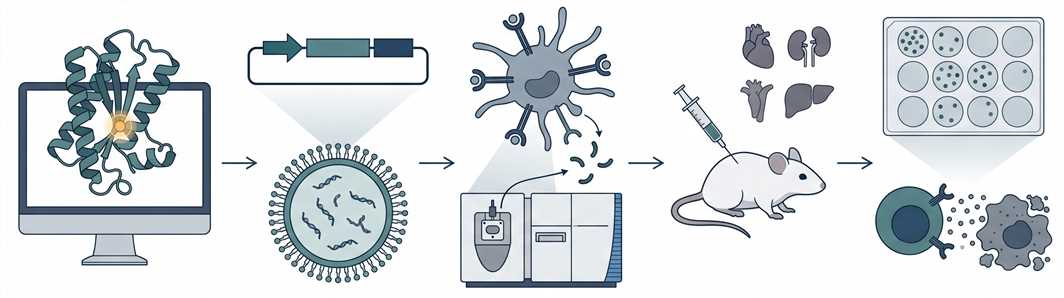
Phase 1 — In Silico Epitope Mining & Structure Redesign
We begin with advanced structure-activity relationship (SAR) modeling to map cryptic hTERT candidates. Modified residues are simulated under various HLA backgrounds to design high-affinity configurations (e.g., replacement of native residues to yield stabilized TERT572Y) that systematically bypass thymic deletion triggers.
Preclinical Platforms Driving hTERT Vaccine Performance
Why Choose Creative Biolabs?
Our team possesses unparalleled expertise in the design, optimization, and synthesis of cryptic peptide candidates designed to crack self-tolerance.
Immunology trials are backed by HLA-A*0201 transgenic HHD mice to ensure translational relevance to human TCR structural targets.
Our evaluations pair physical presentation analysis (mass spectrometry) with functional cytolytic validation (ex vivo killing assays).
From initial vector construction to complete IND-enabling toxicology reports, we construct flexible preclinical timelines aligned with your milestone requirements.
Research Insight: Leveraging Optimized Cryptic Epitopes to Bypass Immunological Tolerance
Immunological Findings from hTERT Cryptic Peptide Formulations
The translation of hTERT-targeted cancer vaccines represents a milestone in clinical oncology. Accumulating data from clinical studies, including randomized phase II clinical trials using the universal tumor antigen hTERT peptide formulation (such as Vx-001 containing TERT572Y and wild-type TERT572Y), shows that priming the immune system with optimized cryptic variant peptides induces specific CD8+ cytotoxic T lymphocytes. This immunogenic strategy successfully bypasses immune tolerance, mounting strong systemic cellular responses.
-
Direct ex vivo Immunogenicity: Unlike traditional tumor-associated antigen formulations that require exhaustive in vitro amplification to be detected, optimized hTERT cryptic peptides yield direct, ex vivo detectable TERT572Y ELISpot cellular signatures, validating robust in vivo priming.
-
Cross-Reactive Repertoire Expansion: Strategic anchor residue modification (e.g., substituting tyrosine to construct the TERT572Y variant) increases the HLA-A*0201 binding stability, promoting clonal expansion of cytotoxic T cells that aggressively cross-react against naturally expressed wild-type TERT572Y on human tumor models.
-
Survival Correlation: Long-term retrospective analysis demonstrates that subjects capable of mounting stable TERT-specific cellular immune responses exhibit significantly prolonged survival metrics (21.3 months overall survival vs. 13.4 months in non-responders, p=0.004), providing clear evidence of cytolytic disease control.
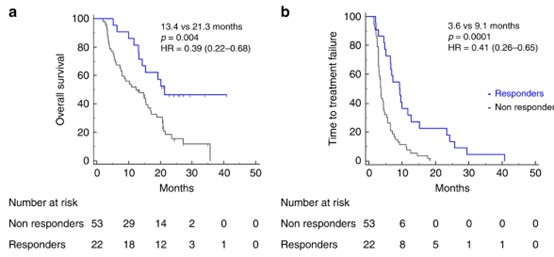
Fig.1 Correlation of Vx-001-elicited immune response with clinical response.1, 2