
Creative Biolabs stands at the forefront of light-responsive liposome technology, offering unparalleled advantages in the field of targeted drug delivery. With a robust portfolio of innovative solutions, we have established ourselves as a leader in precision medicine, providing cutting-edge liposomes that respond to specific wavelengths of light, enabling controlled and targeted release of therapeutic agents.
Light is a clean and effective external stimulus, eschewing the need for physical contact. In contrast to other stimulus such as temperature and pH, light is favored for its robustness within biological environment, adjustable intensity, precise spatiotemporal control, and non-invasive nature. It is a form of electromagnetic (EM) radiation that spans a broad spectrum of wavelengths, with commonly utilized EM radiations including ultraviolet (UV) light, visible light, and near-infrared (NIR) radiation. Generally, the penetration depth increases with the wavelength.
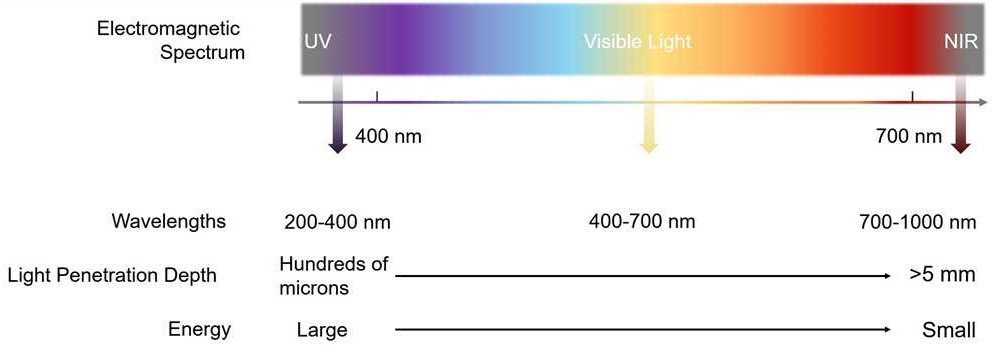 Fig.1 Light source used for responsive release.
Opting for a light source with an appropriate wavelength is essential for modulating the depth and energy of tissue penetration. Generally, the most suitable wavelength for in vivo applications ranges from 650 to 900 nm, with tissue penetration depths in the millimeter range.
Light-responsive liposomes, also known as photosensitive liposomes, incorporate light-responsive materials either encapsulated within the liposomal structure or attached to its exterior. Upon exposure to specific light sources, these light-responsive materials absorb light energy, triggering chemical reactions or thermal effects that alter the properties and structure of the liposomes, facilitating drug release. By adjusting the duration and area of light exposure, precise spatiotemporal and dosage-controlled drug delivery can be achieved at the target site.
The intriguing aspect of light-responsive liposomes lies in their dual capability to deliver both chemotherapy and photothermal/photodynamic therapy. Photothermal therapy harnesses the conversion of light energy into heat through laser irradiation, thereby inducing ablation of tumor cells in proximity to the photothermal agents. Photodynamic therapy, on the other hand, activates photosensitizers with specific wavelengths of light, transforming oxygen in the tumor region into reactive oxygen species, which subsequently leads to the apoptosis of tumor cells.
The mechanisms of drug release in light-responsive liposomes are grounded in photochemical, photothermal, and photoisomerization processes.
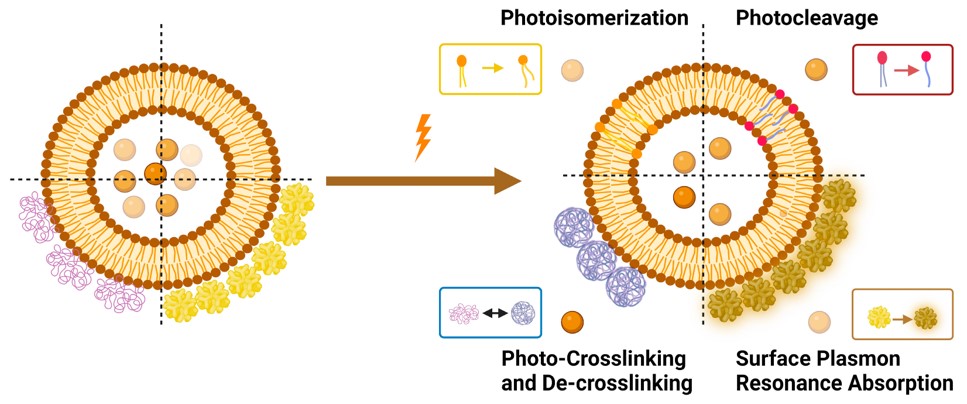 Fig.2 Light-triggered mechanisms used in triggering drug release from liposomes.1
UV, visible, and NIR light are extensively employed to trigger drug release within liposomes, with the choice of the light source being contingent upon the characteristics of the light-responsive materials and the composition of the liposomes. Ideal light-responsive liposomes should meet the following criteria for light-responsive materials:
| Light-responsive Materials | Introduce |
|---|---|
| Azobenzene | Under UV irradiation, reversible cis-trans (or E-Z) isomerization can occur. When the molecule isomerizes to the cis configuration, the payload can be released from the liposomes. |
| Porphyrin | NIR irradiation induces drug release from liposomes. |
| Spiropyran | Reversible isomerization under UV or visible light allows for the preparation of light-responsive liposomes with the capability for repeated drug release. |
| Our Characterization Services | Method |
|---|---|
| Size and Polydispersity Index (PDI) | Dynamic Light Scattering (DLS) |
| Zeta Potential | Electrophoretic Light Scattering (ELS) |
| Morphology |
Scanning Electron Microscopy (SEM) Transmission Electron Microscopy (TEM) |
| Physical Properties | Atomic force microscopy (AFM) |
| Thermodynamic Properties | Differential scanning calorimetry (DSC) |
| Stability and Release |
Ultraviolet-visible spectrophotometry (UV–Vis) High-performance liquid chromatography (HPLC) |
To learn more about how Creative Biolabs' light-responsive liposomes can elevate your pharmaceutical applications to new heights, we encourage you to contact us.
Reference
 For Research Use Only. Not For Clinical Use
Services
Online Inquiry

Creative Biolabs is a world-leading liposome provider with extensive experience in liposome preparation, custom formulation development, and characterization.

© 2026 Creative Biolabs. All rights reserved.