
Creative Biolabs proudly introduces our ROS-responsive liposome, representing a pioneering advancement in targeted cancer therapy. Our technology leverages the high ROS levels in tumor microenvironments for precise drug delivery, marking a significant step forward in the fight against cancer.
Reactive oxygen species (ROS) are oxygen-derived active substances present in biological organisms and natural environments. They are the single-electron reduction products of oxygen within living systems, typically interconvertible through a series of cascade reactions, encompassing hydrogen peroxide (H2O2), superoxide (O2-), hydroxyl radicals (·OH), peroxynitrite (ONOO-), and hypochlorite (OCl-). These ROS molecules often possess unpaired electrons or labile chemical bonds, endowing them with high reactivity and playing a crucial role in metabolism and the regulation of various biological and physiological processes, usually maintained at low levels through reduction-oxidation balance. At low ROS concentrations, they can act as signaling molecules involved in the maintenance of physiological homeostasis. However, when ROS levels rise, the equilibrium between ROS and the antioxidant system is disrupted, leading to oxidative stress, which may subsequently damage cellular macromolecules such as nucleic acids, membrane lipids, and proteins. The oxidative damage to these biomolecules triggers apoptosis and is closely associated with the pathogenesis of aging and numerous diseases, including inflammation, diabetes, neurodegenerative diseases, and cancer.
Cancer cells exhibit ROS concentrations approximately two orders of magnitude higher than normal cells (100 μmol/L compared to 20 nmol/L). In sites of inflammation and tumors, ROS levels are considered a biomarker distinct from the surrounding normal tissue environment. The abnormal ROS levels at the site of pathology favor the development of smart drug delivery systems, enabling precise targeting of therapeutics.
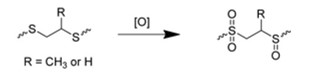
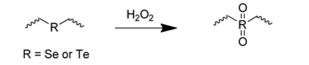
Liposomes prepared with ROS-responsive materials undergo structural changes in their lipid bilayers upon ROS exposure, leading to the release of the encapsulated drugs. A multitude of ROS-responsive materials are utilized in drug delivery, and the drug release mechanisms from these material-based responsive drug carriers primarily involve carrier disintegration due to changes in solubility and the cleavage of chemical bonds.
| ROS-responsive Materials | Reaction | Drug Release Mechanism |
|---|---|---|
| Thioether |
|
Solubility changes |
| Alkyl selenide/ telluride |
|
Solubility changes |
| Alkyl diselenide |

|
Chemical bond cleavage |
| Arylboronic ester |

|
Solubility changes |
| Thioketal |

|
Chemical bond cleavage |
| Polysaccharide |

|
Solubility changes |
| Aminoacrylate |

|
Chemical bond cleavage |
| Oligoproline |

|
Chemical bond cleavage |
| Peroxalate ester |

|
Chemical bond cleavage |
Considering the variability of ROS levels in target areas, the combination of ROS-responsive liposome with other therapeutic approaches is beneficial for enhancing drug release efficiency and therapeutic outcomes both spatially and temporally, while minimizing the impact on healthy tissues. As a pioneering explorer in the field of stimuli-responsive liposome, Creative Biolabs can assist in achieving more effective therapeutic results.
PTT harnesses the photothermal conversion of photothermic agents (PTAs) to absorb laser energy and transform it into heat, raising the temperature of the local environment and leading to the demise of cancer cells. Integrating ROS-responsive liposome with PTT amplifies the therapeutic effects.
In addition to endogenous ROS, exogenous ROS can also be introduced to trigger drug release. During PDT, photosensitizers (PS) absorb light energy and transfer it to surrounding oxygen, generating various ROS, which allows the application of ROS-responsive liposomes to other therapeutic targets. Moreover, PS not only facilitates light-induced drug release but also enhances therapeutic efficiency by killing cells or bacteria through PDT.
SDT similar to PDT, combines low-intensity ultrasound with sonosensitizers to generate ROS, circumventing the phototoxicity and limited penetration depth associated with PDT. The combination of ROS-responsive Liposomes with SDT not only effectively enhances responsive drug release efficiency but also minimizes damage to normal cells, presenting a highly efficient and safe therapeutic strategy.
Creative Biolabs leads the field in lipid-based delivery systems, specializing in the development of smart drug delivery systems, including stimuli-responsive liposome. For integration with other stimuli or therapies, contact us for project insights to propel your research forward.
Reference
 For Research Use Only. Not For Clinical Use
Services
Online Inquiry

Creative Biolabs is a world-leading liposome provider with extensive experience in liposome preparation, custom formulation development, and characterization.

© 2026 Creative Biolabs. All rights reserved.