BIGaxis™ Astrocyte Isolation, Culture & Characterization Service
Astrocytes are the most prevalent glial cell in the central nervous system (CNS). Their main role is to provide neurotrophic support and maintain CNS homeostasis; however, they are also involved in many neural functions and affect multiple complex behaviors. Creative Biolabs offers isolation, culture, and characterization service of astrocytes to facilitate your microbe project's success.
Astrocytes
As the most abundant glial cells in the CNS, astrocytes are the major source of cholesterol in the central nervous system. Apolipoprotein E transports cholesterol from astrocytes to neurons and other glial cells, regulating cell signaling in the brain. Astrocytes in humans are more than twenty times larger than in rodent brains, and make contact with more than ten times the number of synapses.
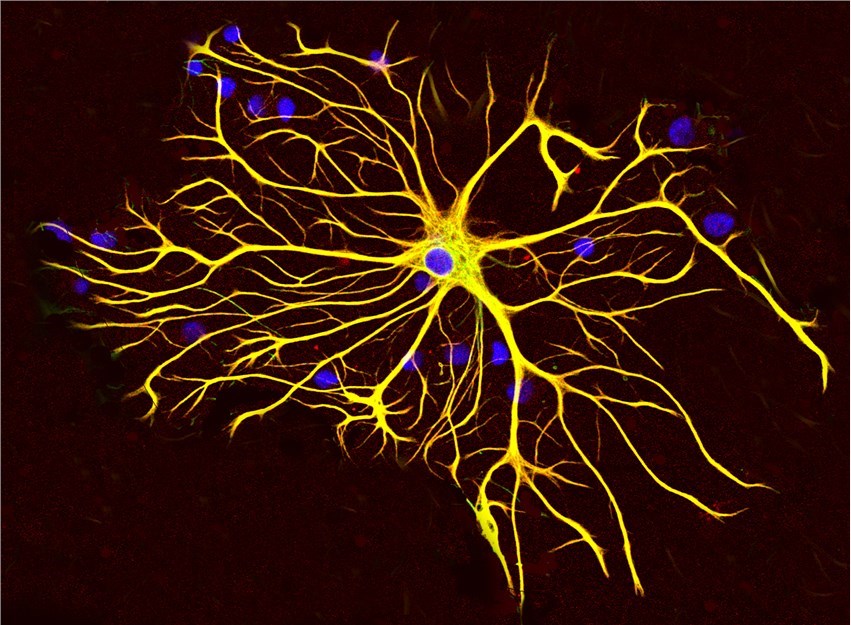 Distributed under CC BY-SA 3.0, from Wiki.
Function of Astrocytes
| FUNCTION | DESCRIPTION |
|---|---|
| Structural | Regulate the transmission of electrical impulses within the brain |
| Glycogen fuel reserve buffer | Fuel neurons with glucose during periods of high rate of glucose consumption and glucose shortage |
| Metabolic support | Provide neurons with nutrients such as lactate |
| Glucose sensing | Increases gastric emptying to increase digestion |
| Blood-brain barrier | Linked to blood flow in the brain |
| Transmitter uptake and release | Express plasma membrane transporters such as glutamate transporters for several neurotransmitters, including glutamate, ATP, and GABA |
| Modulation of synaptic transmission | Affect heterosynaptic transmission between neurons; suppress synaptic transmission by releasing ATP |
| Vasomodulation | Serve as intermediaries in neuronal regulation of blood flow |
| Nervous system repair | Fill up the space to form a glial scar, and may contribute to neural repair |
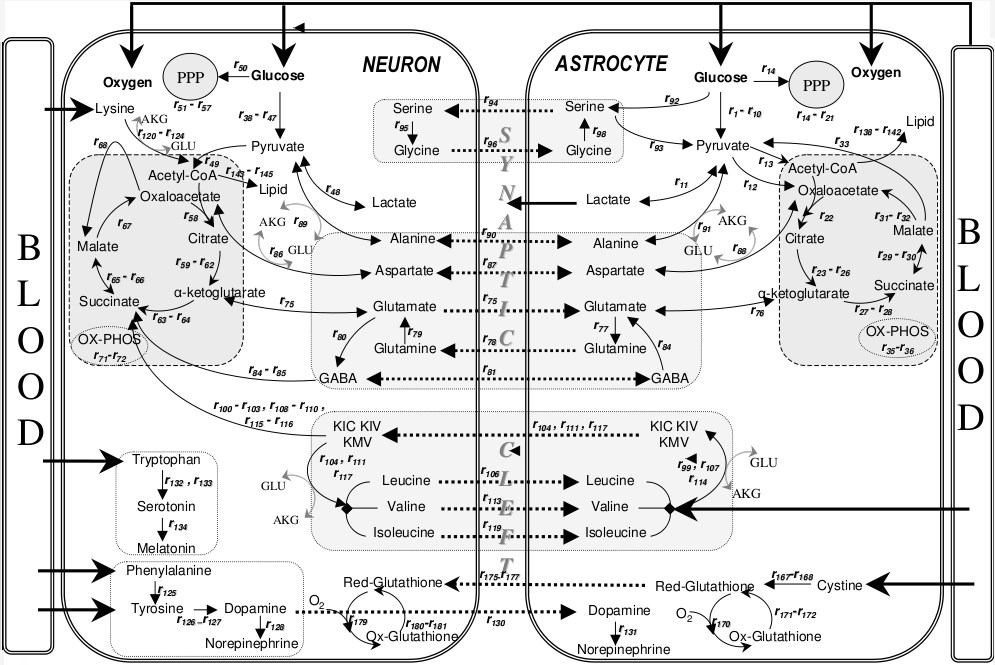 Distributed under CC BY 2.0, from Wiki.
Our Service
-
Cell Isolation
Creative Biolabs offers neonatal and adult astrocytes isolation services to meet your research needs. The microbead technology and tissue dissociation kit allow the isolation of pure neonatal astrocytes within a short time and result in purities over 90%. -
Cell Culture
Creative Biolabs offers excellent cell culture service for astrocytes to guarantee the quality of experiments. - Superior astrocyte growth even with low seeding densities
- Preservation of healthy astrocytes for downstream experiments
- Less dead cells and enhanced adult astrocyte culture
-
Cell Characterization
Creative Biolabs offers specific approaches to characterize the astrocytes: - Immunostaining and microscopy
- Flow cytometry
- Single-cell sequencing
Highlights
- Fast isolation of pure and viable astrocytes
- Characterization with novel astrocyte-specific antibodies
- Cultivation of primary astrocytes in serum-free media
Creative Biolabs offers a comprehensive range of solutions for isolation, culture, and characterization service of astrocytes. More methods of brain-immune-gut research can be found in the unit of our Brain-Immune-Gut interaction Study. If you have interest, please contact us for any discussion about your microbiome project.
 Download our brochure