We utilize mechanical dissociation and enzymatic digestion to isolate viable single cells or concentrated protein samples from various tissue types.
Vascular Gene & Protein Expression Profiling Service
Vascular gene & protein expression profiling service at Creative Biolabs helps you obtain high-quality, multidimensional molecular data and validate definitive therapeutic targets through advanced single-cell transcriptomics and high-throughput proteomic arrays. Creative Biolabs provides the essential biological depth and technical precision needed to confirm molecular mechanisms in complex vascular environments.
Overview What We Can Offer Workflow Required Materials Application Highlights Customer Reviews FAQs Related Services
Overview
Vascular development and pathological angiogenesis are governed by a sophisticated interplay of transcriptional regulators and signaling proteins. While bulk analysis often masks critical endothelial signatures, breakthroughs in single-cell RNA sequencing (scRNA-seq) now allow for the identification of organ-specific endothelial subtypes and their distinct metabolic profiles. By comparing gene activity between treated and untreated cells, researchers can identify new drug targets and evaluate treatment-related phenotypic changes at a molecular level. Creative Biolabs leverages these advancements to provide a global view of cellular function and vascular health.
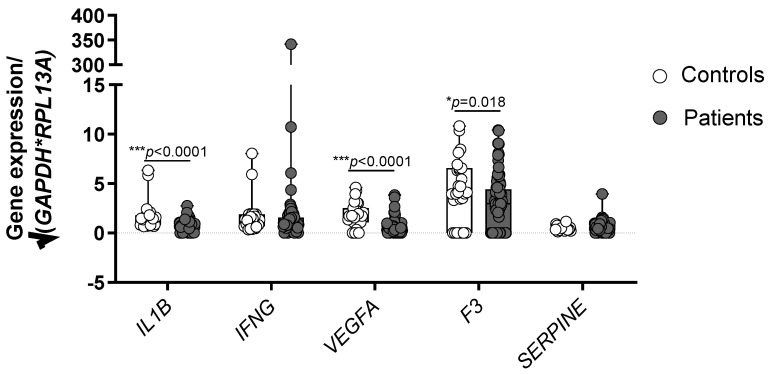 Fig.1 Comparative analysis of gene expression profiles between healthy individuals and patients with CAD.1
Creative Biolabs employs a multi-tiered strategic approach to capture the dynamic molecular landscape of the vasculature, ensuring every profile yields actionable insights.
- Cell-Specific Enrichment: We utilize advanced immunomagnetic separation and fluorescence-assisted cell sorting (FACS) to isolate primary endothelial cells, preventing the dilution of signatures by stromal components.
- Multi-Omics Integration: Our strategy simultaneously analyzes the transcriptome and proteome, identifying post-translational modifications and protein signaling network alterations that drive disease.
- Spatially Resolved Profiling: We utilize in situ sequencing and spatial transcriptomics to understand how the microenvironment influences vessel maturation and inflammatory pathway upregulation.
Empower Your Research with Creative Biolabs — Begin Your Expert Consultation Today
What We Can Offer
RNA-Seq
We offer unbiased assessment of transcriptional responses at singular cellular resolution to clarify pathological states and cellular trajectories.
High-Throughput Proteomic Arrays
Our simple and economical multiplex assays measure more than 100 proteins in a single sample, eliminating the need for multiple Western blots.
Advanced Molecular Stabilization
By utilizing proprietary stabilization techniques for tissue recovery, we ensure that delicate RNA and protein signatures remain intact for downstream analysis.
Machine Learning Integration
We incorporate machine learning to uncover previously unrecognized gene signatures and optimize biomarker panels for personalized medicine.
Workflow
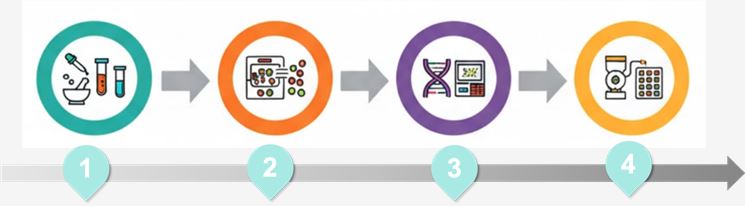
Sample Preparation
Target Enrichment
Techniques such as FACS or immunomagnetic beads are used to enrich for specific vascular cells, such as endothelial cells, while minimizing cellular debris.
High-Throughput Sequencing
Enriched RNA is sequenced using next-generation sequencing (NGS) platforms to achieve absolute quantification and detect novel transcripts.
Proteomic Analysis
We perform mass spectrometry (LC-MS/MS) or use antibody-binding arrays to explore protein signaling networks and post-translational modifications.
Required Starting Materials
- Cell Pellets: Fresh tissue sections (snap-frozen), cultured cells, or whole blood samples collected in RNA-stabilizing media.
- Detailed Experimental Conditions: Information on drug dosage, incubation times, and treatment-versus-control groupings to guide differential expression analysis.
Application
- Target Discovery: Identifying overexpressed or mutated proteins in disease-specific proteomes to pinpoint novel druggable targets.
- Toxicology Assessment: Screening for changing levels of genes like cytochrome P450 as early biomarkers of drug metabolism and toxicity.
- Cardiovascular Precision Medicine: Developing diagnostic and prognostic indicators for complex diseases such as atherosclerosis, hypertension, and aortic aneurysms.
- Molecular Stratification: Classifying patients into finer categories based on their molecular architecture to individualize therapy and enhance treatment outcomes.
- Pharmacogenomics: Researching how genetic systems affect interindividual variance in drug response and sensitivity.
Highlights
Deep Hemodynamic Correlation
We integrate molecular profiling with computational fluid dynamic modeling to determine how blood flow-mediated physical forces induce specific transcriptomic alterations and endothelial remodeling.
Exceptional Multi-Omics Sensitivity
Our RNA-seq and proteomic techniques can detect rare transcripts and low-abundance signaling molecules even in limited samples, overcoming the limitations of traditional cell volume requirements for analysis.
Broad Species and Model Compatibility
Our customized solutions are fully applicable to human clinical samples, as well as mouse, rat, and other model organisms, ensuring seamless translational research from bench to bedside.
Elimination of Enzymatic Bias
We offer innovative methods that require no reverse transcription or cDNA library preparation, significantly reducing enzymatic bias in gene measurement to ensure high-fidelity results.
Experience the Creative Biolabs Difference — Contact Us for a Tailored Quote
Customer Reviews
- "[Improved Toxicological Screening] Using Creative Biolabs' vascular gene & protein expression profiling service in our research has significantly improved our early-stage safety profiles. By tracking cytochrome P450 signatures, we avoided compounds with high metabolic toxicity before entering costly animal trials." -2 months ago, Robert T***er.
- "[Precision Biomarker Validation] Using Creative Biolabs' vascular gene & protein expression profiling service in our research has significantly facilitated the selection of potential PD biomarkers in whole blood. The integration of proteomics and transcriptomics allowed us to confirm engagement of pharmacology in our clinical study." -1 week ago, Prof. Li**a W.
FAQs
How does gene expression profiling assist in drug target validation?
By comparing gene activity in diseased versus healthy tissues, we can pinpoint dysregulated proteins that serve as potential targets. We then functionalize these findings using proteomic networks to ensure they are truly druggable.
Are your protein profiling methods limited to known antibodies?
While our antibody arrays are efficient for early discovery of known targets, we also offer untargeted mass spectrometry-based methods that can discover unknown proteins and map post-translational modifications.
Related Services
In Vivo Vascular Network Formation & Matrigel Plug Assay Service
This service supports in vivo evaluation of vascular network formation using Matrigel plug assays to examine host cell infiltration, neovascularization, and vessel organization.
Learn More →Vascular Morphology & Radiomic Biomarker Analysis Service
This service provides quantitative analysis of vascular morphology and radiomic features to identify imaging-derived biomarkers linked to vascular structure and heterogeneity.
Learn More →For detailed project discussions, technical consultations, or to receive a tailored proposal regarding our vascular gene & protein expression profiling service, please reach out to our molecular biology team.
Reference
- Hrovat, Katja et al. "Gene Expression Profiling of Markers of Inflammation, Angiogenesis, Coagulation and Fibrinolysis in Patients with Coronary Artery Disease with Very High Lipoprotein(a) Levels Treated with PCSK9 Inhibitors." Journal of cardiovascular development and disease vol. 9,7 211. 1 Jul. 2022. Distributed under Open Access license CC BY 4.0, without modification. https://doi.org/10.3390/jcdd9070211
 Download our brochure
Loading case studies...
Online Inquiry