Our Immunophenotyping-Based Oncology Recognition Service offers comprehensive, high-resolution cellular analysis to aid in the precise diagnosis, classification, prognosis, and monitoring of various hematological and select solid malignancies. Leveraging state-of-the-art flow cytometry and immunohistochemistry techniques, we provide critical insights into the unique protein expression profiles (immunophenotypes) of cancer cells, enabling highly targeted and effective patient management.
Learn More →Immunophenotyping based Disease Recognition Services
Background Service Workflow Advantages FAQs
Are you currently facing long diagnostic timelines, imprecise disease classification, challenges in patient stratification, or difficulty in monitoring treatment efficacy? Creative Biolabs offers a wide range of immunophenotyping based disease recognition services help you accelerate disease recognition, enable precise patient stratification, and optimize therapeutic strategies through advanced multi-parameter flow cytometry, and bioinformatics analysis.
The Imperative of Immunophenotyping in Disease Understanding
The intricate nature of human diseases, particularly in areas like oncology, autoimmune disorders, and infectious diseases, demands highly precise diagnostic and prognostic tools. Traditional methods often lack the resolution to fully characterize the cellular landscape of a disease. Immunophenotyping offers a critical advantage by enabling the identification and quantification of specific immune cell subsets and their activation states, which are pivotal for understanding disease pathogenesis, predicting patient outcomes, and guiding the development of targeted therapies. This necessity drives the continuous development of advanced immunophenotyping techniques for more accurate and comprehensive disease recognition.
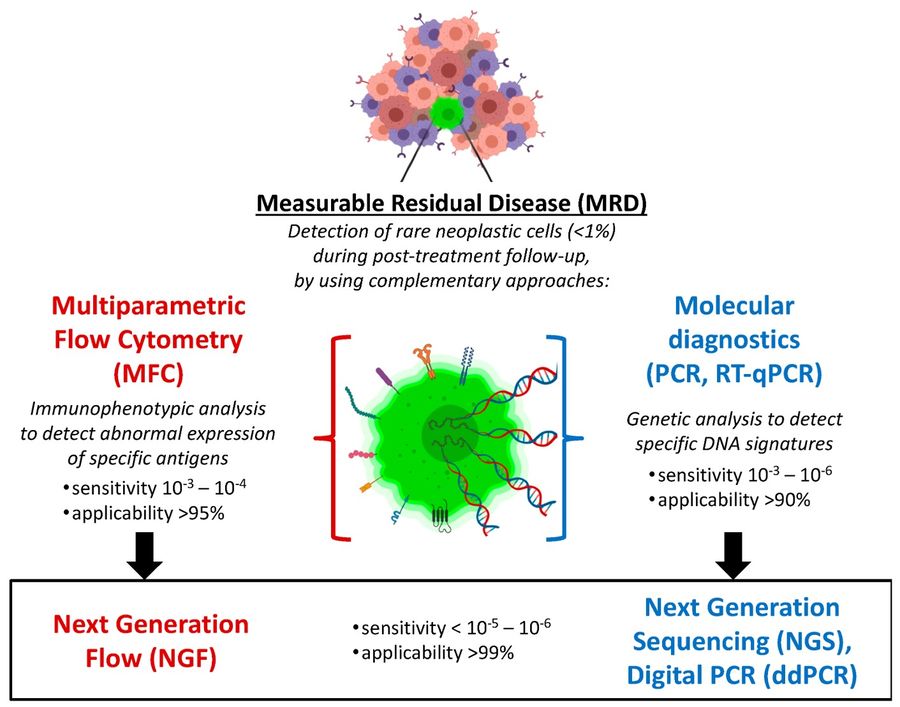 Fig.1 Hematologic MRD monitoring using complementary immunophenotypic and molecular methods.1
Immunophenotyping based Disease Recognition Services at Creative Biolabs
Creative Biolabs' Immunophenotyping based Disease Recognition Services provide comprehensive cellular analysis to unravel the complexities of disease. We deliver precise identification and quantification of immune cell populations, critical for accurate diagnosis, prognosis, patient stratification, and monitoring therapeutic responses. Our solutions empower you with a deeper understanding of disease mechanisms, facilitating the development of highly effective, personalized treatment strategies.
Service Packages
Oncology Recognition
Autoimmune Disorder Recognition
Immunophenotyping-based Autoimmune Disorder Recognition Services leverage advanced laboratory techniques, primarily Flow Cytometry, to precisely identify and quantify different immune cell populations in a patient's blood or other biological fluid samples. This service is critical for the diagnosis, monitoring, and understanding of autoimmune diseases.
Learn More →Workflow
Step 1
Sample Preparation & Staining
Upon receipt, samples undergo meticulous preparation, including cell isolation (if necessary) and viability assessment. Cells are then carefully stained with pre-validated, multi-parameter antibody panels targeting specific cell surface and intracellular markers. This step ensures optimal labeling of all relevant cell populations.
Step 2
Data Acquisition
Prepared samples are analyzed using state-of-the-art multi-parameter flow cytometers or mass cytometers, depending on the complexity and number of markers required. Our advanced instrumentation allows for the simultaneous detection of numerous parameters per cell.
Step 3
Data Analysis & Interpretation
Raw data undergoes rigorous bioinformatics processing. This involves sophisticated gating strategies, advanced clustering algorithms, and statistical analysis to identify, quantify, and characterize distinct immune cell subsets. We focus on identifying changes in cell frequencies, marker expression, and functional states relevant to your disease model.
Step 4
Gene Transduction & Engineering
The expanded NK cells are transduced with the engineered gene vectors to introduce and express the desired chemokine receptor(s) on their surface. Our optimized protocols ensure high transduction efficiency with minimal impact on cell viability.
Step 5
Report Generation
A detailed, comprehensive report is compiled, summarizing all findings. This includes high-resolution graphical representations (e.g., scatter plots, heatmaps, dimensionality reduction plots), statistical analyses, and a clear interpretation of the immunophenotypic data in the context of your research questions.
Step 6
Consultation & Strategy
Our expert scientists provide a personalized consultation to discuss the results, their implications, and potential next steps for your project. We offer strategic guidance on how to leverage these insights for further research, biomarker validation, or therapeutic development.
Our Service Highlights
- High-Resolution Cellular Analysis: Precisely identify and quantify even rare immune cell subsets.
- Accurate Disease Classification: Enable more precise disease staging and sub-typing.
- Early Detection Capabilities: Facilitate the identification of disease onset or progression markers.
- Personalized Treatment Insights: Inform patient stratification and guide targeted therapeutic strategies.
- Comprehensive Immune Profiling: Gain a holistic understanding of immune responses in health and disease.
- Accelerated Biomarker Discovery: Efficiently identify novel diagnostic and prognostic biomarkers.
FAQs
Q1: What types of samples can be analyzed using your Immunophenotyping based Disease Recognition Services?
A1: We can analyze a wide range of biological samples, including fresh or cryopreserved peripheral blood, bone marrow aspirates, tissue biopsies (e.g., tumor tissue), and isolated immune cell populations. Our team can advise on optimal sample collection and preparation to ensure the best results for your specific project.
Q2: Can your services help with patient stratification for clinical trials?
A2: Absolutely. Our immunophenotyping based disease recognition services are highly valuable for patient stratification. By identifying specific immune cell profiles associated with disease subtypes or treatment responsiveness, we can help you select the most appropriate patient cohorts for your clinical trials, enhancing trial efficiency and success rates.
Q3: How do your services compare to traditional diagnostic methods for disease recognition?
A3: Our services offer a significantly higher resolution and depth of analysis compared to traditional methods. While conventional diagnostics might identify broad cell types, immunophenotyping provides detailed information on specific cell subsets, their activation states, and biomarker expression, leading to a more precise and comprehensive understanding of the disease.
If you want to know more about our services, please feel free to get in touch with us.
Reference
- Riva, Giovanni et al. "Multiparametric Flow Cytometry for MRD Monitoring in Hematologic Malignancies: Clinical Applications and New Challenges." Cancers vol. 13,18 4582. 12 Sep. 2021, doi:10.3390/cancers13184582. Distributed under Open Access License CC BY 4.0, without modification.
 Download our brochure
Loading case studies...
Online Inquiry