Human Uterus Cell MES-SA based Proliferation Assay Service
Introduction of MES-SA Cell Line
- MES-SA: Drug-sensitive uterine sarcoma cell line.
The MES-SA cell line is derived from a human uterine sarcoma, a type of soft tissue cancer that originates in the smooth muscles of the uterus. It was initially established for research into gynecological cancers. MES-SA cells are sensitive to a variety of chemotherapeutic drugs, allowing researchers to study the effects of these drugs on cancer cells at a basic level. Besides, MES-SA cells can be used to study other aspects of tumor biology, such as cell proliferation, apoptosis, signaling pathways, and metastatic potential.
- MES-SA/Dx5: Drug-resistant derivative of MES-SA, used to study multidrug resistance mechanisms.
A well-known sub-line of MES-SA is the MES-SA/Dx5 cell line, which is resistant to the chemotherapeutic agent doxorubicin (adriamycin). These cells are commonly used in cancer research, particularly in studies related to drug resistance, tumor biology, and chemotherapy responses.
- Characteristics
Origin: Uterine sarcoma.
Species: Human (Homo sapiens).
Morphology: Epithelial-like.
Growth Properties: Adherent.
Doubling Time: Approximately 30-40 hours.
Comprehensive MES-SA-Based Proliferation Assay Services
Creative Biolabs is proud to offer a comprehensive range of advanced bioassays, aimed at propelling the development of therapeutic antibodies and proteins. As a leader in bioassay services, Creative Biolabs provides a one-stop platform for an extensive variety of cell proliferation assays, meticulously tailored to meet the diverse needs of the scientific community.
We are excited to announce the launch of our MES-SA-based proliferation assay service. Whether you are investigating new cancer therapies or exploring the fundamental aspects of cell biology, our team of expert scientists is committed to offering unparalleled expertise and personalized support throughout your project. Utilizing state-of-the-art methodologies, our cutting-edge assays play a crucial role in understanding the mechanics of cell proliferation and evaluating the efficacy of anticancer agents.
Workflow
- Cell Preparation: Cells are cultured under controlled conditions.
- Assay Setup: An appropriate assay method is selected and cells are seeded into multi-well plates.
- Treatment: Cells are treated with test agents or conditions.
- Incubation and Monitoring: Cells are incubated over a specified period, with real-time or endpoint measurements recorded.
- Data Collection: Proliferation rates are quantified, and data are collected and analyzed.
Frequently Asked Questions
1. When should the test compound or vehicle be added?
The test compound and/or vehicle should be added after the overnight incubation period, and the cells should then be incubated for an additional 72 hours under the same atmospheric conditions (5% CO2 and 37°C).
2. What kind of data do I receive upon completion of the assay?
You will receive a detailed report consisting of raw experimental data, the experimental workflow, and analysis results including dose-response curves and IC50 values.
Contact us today to learn more about our MES-SA-based proliferation assay services and how we help propel your research forward.
Published Data
To assess the inhibitory effects of PC and TR extracts, MES-SA and MES-SA/Dx5 cells were treated with increasing concentrations of PC and TR extracts for 48 and 72 hours. Cell viability was then evaluated using the MTT assay.
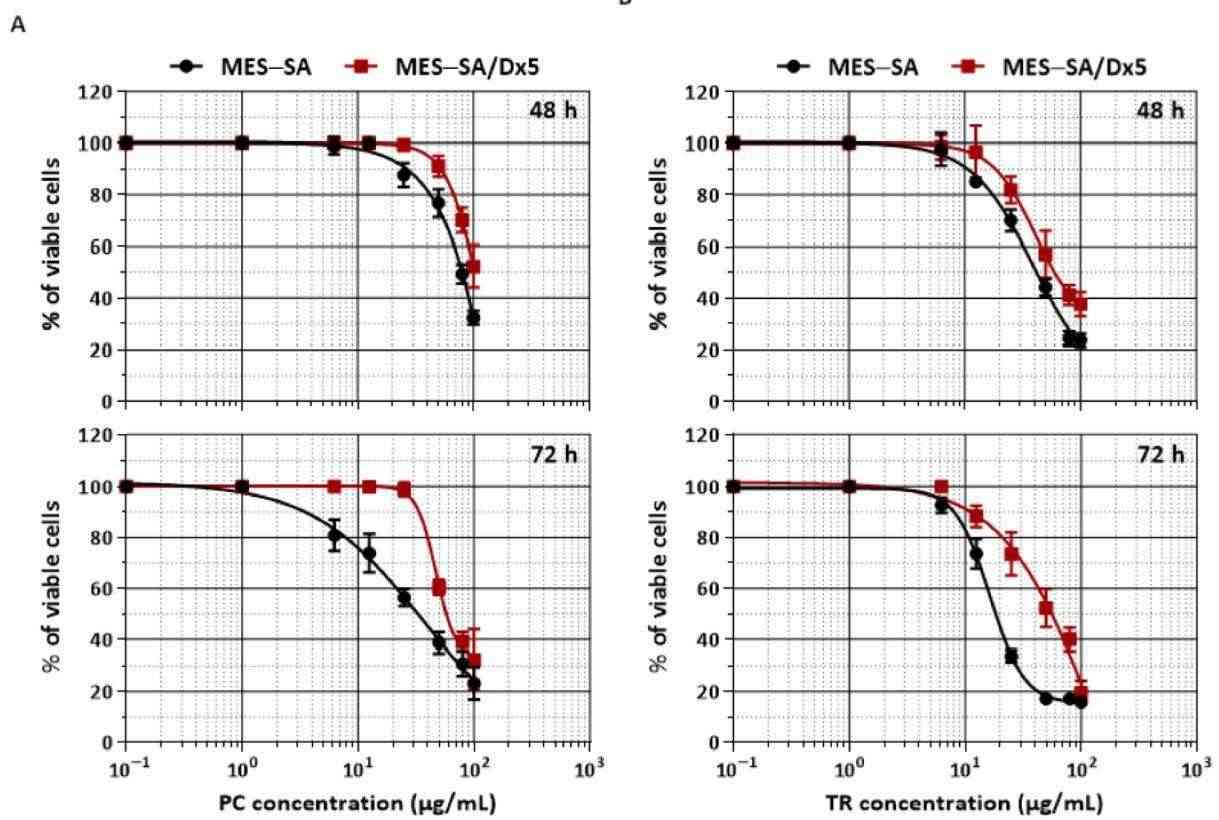 Fig.1 Inhibitory effects of PC and TR extracts on the proliferation of MES-SA and MES-SA/Dx5 cells.1
Reference
- Lahmar, Aida, et al. "Essential oils, pituranthos chloranthus and teucrium ramosissimum, chemosensitize resistant human uterine sarcoma MES-SA/Dx5 cells to doxorubicin by inducing apoptosis and targeting P-glycoprotein." Nutrients 13.5 (2021): 1719. Distributed under Open Access license CC BY 4.0, without modification.
 Download our brochure