Methyltransferase Panel Screening Service
Decoding Epigenetic Regulation: The Pivotal Role of Methyltransferases
Methyltransferases represent a crucial class of enzymes central to a myriad of biological processes. These enzymes meticulously catalyze the transfer of a methyl group (CH3) from S-adenosylmethionine (SAM) to various substrate molecules, including DNA, RNA, and proteins. This seemingly subtle modification orchestrates profound changes, influencing gene expression, chromatin architecture, cellular signaling, protein function, and overall cellular homeostasis.
DNA methyltransferases (DNMTs) are paramount in establishing and maintaining DNA methylation patterns, particularly at CpG islands in gene promoters. This epigenetic mark is intrinsically linked to gene silencing and plays an indispensable role in processes like embryonic development, cellular differentiation, and genomic stability. Beyond DNA, RNA methyltransferases modify various RNA species (mRNA, tRNA, rRNA), affecting RNA stability, splicing, and translation, thereby adding another layer to post-transcriptional gene regulation. Similarly, protein methyltransferases, including the widely studied histone methyltransferases, modify amino acid residues on proteins. These modifications can dramatically alter protein function, modulate protein-protein interactions, and fine-tune cellular signaling pathways, underpinning diverse physiological processes.
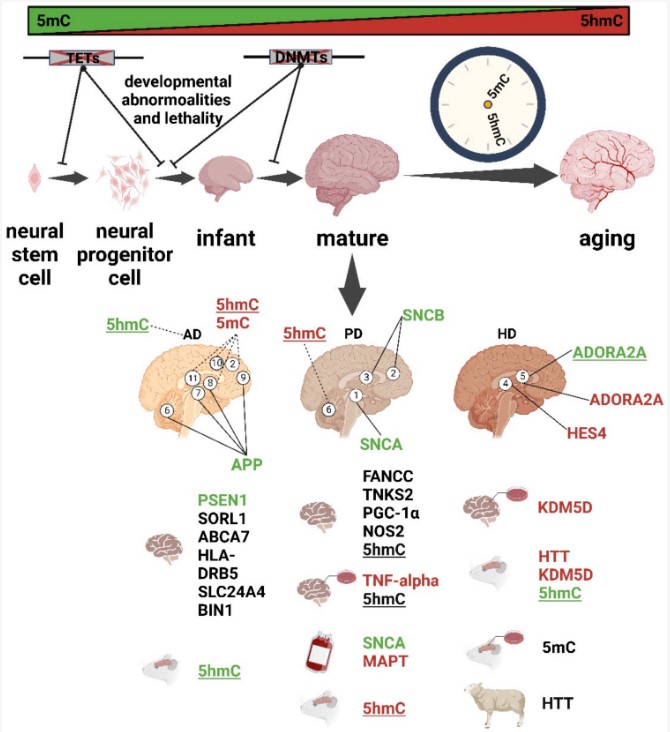 Fig.1 DNA methyltransferases involved in neurodegenerative diseases.1
Our Methyltransferase Panel Screening Service
At Creative Biolabs, our Methyltransferase Panel Screening Service is meticulously designed to accelerate drug discovery and target validation initiatives by providing a robust, high-throughput platform for assessing the activity of a diverse array of methyltransferases. We understand the complexity of epigenetic research and offer a tailored approach to identify compounds that precisely modulate methyltransferase activity.
Our service extends beyond just DNA methyltransferases to encompass a broad spectrum of enzymes, including critical histone methyltransferases and RNA methyltransferases, offering a holistic view of compound effects across the methyltransferase landscape. This comprehensive enzyme panel allows for unparalleled selectivity profiling, minimizing off-target effects and guiding the development of highly specific therapeutic candidates.
Service Content and Workflow
Creative Biolabs' Methyltransferase Panel Screening Service is built upon a foundation of established biochemical assay formats, optimized for both sensitivity and high-throughput compatibility. Our workflow is designed for precision, efficiency, and scalability, accommodating projects ranging from initial hit discovery to detailed mechanism-of-action studies.
Our comprehensive service content typically includes:
- Enzyme Panel Selection: Clients can choose from our extensive panel of purified recombinant methyltransferases, spanning DNA, RNA, and various protein methyltransferases (histone, arginine, lysine). We also offer custom panel development to meet specific research needs.
- Substrate Versatility: We utilize a wide range of biologically relevant substrates, including synthetic peptides, full-length proteins (e.g., histones, nucleosomes), DNA oligonucleotides, and RNA molecules, ensuring physiological relevance for your screening campaigns.
- Assay Format Options: Leveraging cutting-edge technologies, our assays include:
- Bioluminescent Assays: These highly sensitive assays measure the production of S-adenosylhomocysteine (SAH), a universal byproduct of methyltransferase reactions, through a coupled enzymatic reaction that generates a luminescent signal.
- Fluorescence-based Assays: These platforms directly detect SAH or employ Time-Resolved Fluorescence Resonance Energy Transfer for robust and homogenous readouts, minimizing interference from colored or fluorescent compounds.
- Radioactive Assays: For specific applications or when maximum sensitivity is required, we can utilize radiolabeled SAM to measure methyl group incorporation into the substrate, followed by detection via scintillation counting or autoradiography.
- High-Throughput Screening Capability: Our infrastructure supports high-density plate formats (e.g., 384-well plates), enabling the rapid screening of large compound libraries with minimal reagent consumption.
- Dose-Response and IC50/EC50 Determination: We perform detailed dose-response experiments to accurately determine the potency (IC50 for inhibitors, EC50 for activators) of identified compounds.
- Hit Confirmation and Validation: Identified hits undergo rigorous validation, often utilizing orthogonal assay formats or counter-screens to eliminate false positives and confirm genuine activity.
- Mechanism of Action (MOA) Studies: Beyond simple inhibition, we can help elucidate the MOA of compounds, determining whether they are competitive with SAM or substrate, non-competitive, or uncompetitive.
- Enzyme Kinetics: We provide detailed kinetic parameter determination (Km, Vmax, Ki) for methyltransferases and their modulators, offering deeper insights into their enzymatic behavior.
Our Advantages
Creative Biolabs stands as a leader in epigenetic service provision, offering distinct advantages that set us apart:
- Decades of Specialized Expertise
- State-of-the-Art Technology
- Comprehensive Enzyme and Substrate Panel
- Flexible and Tailored Solutions
FAQs
Q1: What types of methyltransferases can Creative Biolabs screen?
A1: Creative Biolabs offers screening for a wide range of methyltransferases, including DNA methyltransferases (DNMTs like DNMT1, DNMT3A, DNMT3B), histone methyltransferases (e.g., EZH2, G9a, various PRMTs, MLL family, SMYD family), and RNA methyltransferases (e.g., METTL3/METTL14 complex). Our capabilities are constantly expanding, and we welcome discussions on specific targets of interest.
Q2: What are the key advantages of using a panel screening approach?
A2: Panel screening offers several significant advantages, including:
- Selectivity Profiling: Identifying compounds that are selective for a particular methyltransferase while minimizing off-target effects.
- Broad Target Coverage: Simultaneously assessing compounds against multiple targets, accelerating the discovery of broad-spectrum modulators or identifying unexpected activities.
- Resource Efficiency: High-throughput capabilities reduce the time, cost, and reagent consumption compared to individual enzyme assays.
Q3: Can Creative Biolabs help with custom assay development for novel methyltransferases?
A3: Absolutely. Our team of experts specializes in custom assay development. If your target methyltransferase is not currently in our standard panel, we can work with you to develop and optimize a specific assay to meet your research needs.
Q4: How does Creative Biolabs ensure data quality and reliability?
A4: Creative Biolabs adheres to rigorous quality control standards throughout the screening process. This includes using high-quality purified enzymes and substrates, running appropriate positive and negative controls, performing assays in multi-replicate formats, and utilizing advanced statistical methods for data analysis. We provide detailed reports with raw data and comprehensive interpretations.
Contact Us
To learn more about Creative Biolabs' Methyltransferase Panel Screening Service or to discuss your specific research needs, please visit our website or contact our expert team. We are dedicated to supporting your scientific endeavors and accelerating your breakthroughs in epigenetic research.
Reference
- Xie, Jiaxiang et al. "Dynamic Regulation of DNA Methylation and Brain Functions." Biology vol. 12,2 152. 18 Jan. 2023, doi:10.3390/biology12020152. Distributed under Open Access License CC BY 4.0, without modification.
 Download our brochure