Resistant Cell Line Panel Screening Service
Drug resistance remains one of the most formidable obstacles in the development of effective cancer treatment. At Creative Biolabs, we recognize the complexity of drug resistance and are proud to offer our resistant cell line panel screening service.
Comprehensive Resistant Cell Line Panel Screening
Creative Biolabs has developed an extensive panel of resistant cell lines, encompassing various cancer types and resistance mechanisms. The service includes cell lines resistant to a range of commonly used chemotherapeutic agents, providing a broad testing environment for new therapeutic candidates. This comprehensive panel allows researchers to screen their antibody and protein candidates across diverse resistant cell lines, identifying potential efficacy limitations or resistance mechanisms. Additionally, the panel is fully customizable, allowing clients to select specific cell lines that match their research needs, ensuring a highly targeted and relevant screening process.
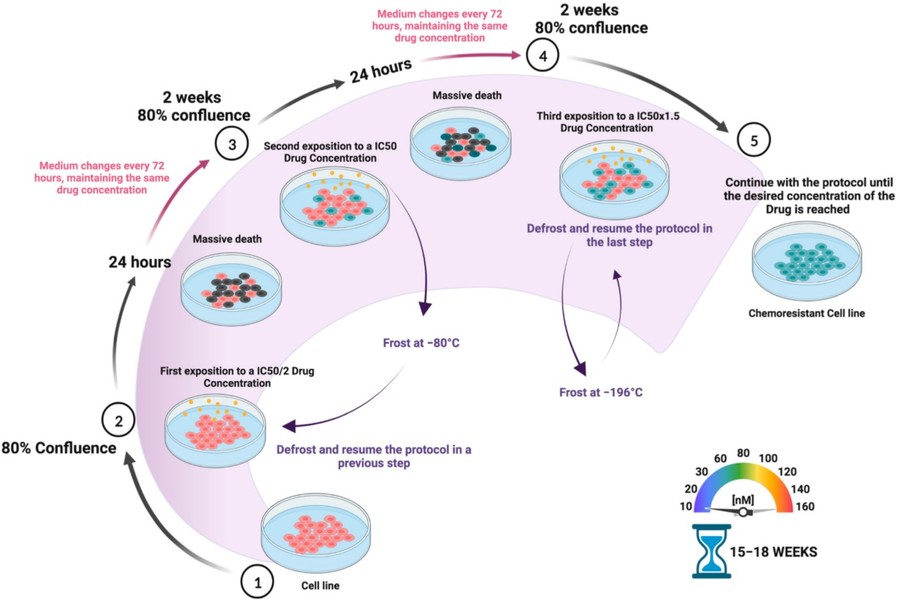 Fig.1 Protocol used to develop drug-resistant cell lines.1
A Broad Spectrum of Resistant Cell Lines
Our resistant cell line panel encompasses a diverse collection of over 30 drug-resistant cell lines covering various cancers, including lung cancer, lymphoma, gastric cancer, breast cancer, and prostate cancer. Our panel includes resistance models for critical targets such as KRAS G12C, CDK4/6, EGFR, PARP, and BTK—twelve of the most sought-after targets in cancer research. These resistant cell lines are invaluable tools for screening and characterizing the efficacy of potential therapeutic agents in real-world scenarios, enhancing the predictive power of preclinical studies.
Our panel includes tumor cell lines resistant to a variety of therapeutic agents, including osimertinib, afatinib, talazoparib, and Olaparib. These models provide a robust platform for understanding the nuances of drug resistance across different classes of chemotherapeutic and targeted therapies. Besides, we specialize in generating drug-resistant cell lines tailored to meet the specific needs of your research.
Expert Solutions for Tackling Drug Resistance
- Selection of Drug-Resistant Cell Lines
The service starts by selecting the appropriate drug-resistant cell lines based on the client's research objectives. Creative Biolabs offers a diverse selection of cell lines with varying resistance mechanisms, allowing for a customized approach that fits the specific therapeutic targets under investigation.
- Screening Process
The therapeutic candidates are introduced to the drug-resistant cell lines in a controlled in vitro environment. The screening involves assessing the ability of the candidate to inhibit cell proliferation, induce apoptosis, or disrupt key resistance pathways. This provides a clear picture of the candidate's effectiveness against resistant cancer cells.
- Comprehensive Data Analysis
After completing the screening, Creative Biolabs provides a detailed analysis of the results. This includes data on the candidate's potency, resistance profile, and potential off-target effects. The findings are presented in a clear and actionable format, enabling clients to make informed decisions about the next steps in their drug development process.
Applications
The applications of our resistant cell line panel screening service are vast and impactful. Pharmaceutical companies and academic researchers can leverage our services to:
- Explore the mechanisms of drug resistance and identify novel therapeutic targets.
- Evaluate the effectiveness of new therapeutic candidates against resistant cell lines.
- Investigate combination therapies that may overcome or prevent the emergence of resistance.
- Investigate the impact of resistance formation on cancer cell biology
Contact us for a detailed quote!
Reference
- Toledo, Belén, et al. "A brief review on chemoresistance; targeting cancer stem cells as an alternative approach." International Journal of Molecular Sciences 24.5 (2023): 4487. Distributed under Open Access license CC BY 4.0, without modification.
 Download our brochure