Human Lung Cell A549 based Proliferation Assay Service
A549 Cells
A549 cells, established in 1976, are a widely studied non-small cell lung cancer (NSCLC) cell line and have become an important model in lung cancer research. A549 cells are readily cultured and widely accessible within the research community. As a non-small cell lung cancer cell line, A549 cells can represent certain types of lung cancer, particularly in studies related to tumor biology and drug response.
However, there are also certain limitations to utilizing A549 cells as research material, including:
- Limitations in Tumor Heterogeneity: A549 cells may not fully represent the heterogeneity of lung cancer, especially regarding different histological types and subtypes.
- Lack of Microenvironment: Compared to original tumors, cell lines lack the stroma, vasculature, and inflammatory components present in the tumor microenvironment, which may affect the understanding of tumor biology.
- Genomic Drift: During culture, A549 cells may undergo genomic changes that could impact their relevance to the original tumors.
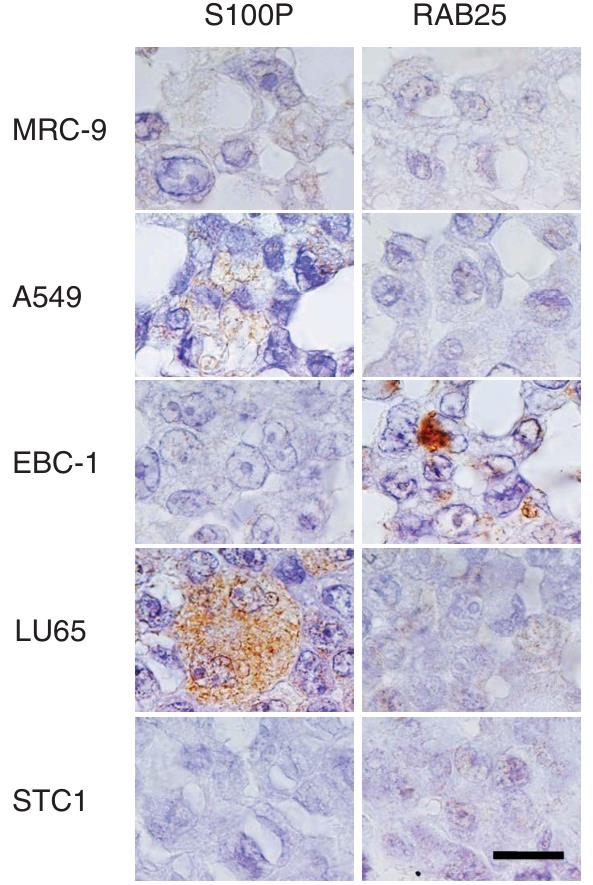 Fig.1 Different protein expression in four lung cancer cell lines.1
A549-based Proliferation Assay
In the A549-based proliferation assay, staurosporine served as the control. As an inhibitor, staurosporine significantly inhibited the adhesion and mobility of A549 cells in a dose-dependent manner. Staurosporine treatment caused significant alterations in the morphology of A549 cells. Untreated A549 cells were primarily short spindle- and triangle-shaped, resembling epithelial cells. Subsequent to staurosporine treatment, the cells transformed into elongated, spindle-like structures with thin extensions and tiny vacuoles in the cytoplasmic region. With a higher concentration, the cells continued to round up, and there was an increase in the number of shedding cells. Additionally, signs of apoptosis were observed, including vacuole fragmentation, chromatin degeneration, and a decrease in the number of microvilli on the cell surface.
A549 cells are a human lung cancer cell line commonly used for studying lung cancer. Assessing the compound's effect on A549-based proliferation can help evaluate the compound's potential efficacy as an anti-lung cancer drug.
Creative Biolabs is pleased to offer you a variety of cell proliferation assay services. You might also be interested in another proliferation assay involving a different lung cancer cell line H460. If you have any other needs or questions, please feel free to contact us.
Reference
- Watanabe, T., et al. " Comparison of lung cancer cell lines representing four histopathological subtypes with gene expression profiling using quantitative real-time PCR." Cancer Cell International 10.2 (2010). Distributed under Open Access license CC BY 4.0, without modification.
 Download our brochure