We generate symmetric bispecifics by assembling antibodies with unmodified heavy chain constant regions, ensuring high structural stability for standard research applications.
Bispecific Antibody (BsAb) Generation Service
As a leading biotech company, Creative Biolabs has extensive experience in the development of therapeutic antibodies. Our unique combination of comprehensive services allows us to guide you through antibody drug discovery challenge from target selection to clinical candidates. Currently we offer bispecific antibody generation services for various target categories, as well as antibody characterization and lead optimization.
Introduction What We Can Offer How We Can Help Why Choose Us? Customer Reviews FAQs Related Services Contact Us
Bispecific Antibody Structure and Formats
Broadly speaking, BsAbs fall into two categories - those with Fc regions and those without Fc regions. The advent of recombinant DNA methods has produced a series of recombinant BsAbs that have now produced more than 50 different forms. Several examples of formats in the schematic on the right are currently in clinical development or have been approved for cancer treatment of various bispecific antibodies (bsAbs).
Request a Consultation →
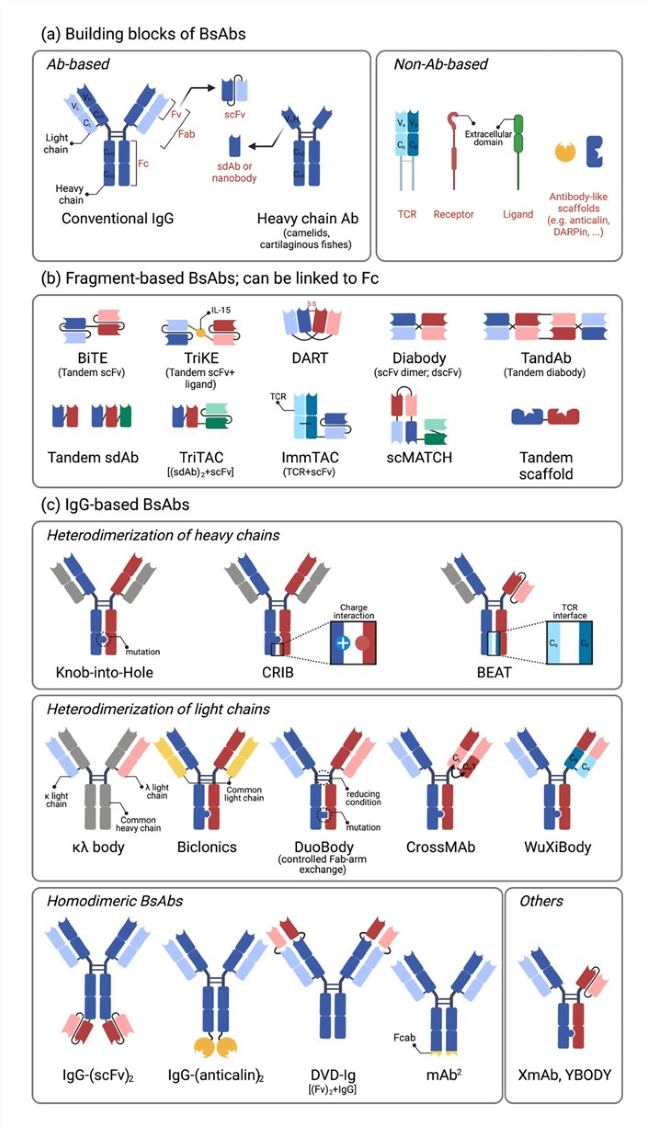 Fig.1 The building blocks and formats of bispecific antibodies. 1
What We Can Offer
Overview about how our scientists design strategies for producing different bispecific antibodies (bsAbs):
Symmetric Antibody Assembly
Asymmetric Heterodimerization Engineering
Our team utilizes heavy chain modifications, such as the "knob-into-hole" strategy, to force precise heterodimerization and create highly functional asymmetric bispecifics.
Non-Immunoglobulin Fusion Platforms
We offer specialized fusion of two distinct antibody fragments to non-immunoglobulin scaffolds, providing unique modularity for complex multi-targeting protein engineering projects.
Advanced Chemical Conjugation
For specialized requirements, we perform precise chemical conjugation of two different antibodies, ensuring high-yield production of stable and functional bispecific constructs.
Recombinant Bispecific Antibody Approaches
Knobs-into-holes BsAb IgG
The production of bivalent BsAbs is made easier by developing a "knob to well" technique in which H chain heterodimerization is forced by introducing different mutations into two CH3 domains, resulting in asymmetric antibodies. Specifically, the "knob" is mutated to one HC and a "hole" mutation is produced in the other HC to promote heterodimerization.
Ig-scFv fusion
Here, the direct addition of a new antigen-binding portion to the full-length IgG results in a tetravalent fusion protein. Examples include IgG C-terminal scFv fusions and IgG N-terminal scFv fusions.
Diabody-Fc fusion protein
This involves replacing the Fab fragment of IgG with a bispecific diabody (a derivative of scFv).
Double variable domain IgG
Here, the VL and VH domains of a specific IgG are fused to the N-terminus of VL and the VH of IgG of different specificity by a linker sequence, respectively.
Creative Biolabs Expertise
Our experts have more than 10 years of experience in the development of therapeutic bispecific antibodies as well as diagnostic antibodies. Our cutting-edge hybridoma development and phage display platforms produce the most comprehensive list of antibody products and extensive services portfolio. We also offer specialized antibody discovery and engineering services, including phage display library construction, immune library, engineered antibody lead production and antibody sequencing.
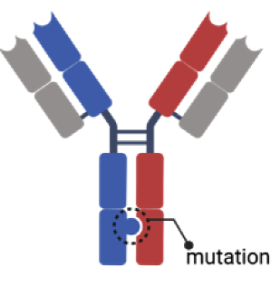
Knobs-into-holes BsAb IgG
The production of bivalent BsAbs is made easier by developing a "knob to well" technique in which H chain heterodimerization is forced by introducing different mutations into two CH3 domains, resulting in asymmetric antibodies. Specifically, the "knob" is mutated to one HC and a "hole" mutation is produced in the other HC to promote heterodimerization. |

Ig-scFv fusion
Here, the direct addition of a new antigen-binding portion to the full-length IgG results in a tetravalent fusion protein. Examples include IgG C-terminal scFv fusions and IgG N-terminal scFv fusions. |
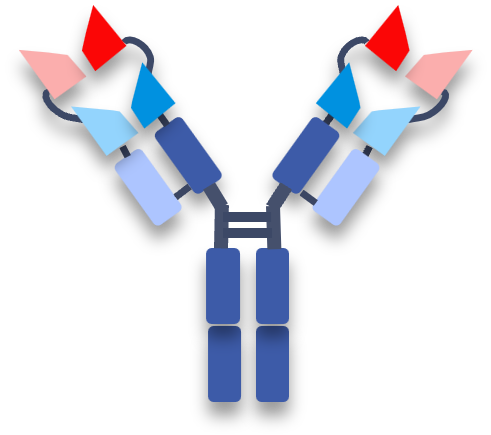
Diabody-Fc fusion protein
This involves replacing the Fab fragment of IgG with a bispecific diabody (a derivative of scFv). |

Double variable domain IgG
Here, the VL and VH domains of a specific IgG are fused to the N-terminus of VL and the VH of IgG of different specificity by a linker sequence, respectively. |
Customer Reviews
-
Thermostability Enhancement via Linker Architecture
Employing Creative Biolabs' platform, our constructs demonstrated heightened thermal stability. Structural optimization effectively attenuated aggregation during high-concentration formulation. - Dr. A**a. M. -
Analytical Precision in Lead Discovery
Perhaps due to the specialized architecture, we observed potent dual-target engagement. This facilitated lead identification with a significantly broader biochemical window. - Prof. J**n. R.
FAQs
How does Creative Biolabs handle the diversity of bispecific formats?
We offer specialized architectural selection based on your specific technical requirements, ensuring that every engineered construct maintains high specificity and manufacturability.
What measures are in place for strain stability?
We utilize cell bank documentation and pre-cultivation assessments to guarantee long-term strain stability during large-scale fermentation and high-throughput production cycles.
Related Services
Cell Line Development Service
We offer high-performance cell line engineering to establish stable, high-yield recombinant expressions, ensuring consistent protein production through genetic stability and productivity screening.
Learn More →Phage Display based Antibody Discovery Service
We provide high-capacity library screening using sophisticated phage display technology to isolate specific, high-affinity binders for the rapid generation of diverse monoclonal antibody candidates.
Learn More →How to Contact Us
Let us support your therapeutic antibody lead generation project and identify the most promising hit compounds for your drug candidates. Feel free to contact us for project quotations and more detailed information.
Reference
- You, Gihoon et al. "Bispecific Antibodies: A Smart Arsenal for Cancer Immunotherapies." Vaccines vol. 9,7 724. 2 Jul. 2021. Distributed under an Open Access license CC BY 4.0, without modification. https://doi.org/10.3390/vaccines9070724
 Download our brochure
Loading case studies...
Online Inquiry