Leukemia Cell HL-60 Engineering Service for Self-Destruction
The scientific team at Creative Biolabs will help provide the creativity, customization, and responsiveness to help engineer leukemia cell HL-60 to Turn Cancer Cells Against Themselves. Our years of experience, deep resources, and flexible service options will help deliver fast, reliable support for any phase of your project.
Treatments for Acute Myeloid Leukemia (AML)
AML is an aggressive hematological myeloid malignancy, characterized by rapid cellular proliferation, an aggressive clinical course, and generally high mortality. Progress has been made in the understanding of the genetic and molecular biology of this disease. Potentially useful agents include improved chemotherapies, targeted inhibitors, pro-apoptotic agents, microenvironment targeting molecules, cell cycle checkpoint inhibitors, and epigenetic regulators. Moreover, advances in immunotherapy, which employs antibodies, chimeric antigen receptor (CAR) T cells, checkpoint inhibitors, and vaccines, provide an alternative pathway for AML treatment. Nevertheless, side effects persist, and novel therapeutic agents are needed for this disease.
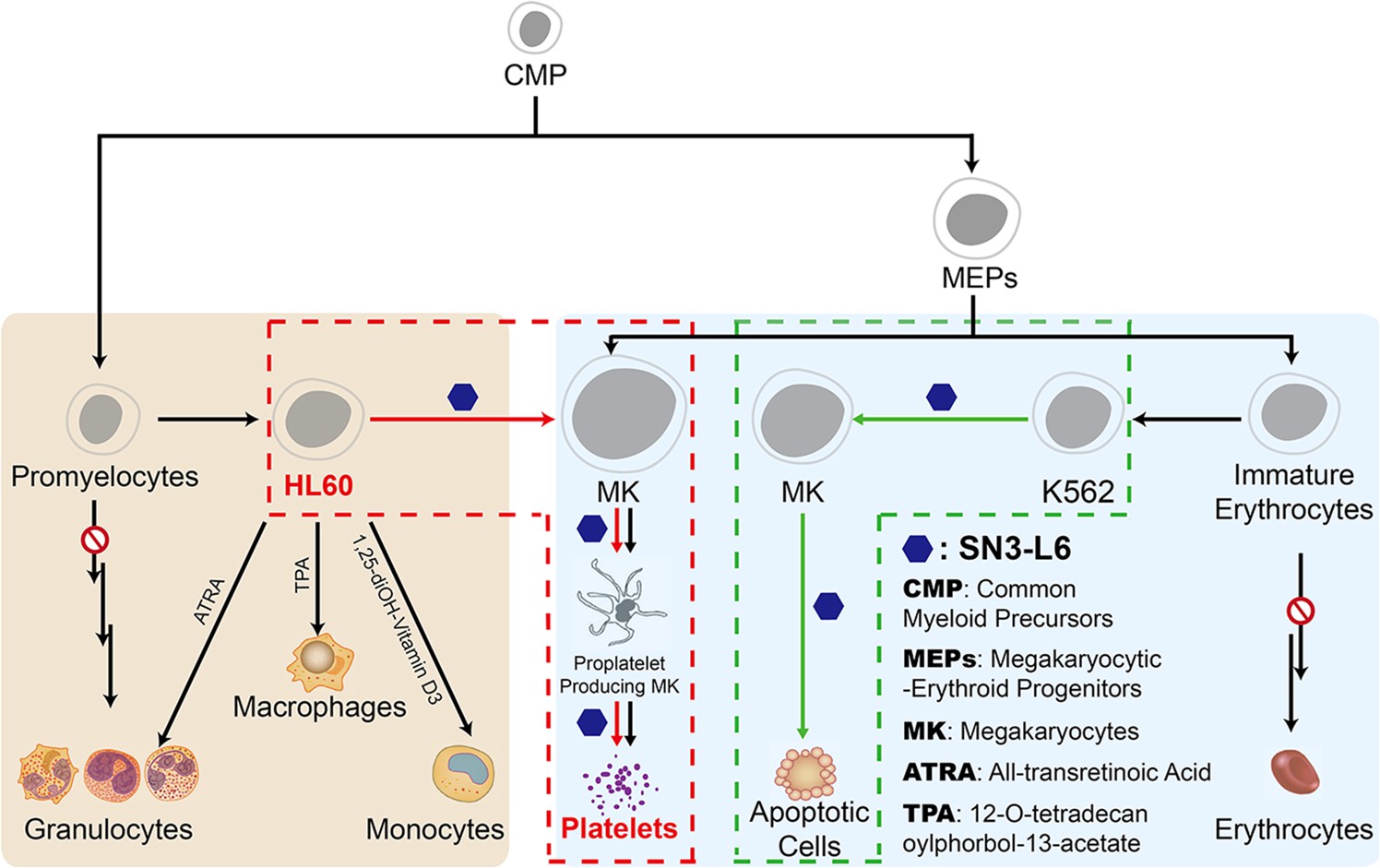 Fig.1 Normal and new differentiation pathways of hemocytes or induced differentiation pattern of leukemia cells by inductive agents.1
Why Choose HL-60 Cell Line?
Although leukemic cells from patients with acute myeloid leukemia display a seemingly unlimited proliferative capacity in vivo, their life span in liquid suspension culture is usually limited to a few cell divisions. One possible explanation is that certain growth factors sustaining leukemic cell division are absent from the in vitro culture environment. HL-60 cell line was derived from peripheral blood leukocytes of a 36-year-old Caucasian female with acute promyelocytic leukemia, which can be induced to differentiate in vitro into a number of different cell types. Studies with HL-60 cell lines have proved invaluable in a variety of different areas. This cell provides an invaluable model system for studying the relationship between particular hematopoietic differentiative lineages. Moreover, HL-60 serves as an invaluable model system for studying both the regulation of expression of these cellular oncogenes and the physiologic role in the differentiation of normal monocytes, macrophages, and granulocytes.
HL-60 Engineering Service at Creative Biolabs
Creative Biolabs combines deep, industry-leading expertise with innovative platforms to inspire the lymphangiogenic potentiation of immunotherapy to turn cancer cells against themselves. A comprehensive range of Cancer Cells is available to be engineered employing multiple Genetic Methods, including Retrovirus, Lentivirus, Adenovirus, Adeno-associated Virus, and CRISPR-based Methods.
As an excellent model, HL-60 suggests new therapeutic approaches for patients with leukemia. We have developed several different approaches for engineering HL-60 for cancer cell self-destruction purposes. Our strategies for engineering cancer cells for self-destruction include but are not limited to:
- Engineering Cancer Cells with Cytokine Overexpression for Stronger T Cell Activation
- Engineering Cancer Cells with Target-specific Aptamer for Cancer Immunotherapy
- Engineering Cancer Cells With Aptamer-siRNA for Enhanced Antitumor T Cell Immunity
- Engineering Cancer Cells with Synthetic Immunomodulatory Gene Circuits for Cancer Immunotherapy
- Engineering Cancer Cells with Targeted siRNA for Cancer Immunotherapy
For more detailed information, please feel free to contact us or directly send us an inquiry.
Reference
- Hou, Wen, et al. "Induction of differentiation of the acute myeloid leukemia cell line (HL-60) by a securinine dimer." Cell Death Discovery 6.1 (2020): 123. Distributed under Open Access license CC BY 4.0, without modification.
 Download our brochure