Creative Biolabs delivers a thorough analysis service that encompasses an integrated pipeline from initial sample preparation and multi-omic data acquisition to professional bioinformatic interpretation, ensuring a seamless flow for your research project.
Ferroptosis Resistance Marker Analysis Service
Creative Biolabs provides an integrated suite of analytical tools to identify the metabolic and genetic drivers of resistance in cell-based models. We deliver precise quantification of enzymatic defenses and lipid remodeling factors. By partnering with us, our clients expect to gain a deeper understanding of cellular escape mechanisms, allowing for the strategic optimization of lead compounds and the identification of synergistic research targets. This multidimensional approach clarifies the molecular pathways that allow cells to survive, providing a robust foundation for refining experimental leads.
Introduction What We Can Offer How We Can Help Why Choose Us Customer Reviews FAQs Related Services Contact Us
Ferroptosis Resistance Marker Analysis Service: Overcoming Research Barriers
Ferroptosis is an iron-dependent form of cell death regulated by the GPX4 enzyme. Recent studies highlight that resistance involves multiple backup systems, including DHODH in the mitochondria and the FSP1 pathway. Furthermore, the Mevalonate pathway and GCH1-BH4 axis serve as metabolic engines supporting these defenses. Creative Biolabs integrates these findings to provide a detailed analysis of the barriers preventing cell death in research settings, ensuring that your compound's mechanism is fully understood through evidence-based research models.
Request a Consultation →
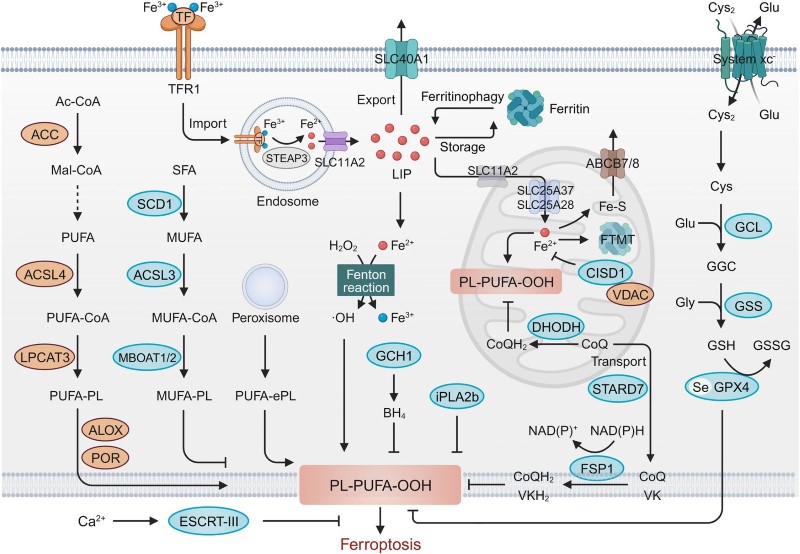 Fig.1 Ferroptosis in cancer: from molecular mechanisms to therapeutic strategies. 1
What We Can Offer
One-stop Analysis Service
Customized Analytical Protocols
We offer customized analytical protocols consisting of tailor-made assays designed to meet your specific research objectives, including cell-line-specific marker panels and bespoke cytokine stimulation models for your unique experimental goals.
High-Volume Processing Capability
Our high-volume processing capability features throughput platforms capable of processing large batches of research samples while maintaining analytical depth, allowing for rapid data generation across extensive experimental groups in your pipeline.
Standard Validation Tools
We provide access to state-of-the-art lipidomics (LC-MS/MS) and proteomics platforms used to quantify the concentration of resistance markers, providing the necessary depth to identify the specific biochemical signatures that drive responses.
How Creative Biolabs Can Assist Your Project
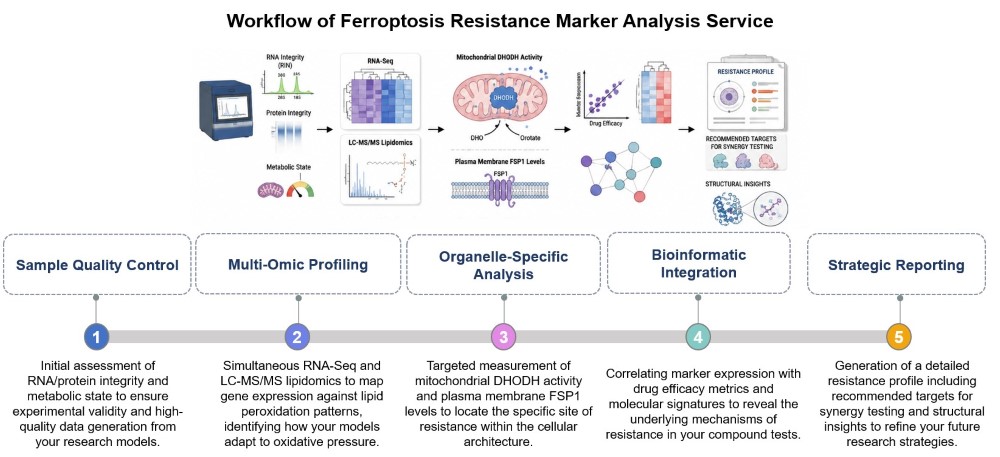
Highlights
Scientific Specialization
Our team focuses on the intricate mechanics of oxidative stress, ensuring your data is aligned with current research standards. We adapt our methodologies to fit your specific cellular models and objectives.
Enhanced Analytical Scope
We explore beyond standard pathways to identify diverse escape routes across multiple organelles. This detailed approach provides a thorough map of molecular defenses that might otherwise remain hidden during routine screening.

Consultative Partnership
Creative Biolabs functions as an extension of your R&D team. We provide expert interpretation of complex biological data, helping you navigate research roadblocks and refine your investigative strategies with clear evidence-based results.
Project Specificity
We reject one-size-fits-all solutions, opting instead for highly customized experimental designs. This ensures that every analysis is optimized for the unique chemical properties and biological targets of your specific research compounds.
Get a Quote Today to explore intricate molecular defense patterns in your models and receive expert guidance on identifying effective lead compounds.
Customer Reviews
-
Superior Sensitivity
Using Creative Biolabs' analysis in our oncology research has facilitated our understanding of mitochondrial lipid remodeling and its role in DHODH-dependent resistance in cell-based models. - Dr. A**n. S. -
Strategic Insight
The customized signature provided by Creative Biolabs allowed us to rescue a research project by identifying a synergy window with existing small molecule libraries for our target cell lines. - Prof. L**a. K.
FAQs
Can you analyze research tissue samples?
Yes, we process various research-grade materials including frozen cell pellets and fresh-frozen tissues. Our optimized protocols ensure high-quality extraction of lipid and protein markers for a detailed view of defense mechanisms.
Do you offer customization for non-oncology models?
Absolutely. While often used in oncology research, our markers are applicable to neurodegenerative study models. We provide specialized panels to explore how oxidative stress and iron-dependent death contribute to varied research outcomes.
Related Services
Ferroptosis Tumor-related Pathway Solutions
We map intracellular signaling cascades to determine how experimental leads influence metabolic checkpoints, providing insights into the regulatory networks that govern resistance in specialized research models.
Learn More →CRISPR-based Ferroptosis Target Screening Services
We provide high-throughput CRISPR/Cas9 libraries to systematically screen for novel genetic regulators, allowing researchers to identify and validate specific genes that modulate ferroptosis in research models.
Learn More →How to Contact Us
Creative Biolabs offers a sophisticated, multi-layered approach to identifying the various molecular escape routes that compromise the efficacy of ferroptosis-inducing leads. By analyzing organelle-specific defenses and metabolic flux patterns through detailed gene signatures, we provide the robust evidence required to bypass biological resistance and drive your research programs forward - Get Started Today.
Reference
- Zhou, Qian et al. "Ferroptosis in cancer: From molecular mechanisms to therapeutic strategies." Signal transduction and targeted therapy vol. 9,1 55. 8 Mar. 2024. Distributed under an Open Access license CC BY 4.0, without modification. https://doi.org/10.1038/s41392-024-01769-5
 Download our brochure
Loading case studies...
Online Inquiry