We accurately quantify compound potency against BT-474 cells in both 2D monolayers and 3D spheroids, rigorously measuring the resistance shift for a realistic measure of in vivo efficacy.
Human Breast Cell BT-474 based Proliferation Assay Service
The Creative Biolabs' BT-474 based proliferation assay service offers comprehensive, tailored solutions that transcend basic cell viability data. We leverage the BT-474 human breast cancer cell line's unique characteristics—particularly its HER2 positivity and dependence on estrogen—to generate robust, clinically relevant mechanistic insights. This deep data is essential for therapeutic development, directly supporting regulatory filings, and significantly accelerating lead compound optimization toward submission by demonstrating target engagement and efficacy in a relevant model.
Background What We Can Offer Workflow Publication Why Choose Us FAQs Customer Review Related Services Contact Us
The BT-474 Model: A Clinically Relevant Platform
The BT-474 cell line is an established in vitro model for breast cancer, crucial for translational research due to its ability to mimic clinically resistant tumors. Recent literature confirms that 3D BT-474 spheroids better recapitulate the in vivo tumor microenvironment, often exhibiting increased drug resistance compared to 2D cultures. The use of advanced proliferation assays, like those coupled with transcriptomic profiling (e.g., examining the survival gene), is paramount for unveiling the molecular mechanisms that drive acquired resistance and identifying effective combination strategies.
Specific Solutions and Deliverables
The BT-474 cell line was isolated from an infiltrating ductal carcinoma of the breast. Its unique molecular profile makes it invaluable for drug screening and mechanistic studies:
Precision and Determination
Chronic Resistance Modeling
We establish and analyze long-term, acquired resistance phenotypes (e.g., to Trastuzumab) to allow testing of novel therapies designed to overcome treatment failure.
Integrated Mechanistic Data
We couple proliferation data with advanced cellular analysis (e.g., flow cytometry, high-content screening) to understand your compound's precise mechanism of action.
Biomarker Correlation
Our platform generates cell pellets for immediate omics analysis (e.g., RNA-Seq), enabling direct correlation of drug response with gene expression changes to aid in stratification and identification of predictive response markers.
Discover How We Can Help - Request a Consultation
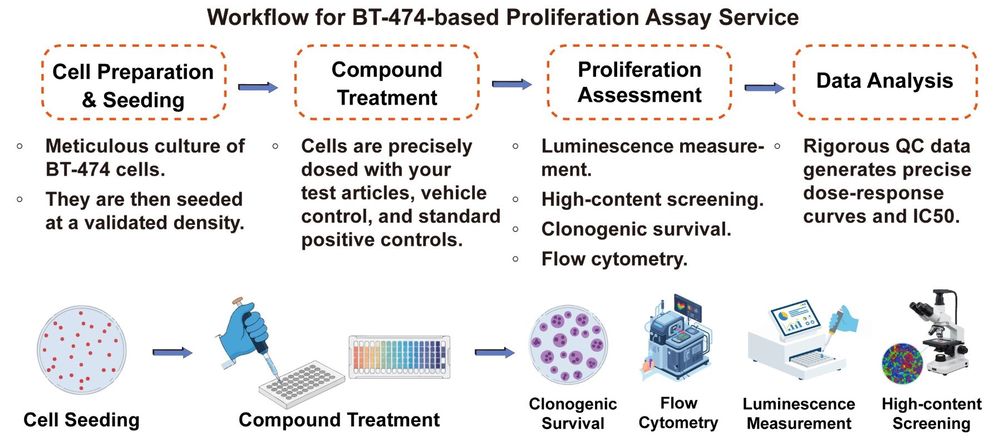
Workflow: Optimized Process for Rapid and Reliable Results
The Creative Biolabs workflow is meticulously designed for maximum scientific rigor and operational clarity, ensuring seamless integration with your drug discovery schedule.
Publication
This study investigates how human blood serum modulates trastuzumab efficacy in HER2-positive BT474 breast cancer cells. Serum samples showed donor-specific effects on drug sensitivity, with epidermal growth factor (EGF) specifically suppressing trastuzumab's effect. RNA sequencing showed trastuzumab acts by inhibiting the PI3K/Akt/mTOR axis, while EGF resistance involves PKC activation. These findings highlight the critical role of endogenous serum factors in personalizing HER2-positive breast cancer treatment.
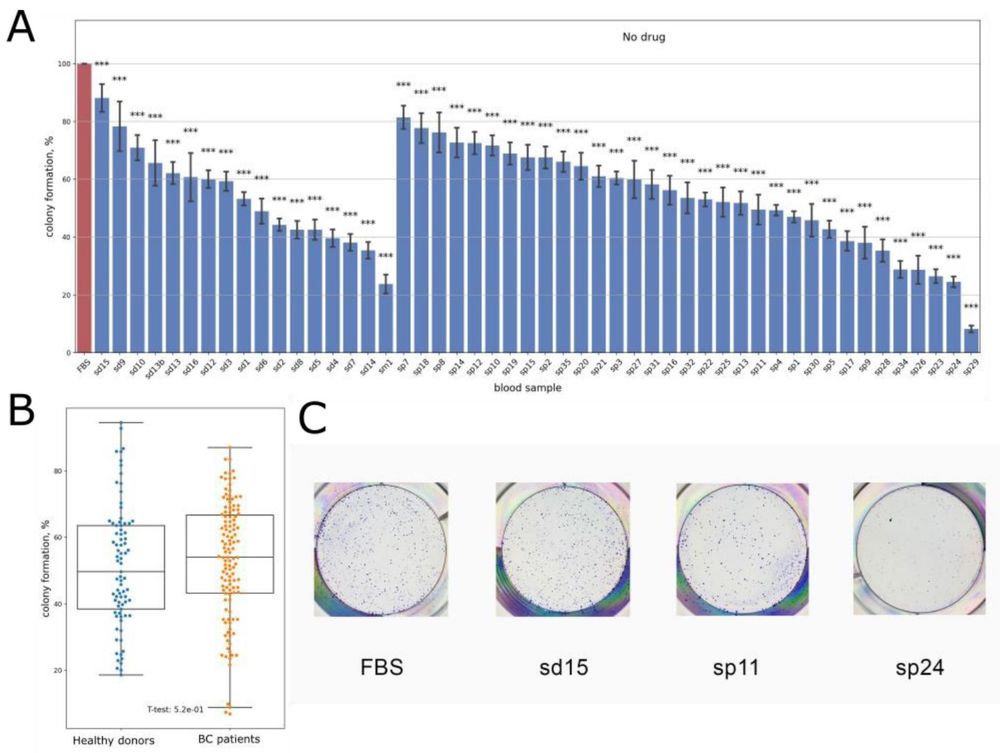 Fig.1 Comparative analysis of colony formation in BT474 cells. 1
Why Choose Us
Creative Biolabs is a recognized leader in cancer cell based assays, providing the strategic expertise needed to navigate the complexities of oncology with unmatched precision and biological relevance.
Dual Receptor Model Authority
Our specialization in the HER2+ subtype provides deep insight into the complex HER2/HER3 interplay, which is crucial for accurately interpreting the efficacy of targeted and combination therapies.
Spheroid Proficiency
We use proven, validated methodologies to generate highly uniform, reproducible BT-474 3D spheroids. This robust model faithfully reflects the in vivo environment, including factors that drive clinical resistance.

Integrated HCS and Flow Cytometry
We move beyond bulk viability by integrating high-content screening (HCS) for single-cell, spatial analysis of key markers (e.g., proliferation index Ki-67) and precise spheroid measurement, confirming genuine anti-proliferative activity.
Acquired Resistance Modeling
We offer customized chronic exposure protocols that meticulously replicate the clinical emergence of drug resistance, which is essential for developing next-generation therapeutics.
Experience the Creative Biolabs Advantage - Get a Quote Today
FAQs
Q1: How does the 3D BT-474 model improve predictability over a standard 2D monolayer assay?
A1: The 3D spheroid model introduces crucial physiological elements that are absent in 2D culture. This leads to altered cell signaling, reduced drug diffusion, and often results in increased drug resistance, providing a more accurate and predictive IC50 value that better reflects in vivo efficacy.
Q2: Can you use patient-derived biological fluids (serum/plasma) in the proliferation assay setup?
A2: Absolutely. Our customization options allow for the incorporation of patient-derived biological fluids or specific growth factors into the BT-474 culture medium. This capability enables you to assess how the tumor microenvironment or circulating factors in a patient influence the sensitivity or resistance to your test compound.
Q3: Besides luminescence, what quantitative markers of proliferation do you offer, and why?
A3: Beyond our high-sensitivity ATP luminescence assay, we offer HCS to quantify Ki-67 expression and measure spheroid volume, and flow cytometry for cell-cycle analysis. These markers confirm that the measured effect is true anti-proliferative activity, not merely cytotoxicity.
Customer Review
-
Deep Mechanistic Insight
Using Creative Biolabs' integrated proliferation and cell-cycle analysis significantly improved our understanding of the mechanism of action for our compound inhibitor. Precise quantification of G1/S phase arrest was crucial for our patent filing submission. - Je L.* -
Validated Resistance Model
The chronic Trastuzumab resistance model provided by Creative Biolabs was essential for our follow-up study. The stable, long-term proliferation kinetics allowed us to confidently correlate gene expression changes with the emergence of resistance. - Pl A.*
Related Services
To further support your oncology pipeline, Creative Biolabs offers complementary services designed to provide a complete picture of your drug's efficacy:
DCs-Involved Immuno-Oncology Models for In Vivo Testing
Creative Biolabs developed DCs-involved immuno-oncology models for in vivo testing, co-inoculated with CD3+ T cells, induced DCs, and cancer cells in mice to assess anti-tumor efficacy.
Learn More →Treg Functional Profiling in Tumors
Creative Biolabs offers advanced Treg functional profiling in tumors. We assess immunosuppressive function, cytokine production, antigen recognition, and signaling pathways using flow cytometry and co-culture systems to understand tumor immune evasion.
Learn More →Contact Us
To learn more about how our specialized BT-474 assay service can be customized to meet the unique challenges of your oncology project, please reach out directly to our scientific team.
Empower your breast cancer drug discovery program with precision data. Contact Creative Biolabs today to customize your BT-474 proliferation assay.
Reference
- Kamashev, Dmitrii, et al. "Human blood serum inhibits ductal carcinoma cells BT474 growth and modulates effect of HER2 inhibition." Biomedicines 10.8 (2022): 1914. Distributed under Open Access license CC BY 4.0, without modification. https://doi.org/10.3390/biomedicines10081914
 Download our brochure
Loading case studies...
Online Inquiry