Immuno-Toxin Construction Service
The Structure of an Immunotoxin
Immunotoxins are designed to target and kill specific cells in the body, such as cancer cells or cells involved in autoimmune diseases. The immunotoxins typically consist of three components: a targeting moiety, a cytotoxic payload (usually a protein-based toxin), and a linker molecule that connects the antibody and toxin.
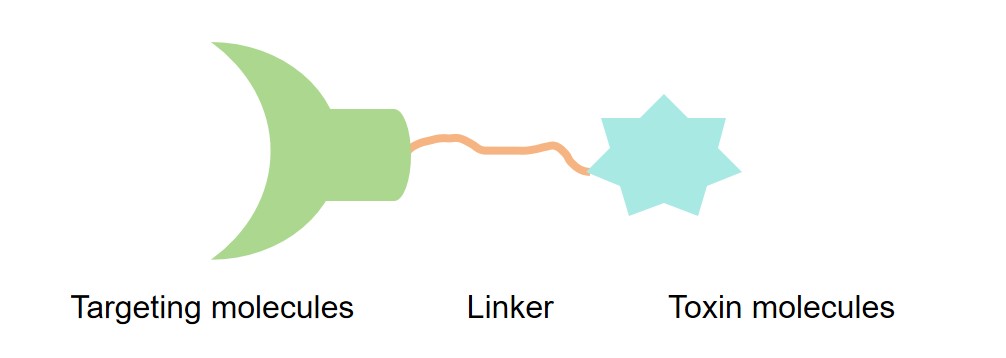 Fig.1 The structure of immunotoxin.
- Antibody-Based Immunotoxins
Antibody-based immunotoxins are a type of therapeutic agent that combines the specificity of antibodies with the cytotoxic potency of toxins. The antibody portion of the immunotoxin binds specifically to the target cells, while the toxin portion induces cell death or interferes with cellular processes.
- Ligand-Based Immunotoxins
Ligand-based immunotoxins are a type of therapeutic agent that combines a specific targeting ligand with a toxin payload. The targeting ligand is typically a receptor-binding peptide (cytokine, growth factor, etc.) that binds specifically to a cell-surface antigen or receptor expressed on the target cells.
Immunotoxin Construction Service
At Creative Biolabs, we provide a one-stop immunotoxin construction service, including:
- Selection or generation of a targeting moiety: Antibodies that bind to the specific target antigen are required. Our scientists have rich experience in antibody development.
- Selection or generation of a toxin: A wide range of toxins such as diphtheria toxin (DT), ricin, and gelonin, have been studied as a cytotoxic moiety used in immunotoxins.
- Conjugation of antibody and toxin: Different conjugation techniques can be used, including chemical crosslinking, site-specific conjugation, or genetic fusion.
- Evaluation of immunotoxin activity: In vitro cell-based assays, such as flow cytometry or cell viability assays, can be used to assess the killing of target cells and the specificity of the immunotoxin.
- Optimization and characterization: If necessary, the immunotoxin needs further modifications to enhance its efficacy and specificity. This can involve adjusting the toxin-to-antibody ratio, modifying the linker used for conjugation, or optimizing the purification process.
 Fig.2 A workflow of immunotoxin construction.
Expression Systems of Immunotoxin
Immunotoxins can be expressed using yeast, bacteria, or cell expression systems. At Creative Biolabs, we utilize various expression systems to generate immunotoxins with optimal performance. The choice of expression system depends on various factors such as protein complexity, post-translational modifications, and scale of production. Our expertise in protein expression and purification allows us to develop efficient expression strategies for producing recombinant immunotoxins.
Please don't hesitate to get in touch with us to discuss your immunotoxin development project. Our experts are pleased to provide support and guidance for your project.
Reference
- Rust, Aleksander, et al. "The use of plant-derived ribosome inactivating proteins in immunotoxin development: Past, present and future generations." Toxins 9.11 (2017): 344. Distributed under Open Access license CC BY 4.0, without modification.
 Download our brochure