Lysine Acetyltransferase (KAT) Panel Screening Service
Introduction: The Epigenetic and Metabolic Nexus of Lysine Acetyltransferases (KATs)
Lysine acetyltransferases (KATs) represent a pivotal family of enzymes that orchestrate a myriad of cellular processes through the precise post-translational modification known as lysine acetylation. This critical enzymatic activity involves the transfer of an acetyl group from acetyl-CoA to specific lysine residues on target proteins, encompassing both histones and non-histone proteins. Such acetylation fundamentally alters protein function, influencing their subcellular localization, enzymatic activity, stability, and crucial protein-protein interactions.
Given their widespread influence on fundamental cellular processes, it is unsurprising that dysregulation of KATs has been strongly implicated in the pathogenesis of numerous diseases, including various cancers, autoimmune disorders, and neurodegenerative conditions. This critical involvement positions KATs as compelling and emerging drug targets, driving intense research into the development of specific KAT inhibitors. The complexity of the KAT family, comprising diverse members such as p300, the MYST family and GCN5/PCAF, necessitates specialized tools and services for their comprehensive characterization and the identification of selective modulators.
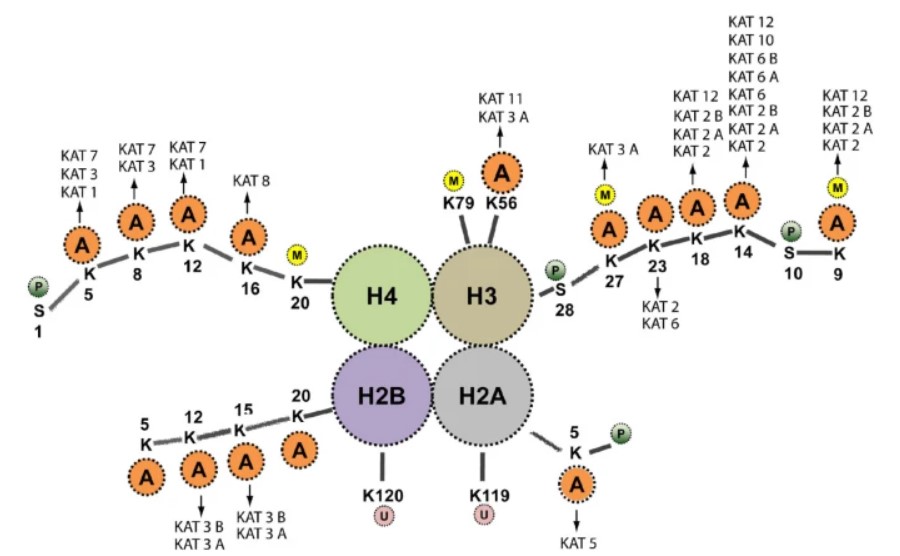 Fig.1 Schematic of lysine acetyltransferases involved in acetylating histone proteins.1
Our Lysine Acetyltransferase (KAT) Panel Screening Service
At Creative Biolabs, with over 20 years of dedicated experience in the biological industry, we recognize the critical need for advanced tools to unravel the intricacies of lysine acetylation. Our Lysine Acetyltransferase (KAT) Panel Screening Service is meticulously designed to provide researchers and drug developers with a comprehensive and robust platform for the biochemical and pharmacological characterization of this vital enzyme family.
This specialized service offers a systematic approach to investigate KAT activity, identify their cellular targets, and, crucially, screen for potential KAT inhibitors or activators. By leveraging our extensive expertise and cutting-edge methodologies, Creative Biolabs empowers clients to accelerate their discovery efforts, validate therapeutic targets, and gain deeper mechanistic insights into KAT biology. Our commitment at Creative Biolabs is to deliver high-quality, reproducible data that forms a solid foundation for informed decision-making in both basic research and drug development pipelines.
Comprehensive Service Content and Workflow
Creative Biolabs' KAT Panel Screening Service is structured to provide a detailed and actionable analysis, encompassing a multi-faceted workflow from enzyme selection to expert data interpretation.
Diverse Enzyme Panel Selection for Broad Coverage
Our service begins with the careful selection of a comprehensive panel of recombinant KAT proteins. This panel includes key members from various families, such as the widely studied p300, the diverse MYST family (including MOF, MOZ, KAT6A/B, and KAT7), and the GCN5/PCAF group. These enzymes are often available with convenient FLAG tags, facilitating easy detection and purification for high-quality assay performance. This broad selection ensures that researchers can investigate a wide spectrum of KAT biology relevant to their specific research interests.
Advanced Assay Methodologies for Accurate Measurement
Creative Biolabs employs a suite of in-house developed biochemical assays meticulously optimized to measure KAT activity with high sensitivity and reliability. These assays typically utilize acetyl-CoA as the acetyl donor and monitor the acetylation of histone or peptide substrates. Our methodologies integrate various advanced techniques to ensure accurate quantification:
- Spectrophotometric and Fluorometric Assays: These methods rely on measuring changes in absorbance or fluorescence upon substrate acetylation. For instance, the detection of CoA release upon acetylation can be measured fluorometrically using thiol-sensitive fluorogenic probes like 7-diethylamino-3-(4'-maleimidylphenyl)-4-methylcoumarin (CPM). These assays offer an excellent balance of sensitivity, speed, and ease of use, making them ideal for high-throughput screening.
- Antibody-Dependent Assays: Utilizing highly specific antibodies that recognize acetylated lysine residues, these assays quantify the amount of antibody bound to the acetylated substrate. This approach is particularly valuable for studying the acetylation of specific lysine residues on proteins, providing precise insights into target modification.
While radioisotopic labeling provides high sensitivity, Creative Biolabs prioritizes non-radioactive methods for convenience and safety in our standard screening panels, ensuring efficient throughput without compromising data quality.
High-Throughput Inhibitor Screening and Potency Determination
A cornerstone of our service is the systematic screening of chemical libraries to identify potential KAT inhibitors. Our high-throughput screening capabilities allow for the rapid evaluation of thousands of compounds. Following initial hit identification, Creative Biolabs performs potency determination, typically calculating the half-maximal inhibitory concentration (IC50) for promising compounds. This quantitative measure is crucial for ranking the efficacy of potential drug candidates.
Rigorous Selectivity Profiling for Targeted Therapeutics
To assess the specificity of identified inhibitors, Creative Biolabs conducts rigorous selectivity profiling. This involves evaluating the effects of potential inhibitors across multiple KATs within the panel. Identifying compounds that selectively target specific KATs is paramount for developing therapeutics with minimal off-target effects, thereby improving drug safety and efficacy. Our detailed profiling helps researchers understand the precise inhibitory landscape of their compounds.
In-Depth Data Analysis and Expert Interpretation
At Creative Biolabs, we offer expert support for comprehensive data analysis and interpretation. Our proficient biological specialists analyze the results, identify significant hit compounds, and provide valuable insights into their potential mechanism of action. This expert guidance is critical for translating screening results into meaningful biological conclusions and informing subsequent research directions.
Strategic Follow-up Studies for Confirmatory Insights
Following initial screening, Creative Biolabs can provide further analysis to confirm findings and guide subsequent drug discovery efforts. This includes performing enzymatic assays using the same purified proteins to validate the observed effects and delve deeper into the kinetic properties of the enzyme-inhibitor interactions. These follow-up studies are designed to strengthen the evidence base and streamline the progression of promising candidates.
Our Advantages
Creative Biolabs stands as a leader in the field of KAT research, offering distinct advantages that set our services apart:
- Unparalleled Expertise
- State-of-the-Art Technology:
- Comprehensive Panel & Customization
- Deep Mechanistic Insights
- Quality and Reliability
FAQs
Q1: What types of samples can be screened using Creative Biolabs' KAT Panel Screening Service?
A1: Our service is primarily designed for screening chemical libraries of small molecules or purified compounds. We can also accommodate natural product extracts or other compound collections provided by the client. The assays typically involve purified recombinant KAT enzymes and defined substrates.
Q2: What follow-up services are available after the initial screening?
A2: Creative Biolabs offers a range of follow-up services, including confirmatory enzymatic assays, detailed kinetic studies, and further selectivity profiling against a broader panel of enzymes. We can also provide guidance for subsequent drug discovery efforts based on the screening results.
Q3: Why are Lysine Acetyltransferases (KATs) considered important drug targets?
A3: KATs are crucial drug targets because their dysregulation is directly implicated in numerous diseases, including various cancers, inflammatory conditions, and neurodegenerative disorders. Modulating KAT activity offers a promising therapeutic strategy to restore normal cellular function and combat disease progression.
Q4: How is the data presented, and what kind of analysis is included?
A4: Data is presented in a clear, comprehensive report, including raw data, normalized activity values, and calculated IC50 values where applicable. Our expert team provides in-depth analysis, identifying hit compounds and offering insights into their potency, selectivity, and potential mechanism of action.
Contact Creative Biolabs for Your KAT Research Needs
To learn more about Creative Biolabs' Lysine Acetyltransferase (KAT) Panel Screening Service or to discuss your specific research requirements, please do not hesitate to contact our team of biological specialists. We are dedicated to supporting your scientific endeavors and helping you unlock new insights into the complex world of lysine acetylation. Visit our website or reach out to us directly to initiate a consultation.
Reference
- Patel, Jigneshkumar et al. "The biology of lysine acetylation integrates transcriptional programming and metabolism." Nutrition & metabolism vol. 8 12. 3 Mar. 2011, doi:10.1186/1743-7075-8-12. Distributed under Open Access License CC BY 4.0, without modification.
 Download our brochure