Human Prostate Cell LNCaP (FGC) based Proliferation Assay Service
LNCaP (FGC) Cell Line
LNCaP (FGC) cells are derived from a human prostate adenocarcinoma lymph node metastatic site. These cells are androgen-sensitive and exhibit key features of prostate cancer biology. Consequently, they serve as an excellent model for investigating the effects of therapeutic compounds on prostate cancer cell growth and proliferation. The relevance of LNCaP (FGC) cells extends to their application in evaluating hormone responsiveness, understanding signaling pathways, and studying genetic and epigenetic changes associated with prostate cancer progression. Their ability to mimic in vivo conditions accurately makes them an indispensable tool in preclinical research and drug development.
Creative Biolabs specializes in various bioassay services for therapeutic antibody and protein development. Our experts utilize LNCaP (FGC) cells in proliferation assays to assess the impact of various therapeutic antibodies and proteins on cell growth and viability.
LNCaP Cell-based Proliferation Assay
At Creative Biolabs, we are committed to providing top-tier LNCaP (FGC)-based proliferation assay services to facilitate therapeutic antibody and protein development. We employ several sophisticated methods for LNCaP (FGC) proliferation assays. These include, but are not limited to, cell counting, MTT assays, BrdU incorporation assays, and flow cytometry-based cell cycle analysis. Each method is meticulously selected and customized according to the specific needs of our clients, ensuring optimal results and valuable insights.
A key aspect of our LNCaP (FGC) proliferation assays is the determination of the half-maximal inhibitory concentration (IC50) value, a critical parameter in drug discovery and development. The IC50 value signifies the concentration of a compound required to inhibit 50% of cell proliferation, offering crucial insights into the potency and efficacy of therapeutic candidates.
Comprehensive Proliferation Assays for Various Tumor Cells
Recognizing the diversity and complexity of cancer, our proliferation studies are not limited to prostate cancer but extend various tumor types, including breast, colon, lung, and ovarian cancers, among others. This versatility is instrumental in driving forward a broad spectrum of oncology research. By offering proliferation assays for different tumor cells, we enable researchers to decipher the cellular and molecular mechanisms underlying cancer growth and progression and to evaluate the efficacy and specificity of novel therapeutic agents across various cancer models.
Advantages
- Customization and Optimization: We begin by understanding the unique requirements of each project and optimize assay conditions to ensure maximum relevance and accuracy.
- Rigorous Quality Control: Throughout the assay process, stringent quality control measures are in place to ensure consistency and reliability of the data.
- Data Interpretation and Reporting: Our team not only conducts the assays but also offers detailed data analysis and interpretation, helping clients to understand the implications of their results fully.
Published Data
LNCaP cells were treated with 6 concentrations of an inhibitor for five days, and cell viability was assessed using an MTT assay. The IC50 value is 13.41 ± 2.51uM.
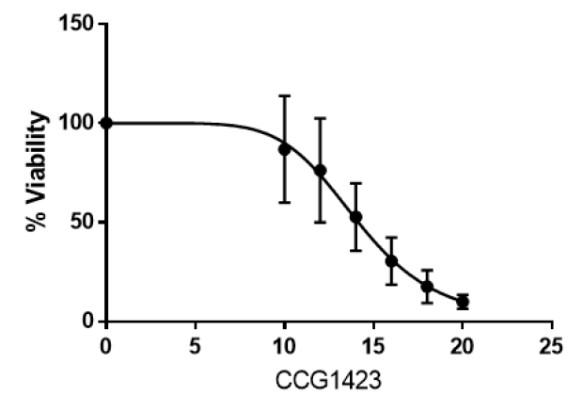 Fig.1 A cell viability curve of LNCaP cells after inhibitor treatment at different concentrations.1
Reference
- Watson, R. William, et al. "Inhibition of serum response factor improves response to enzalutamide in prostate cancer." Cancers 12.12 (2020): 3540. Distributed under Open Access license CC BY 4.0, without modification.
 Download our brochure