Human Peripheral Blood Cell MV-4-11 based Proliferation Assay Service
MV-4-11 Cell: a Model of Acute Myeloid Leukemia
The MV-4-11 cell line is a human biphenotypic B myelomonocytic leukemia cell line that was originally derived from the peripheral blood of a patient with biphenotypic leukemia. These cells are characterized by their expression of both myeloid and lymphoid lineage markers, making them an ideal model for cancer research, particularly for acute myeloid leukemia (AML). Due to their unique properties, rapid proliferation, and high transfection efficiency, MV-4-11 cells are extensively utilized in hematological research and drug development to understand the molecular mechanisms of leukemia and to evaluate the efficacy of anti-leukemic agents.
MV-4-11 Cell-based Proliferation Assay
In the rapidly evolving field of therapeutic antibody and protein development, precise and reliable cell proliferation assays are indispensable tools. As an industry leader with years of experience, Creative Biolabs offers cutting-edge MV-4-11-based proliferation assay services. We leverage a range of methods for the MV-4-11 proliferation assay, tailored to fit the unique requirements of your study. Our services include but are not limited to MTT, CCK-8, ATP-based luminescent assays, and BrdU incorporation assays, providing comprehensive insights into the proliferative effects of your compounds on MV-4-11 cells. Each technique comes with its own set of advantages, enabling us to provide results with high accuracy and reproducibility.
Our standard protocols are designed to assess various parameters crucial for understanding cell proliferation and drug efficacy, including:
- Growth Inhibition (GI50): This measure helps in identifying the concentration of a drug that results in a 50% reduction in cell proliferation. By exposing MV-4-11 cells to varying concentrations of the drug, we generate dose-response curves to accurately determine GI50 values.
- Total Growth Inhibition (TGI): TGI provides an assessment of the concentration required to completely suppress cellular proliferation. This parameter is especially critical for identifying compounds that can fully suppress the growth of malignant cells without necessarily inducing cell death, offering a different therapeutic angle.
- Lethal Concentration (LC50): LC50 is the concentration of a compound at which 50% of the cells are killed. Evaluating LC50 provides insights into the therapeutic window and safety margins of prospective drugs.
Comprehensive Proliferation Assays for Various Tumor Cells
Beyond the MV-4-11 model, our proliferation assay services extend to a wide spectrum of tumor cell lines. Our extensive panel of assays includes but is not limited to breast cancer cell lines (e.g., MCF-7, BT-474), lung cancer cell lines (e.g., A549, NCI-H460), colorectal cancer cell lines (e.g., HCT-116, SW-620), and many others. By offering proliferation assays for a broad range of tumor cells, Creative Biolabs empowers you to comprehensively evaluate the therapeutic potential of your antibody and protein candidates across multiple cancer indications.
Published Data
To assess the inhibitory effects, MV-4-11 cells were treated with increasing concentrations of the drugs, either individually or in combination, for a duration of 48 hours. The results demonstrated that both individual drugs and their combinations effectively reduced the proliferation of MV-4-11 cell lines.
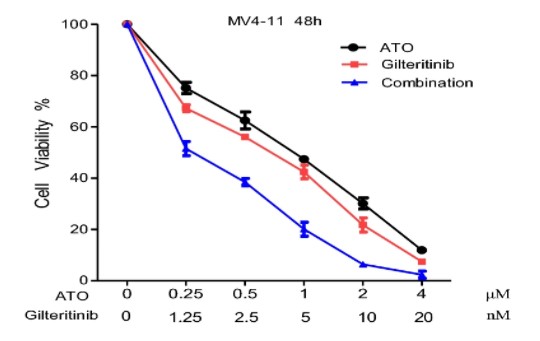 Fig.1 The inhibition effects on MV-4-11 cell proliferation.1
Reference
- Hu, Xiaoli, et al. "Arsenic trioxide potentiates Gilteritinib-induced apoptosis in FLT3-ITD positive leukemic cells via IRE1a-JNK-mediated endoplasmic reticulum stress." Cancer Cell International 20 (2020): 1-14. Distributed under Open Access license CC BY 4.0, without modification.
 Download our brochure