Human Pancreas Cell PANC-1 based Proliferation Assay Service
PANC-1 for Pancreatic Carcinoma Research
PANC-1 cell line, derived from a human pancreatic carcinoma, has become a cornerstone in cancer research, particularly for pancreatic adenocarcinoma. These cells are epithelial in nature and exhibit similar oncogenic profiles and resistance mechanisms found in pancreatic tumors, making them invaluable for studying tumor progression, drug response, and proliferation. Consequently, PANC-1 cells serve as a foundational tool for developing and refining cancer treatment methodologies, making them indispensable in preclinical studies and drug discovery processes.
PANC-1-based Proliferation Assay
Creative Biolabs is proud to offer comprehensive services for PANC-1-based proliferation assay services to aid both academic and industrial research initiatives. Our PANC-1 proliferation assay services are designed to evaluate the anti-proliferative effects of various compounds, drugs, or biological molecules. Common methods we offer to evaluate cell proliferation include the MTT assay, Alamar Blue assay, BrdU incorporation assay, CFSE staining, flow cytometry, etc. These assays are optimized for high sensitivity and reproducibility, ensuring that researchers can confidently rely on the data to drive meaningful conclusions and advancements in cancer treatment strategies.
Our standard procedures involve the culturing of PANC-1 cells in optimal conditions, followed by the application of different stimuli or therapeutic agents under strictly controlled environments. Through quantifying cell division and survival, these assays enable researchers to screen for compounds that may inhibit tumor growth, understand cellular responses to treatments, and explore the molecular pathways involved in cancer progression.
Some Methods for PANC-1-based Proliferation Assay
| Method | Assay |
|---|---|
| Cell counting | Trypan blue staining, automated cell counting |
| Cell metabolic activity | MTT assay, XTT assay, CCK8 assay, Alamar Blue assay |
| Nucleoside-analog incorporation during DNA synthesis | BrdU incorporation assay |
| Dye dilution proliferation assays | CFSE staining |
| Labeling cell cycle-associated proteins | Ki-67 staining |
One-stop Proliferation Assay
Creative Biolabs provides a one-stop platform for a wide range of tumor cell proliferation assays beyond the PANC-1 model. We offer specialized assays for different tumor types, allowing researchers to comprehensively evaluate the proliferation dynamics and drug responses of a broad spectrum of human cancer cell lines, including breast cancer, lung cancer, colorectal cancer, and more. Our platform integrates advanced technologies, from high-throughput screening to personalized assay development, ensuring that each study is tailored to your specific objectives. Our experienced scientists perform these assays under stringent quality control measures, ensuring that each step, from cell culture to data analysis, adheres to the highest standards of scientific rigor. Let Creative Biolabs be your trusted partner in the journey towards groundbreaking cancer research and innovative treatment solutions.
Published Data
The effect of the drug on the PANC-1 cell line was examined by a cell viability assay. Upon the treatment, significant decreases have been observed in mean cell viability with IC50 values at 24 h post-treatment being 7.7 μM for PANC-1.
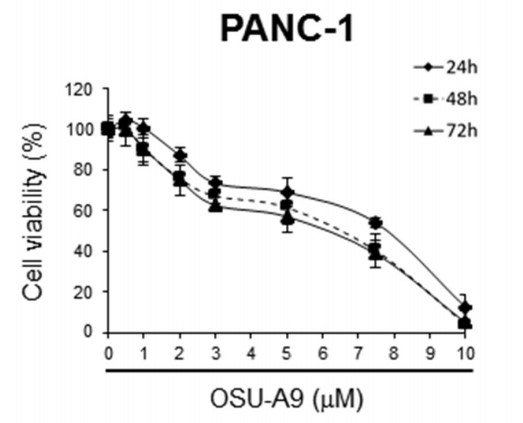 Fig.1 Effects of a potent indole-3-carbinol derivative on cell viability of PANC-1 cell line.1
Reference
- Tsai, Wan-Chi, et al. "OSU-A9 inhibits pancreatic cancer cell lines by modulating p38-JAK-STAT3 signaling." Oncotarget 8.17 (2017): 29233. Distributed under Open Access License CC BY 4.0, without modification.
 Download our brochure