The initial phase involves the strategic selection of a protease panel tailored to the specific research question. Creative Biolabs maintains an extensive library of purified proteases, allowing clients to choose from a pre-validated, broad-coverage panel or to customize a panel focused on particular disease pathways or protease families. This flexibility ensures that the screening efforts are directly aligned with the client's scientific goals, whether it involves broad-spectrum profiling or targeted selectivity assessment.
Protease Panel Screening Service
Background Service Applications Highlights FAQs Contact Us
Introduction: The Indispensable Role of Proteases in Biology and Disease
Proteases, a diverse class of enzymes, are fundamental to virtually all biological processes across all forms of life, from single-celled organisms to complex multicellular systems. Their primary function involves the hydrolysis of peptide bonds, meticulously controlling protein synthesis, degradation, and activation. This enzymatic precision renders them indispensable for critical physiological functions such as digestion, blood coagulation, immune response, apoptosis, and intricate cellular signaling pathways. With nearly 500 distinct proteases encoded within the human genome, their ubiquitous involvement underscores their profound biological significance.
However, the exquisite regulatory mechanisms governing protease activity are often perturbed in pathological states. Dysregulation, whether through aberrant expression, uncontrolled activity, or mutations, is directly implicated in the pathogenesis of a wide array of diseases, including various cancers, inflammatory and autoimmune disorders, neurodegenerative conditions, cardiovascular diseases, and numerous viral infections. Consequently, proteases have emerged as highly attractive and validated therapeutic targets for drug discovery. The challenge, however, lies in developing highly selective inhibitors that can precisely modulate the activity of a target protease without inadvertently affecting other crucial proteases, thereby minimizing off-target effects and enhancing drug safety. At Creative Biolabs, with over 20 years of specialized experience in the biotechnology industry, we recognize this critical need and have developed a robust Protease Panel Screening Service designed to address these complexities comprehensively.
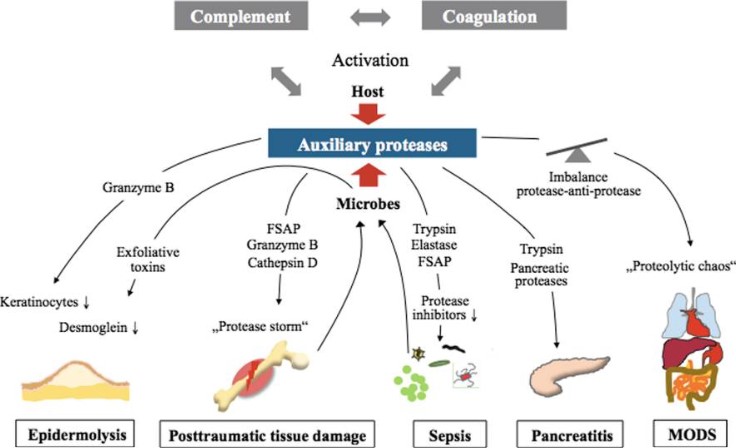 Fig.1 Involvement of protease activity in various diseases.1
Our Protease Panel Screening Service
Creative Biolabs' Protease Panel Screening Service represents a cornerstone in modern drug discovery and biological research, offering a sophisticated platform for the comprehensive profiling and high-throughput screening of novel protease inhibitors. Leveraging our extensive experience and state-of-the-art facilities, we provide an unparalleled capability to assess the specificity, potency, and potential off-target effects of candidate compounds against a broad spectrum of therapeutically relevant proteases.
The rationale behind employing a multi-protease panel is rooted in the inherent promiscuity that can sometimes characterize protease inhibitors. A compound designed to inhibit one specific protease might inadvertently interact with others, leading to undesirable side effects. Our service mitigates this risk by systematically evaluating inhibitor performance across a diverse panel of proteases, encompassing all major catalytic classes: serine proteases, cysteine proteases, aspartic proteases, metalloproteases, and threonine proteases. This comprehensive approach ensures that drug candidates possess the desired selectivity profile, paving the way for safer and more effective therapeutic agents. Creative Biolabs' commitment to scientific rigor and precision underpins every aspect of this service.
Service Content
Our Protease Panel Screening Service is meticulously structured to provide detailed insights into protease activity and inhibitor efficacy. The service workflow is designed for maximum efficiency, scientific accuracy, and adaptability to diverse research objectives.
Protease Panel Selection and Customization
Advanced Assay Methodologies
Creative Biolabs employs a diverse array of cutting-edge assay methodologies to quantify protease activity and inhibition with high sensitivity and specificity:
- Fluorescence-Based Assays: These are widely utilized due to their high sensitivity and real-time monitoring capabilities. They typically involve fluorogenic peptide substrates. Upon protease cleavage, the fluorophore is released or separated from the quencher, resulting in a measurable increase in fluorescence signal.
- Colorimetric Assays: These methods rely on the enzymatic cleavage of chromogenic substrates. The release of a colored product, quantifiable by spectrophotometry, directly correlates with protease activity.
- Luminescence Assays: Utilizing luminescent substrates, these assays offer exceptional sensitivity, detecting protease activity through the emission of light.
- Mass Spectrometry (MS)-Based Assays: For unparalleled specificity and the ability to identify and quantify complex mixtures of protease substrates and products, MS-based assays are employed. This advanced technique provides detailed insights into substrate cleavage sites and the overall proteolytic landscape.
- Cell-Based Assays: For a more physiologically relevant context, Creative Biolabs offers cell-based assays where protease activity is assessed within living cells, often utilizing reporter gene systems or activity-based probes that covalently bind to active proteases.
Inhibitor Screening and Kinetic Analysis
Candidate protease inhibitors are rigorously screened against the chosen panel using the selected assay methods. Compounds are incubated with the proteases, and the reduction in enzymatic activity is precisely measured. Beyond simple activity reduction, Creative Biolabs provides in-depth kinetic analysis, including:
- IC50 Determination: The concentration of an inhibitor required to achieve 50% inhibition of protease activity, a standard measure of inhibitor potency.
- Ki Determination: The inhibition constant, providing a more fundamental measure of inhibitor affinity for the enzyme, independent of enzyme concentration.
- Mode-of-Inhibition Analysis: Determining whether an inhibitor acts competitively, non-competitively, or uncompetitively, which is crucial for understanding its mechanism of action and guiding further chemical optimization.
Comprehensive Data Analysis and Reporting
Data generated from our protease panel screening is subjected to rigorous statistical analysis. Clients receive comprehensive reports that include raw data, analyzed results, IC50 and Ki values, mode-of-inhibition data, and graphical representations. This detailed reporting ensures that all necessary information is readily available for informed decision-making in drug development pipelines.
Diverse Applications
The applications of Creative Biolabs' Protease Panel Screening Service are extensive:
- Drug Discovery: Identifying novel, highly selective protease inhibitors as potential drug candidates for a wide range of diseases. This includes targeting viral proteases (e.g., for HIV, Hepatitis C, SARS-CoV-2), cancer-associated proteases (e.g., MMPs, cathepsins), and proteases involved in metabolic disorders (e.g., DPP-IV).
- Understanding Protease Function: Elucidating the precise biological roles of specific proteases in complex cellular processes, signaling pathways, and disease progression, particularly for those with previously uncharacterized functions.
- Biomarker Discovery: Identifying changes in protease activity or expression profiles that can serve as diagnostic, prognostic, or pharmacodynamic biomarkers for various diseases.
- Enzyme Engineering: Screening and characterizing engineered proteases with altered substrate specificities, enhanced catalytic activities, or improved stability for biotechnological applications.
Our Advantages
Creative Biolabs stands as a leader in protease panel screening, offering distinct advantages that accelerate research and development:
- Broadest Protease Coverage
- Advanced Methodological Versatility
- Unparalleled Expertise and Experience
- Comprehensive Kinetic and Mechanistic Analysis
FAQs
Q1: What types of proteases can Creative Biolabs screen?
A1: Creative Biolabs can screen a comprehensive range of proteases, including serine proteases, cysteine proteases, aspartic proteases, metalloproteases, and threonine proteases. We have an extensive in-house panel covering various therapeutically relevant targets.
Q2: What assay formats does Creative Biolabs typically use?
A2: We utilize a variety of highly sensitive assay formats, including fluorescence-based assays, colorimetric assays, luminescence assays, mass spectrometry-based assays, depending on the specific protease and client requirements.
Q3: How is inhibitor potency determined?
A3: Inhibitor potency is primarily determined by calculating the IC50 value. For more in-depth analysis, we also determine Ki values and the mode of inhibition (competitive, non-competitive, uncompetitive).
Q4: What kind of data will I receive?
A4: You will receive a comprehensive report including raw data, analyzed results, IC50 and Ki values, mode-of-inhibition data, and graphical representations in an easily accessible format, typically Excel.
Contact Us
To learn more about Creative Biolabs' Protease Panel Screening Service, discuss your specific research needs, or request a quote, please do not hesitate to contact our expert scientific support team. We are committed to partnering with you to accelerate your drug discovery and biological research endeavors.
Reference
- Huber-Lang, Markus et al. "Auxiliary activation of the complement system and its importance for the pathophysiology of clinical conditions." Seminars in immunopathology vol. 40,1 (2018): 87-102. doi:10.1007/s00281-017-0646-9. Distributed under Open Access License CC BY 4.0, without modification.
 Download our brochure
Loading case studies...
Online Inquiry