Senescence Marker Profiling Service
Creative Biolabs provides a comprehensive analytical suite that delivers actionable insights into the cellular state, secretory behavior, and metabolic rewiring of your research models. We assist your project by providing definitive proof of senescence induction or clearance, mapping the pro-tumorigenic niche, and identifying novel senescence-associated secretory phenotype (SASP) targets for therapeutic intervention. Whether you are developing senolytic compounds to clear aged cells or exploring therapy-induced senescence (TIS) in oncology research, our data-driven approach ensures your leads are grounded in robust biological evidence.
Molecular Drivers and Pathological Implications of Cellular Senescence
Cellular senescence is a complex state of permanent cell-cycle arrest typically triggered by stressors such as critical telomere attrition, oncogene activation, or persistent DNA-damaging agents. This phenomenon acts as a "double-edged sword" within the biological landscape. While it serves as an initial tumor-suppressive barrier, the eventual accumulation of senescent cells drives aggressive disease progression through the SASP. This secretome remodels the microenvironment, promoting inflammaging and therapeutic resistance. Effective drug discovery necessitates high-resolution profiling beyond traditional markers to include nuclear integrity shifts via Lamin-B1, genomic instability tracking through DNA damage response (DDR) foci, and the activation of the cGAS-STING inflammatory axis to fully characterize the pathological impact of the senescent niche.
Comprehensive Analytical Solutions for Senescence Characterization
To effectively navigate the heterogeneity of cellular aging, Creative Biolabs provides an integrated suite of high-resolution assays designed to validate the senescent phenotype across diverse biological systems and therapeutic contexts.
Multi-Tiered Biomarker Validation
We utilize a tiered approach combining canonical markers with lysosomal SA-β-gal and lipofuscin detection (GL13) to ensure definitive identification and resolve ambiguities between senescence and quiescence.
High-Resolution SASP Profiling
Our platform employs multiplexed proteomics and transcriptomics to characterize the SASP, identifying pro-inflammatory cytokines, matrix metalloproteinases, and growth factors that drive tissue remodeling and therapeutic resistance.
Nuclear and Genomic Integrity Mapping
We perform a detailed analysis of nuclear envelope breakdown via Lamin-B1 quantification and visualize senescence-associated heterochromatin foci (SAHF) and DDR markers to confirm stable cell-cycle exit.
Metabolic and Signaling Axis Analysis
Our experts profile the AKT-mTOR and cGAS-STING pathways to determine the metabolic state of senescent cells, identifying potential bypass mechanisms and triggers for chronic inflammation within the microenvironment.
Consult with Our Senior Scientists to Build a Customized Profiling Strategy for Your Lead Compounds
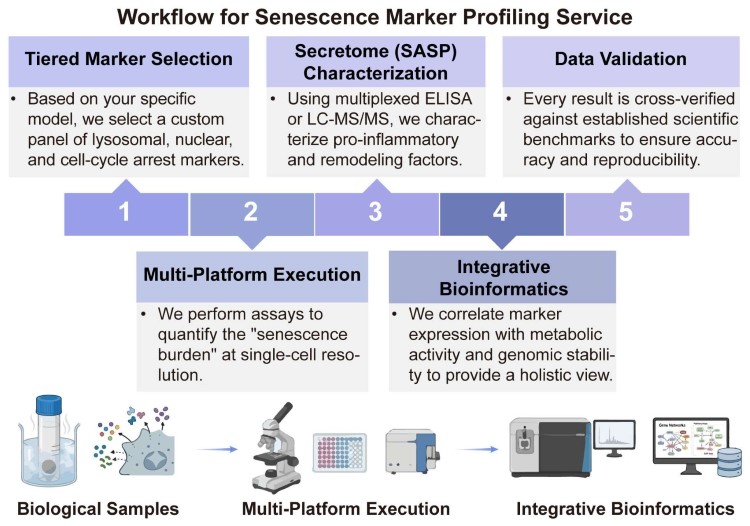
Workflow
To initiate the service, our team follows a rigorous, collaborative process designed for maximum data integrity and comprehensive characterization of the senescent phenotype.
Publication
This review explores the paradox of senescent-marker-positive (Sen-Mark+) cancer cells, which express key senescence effectors like p16 and p21 yet remain highly proliferative and often correlate with poor prognosis. The authors discuss how these cells challenge traditional views of senescence as an anti-tumor barrier, the difficulties in accurately classifying such cells, and emerging therapeutic strategies, including pro-senescence therapies, senolytics, and immunotherapy, that could exploit this phenomenon for cancer treatment.
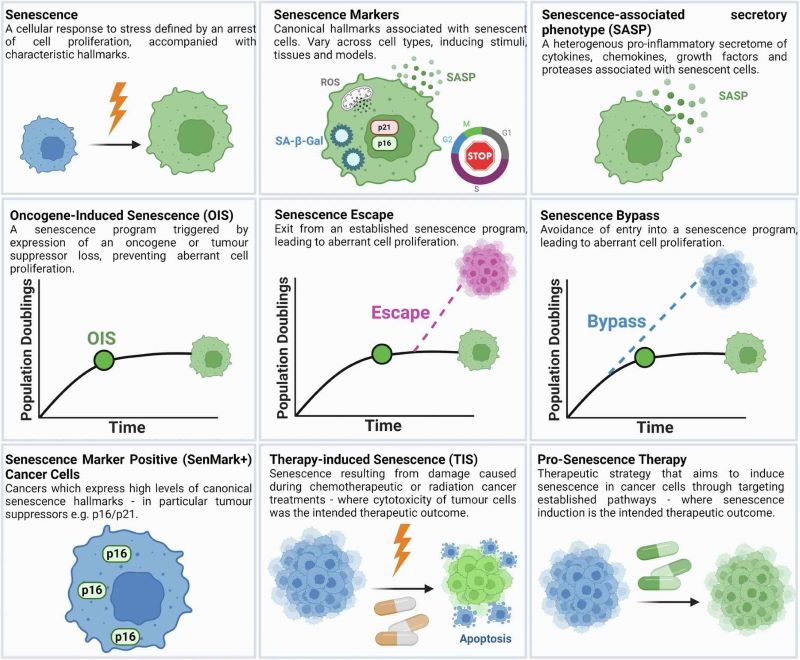 Fig.1 Defining core processes in cellular senescence. 1
Why Choose Us?
Creative Biolabs stands at the forefront of cellular senescence research by integrating the latest technological breakthroughs into our core service modules. Our platform offers distinct advantages by addressing the heterogeneity of the senescent phenotype across different tissues. We provide specialized protocols for identifying niche-mediated resistance in bone marrow mesenchymal stem cells (MSCs) and the complex tumor microenvironment (TME), utilizing proprietary detection tools such as GL13 for lipofuscin and TeSLA for precision telomere dynamics. Our methodologies are grounded in high-resolution multi-omic integration, allowing researchers to distinguish between terminal arrest and potentially reversible states driven by metabolic bypass mechanisms like the AKT-mTOR signaling axis.
Harness the Creative Biolabs Advantage—Request a Custom Quote Tailored to Your Research Budget
FAQs
Can Creative Biolabs distinguish between senescence and quiescence?
Yes. We combine arrest markers (p16/p21) with negative proliferation markers to definitively distinguish permanent arrest from temporary quiescence.
Is SA-β-gal staining sufficient for definitive identification?
Generally, no. Robust identification requires multi-marker validation, such as combining enzymatic assays with Lamin-B1 loss or SASP profiling.
How do you quantify SASP in a heterogeneous sample?
We utilize multiplexed ELISA for bulk secretion and spatial transcriptomics to map cell populations contributing to the pro-inflammatory niche.
Customer Review
-
High Specificity in Niche Profiling
Using Creative Biolabs' senescence marker profiling in our research on AML has significantly facilitated our understanding of niche-mediated resistance. Their GDF15/SASP panel was exceptionally precise. - Dr. Al R -
Reliable TIS Validation
The combination of GL13 staining and AI-driven morphometry allowed us to quantify therapy-induced senescence in our cancer models with a level of detail that streamlined our entire lead optimization phase. - Prof. Marc S
Related Services
To further support your aging and oncology research, Creative Biolabs offers the following complementary services:
Extracellular Vesicle (EV) Immunophenotyping Service
Creative Biolabs provides EV immunophenotyping, quantifying surface protein profiles and cargo heterogeneity. We utilize high-resolution flow cytometry to evaluate nanoscale subpopulations and biomarker expression for targeted therapeutic delivery and quality control.
Learn More →Therapeutic Cytokine Development Services
Creative Biolabs provides therapeutic cytokine development, quantifying receptor specificity and TME-confinement. We utilize rational protein engineering to evaluate Treg-sparing IL-2 variants and IL-15 fusions for an optimized therapeutic index.
Learn More →How to Contact Creative Biolabs
Creative Biolabs offers a world-class senescence marker profiling service that bridges the gap between basic research and drug discovery. By utilizing advanced multi-omic technologies and comprehensive validation protocols, we empower our clients to turn the complexity of cellular senescence into a strategic advantage. Our detailed analytical reports provide the evidence necessary for robust scientific conclusions and accelerated development pipelines.
Secure Your Project Timeline—Contact Our Team for a Detailed Consultation and Feasibility Assessment
Reference
- O'Sullivan, Emily A., et al. "The paradox of senescent-marker positive cancer cells: challenges and opportunities." npj Aging 10.1 (2024): 41. Distributed under Open Access license CC BY 4.0, without modification. https://doi.org/10.1038/s41514-024-00168-y
 Download our brochure