We offer robust chemokine production and measurement services to quantify key chemotactic cytokines. This service is essential for understanding cell migration and the directional signaling that organizes the immune response in your in vivo model.
Learn More →T & B Cell based In Vivo Assay Service
Creative Biolabs' T and B cell-based in vivo assay provides a sophisticated platform for assessing the immunogenicity and efficacy of your therapeutic candidates, from vaccines to cell therapies. Creative Biolabs delivers critical data on antigen-specific immune responses, including T cell activation and the generation of memory cells, as well as B cell-mediated humoral immunity. Our services are designed to address the limitations of in vitro models, providing physiologically relevant insights that are essential for making informed go/no-go decisions in your development pipeline.
Introduction What We Can Offer How We Can Help Why Creative Biolabs Customer Reviews FAQs Related Services Contact Us
Discover the Tumor-associated Peptides Presented in Vivo
As we all know, tumor antigens are processed by antigen-presenting cells and then presented on major histocompatibility complex class I (MHC-I) molecules, also called the human leukocyte antigen (HLA) in humans. In cancer epitope studies, most methods used for peptide-MHC studies are limited to in vitro assays to analyze the proteome-level peptide library. However, the cancer epitopes have a strong association with the post-translational process and can't be predicted by the genome-scale analysis of mRNA. The crucial step of antigen presentation in vivo should not be neglected if you want to identify the cancer peptides.
To ascertain how our services can address the unique requirements of your project, request a consultation.
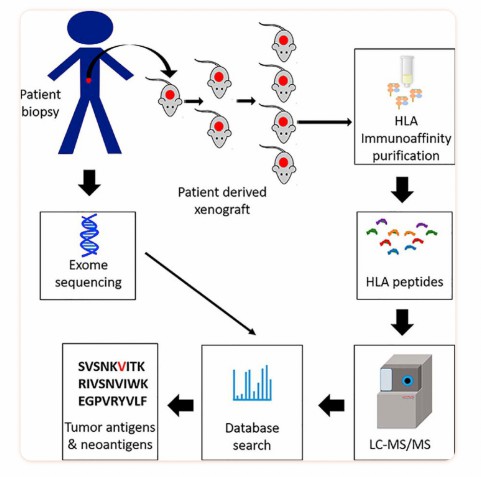 Fig.1 Identification of cancer antigens in vivo using the PDX mouse models.1
What We Can Offer
In Vivo Models Available
| Types | Features | Functions |
|---|---|---|
| MHC-I Transgenic Mouse Model | Expressing the human HLA-A2 molecular | Investigating CD8+ T cell responsive antigenic epitope. |
| MHC-II Transgenic Mouse Model | Harboring the human HLA-DR molecular | Investigating CD4+ T cell responsive antigenic epitope. |
| Double Transgenic Mouse Model | Expressing MHC-I and MHC-II molecules | Monitoring the synergy function of CD8+ and CD4+ T cell responses. |
| Xenograft Model | Patient-derived tumor model | Providing a larger cancer antigen peptidome for screening. |
Immunodominant Epitope Evaluation Services
| Types | Functions |
|---|---|
| Protection Assay | Analyzing the epitope-specific vaccine and adoptively transferred cells for disease protection and therapeutic effects. |
| Reactivity Assay | Analyzing immune cells' proliferation, cytotoxicity, survival, cytokine release, and tumor burden when concurrent with specific therapeutics. |
In Vivo Assay Services at Creative Biolabs
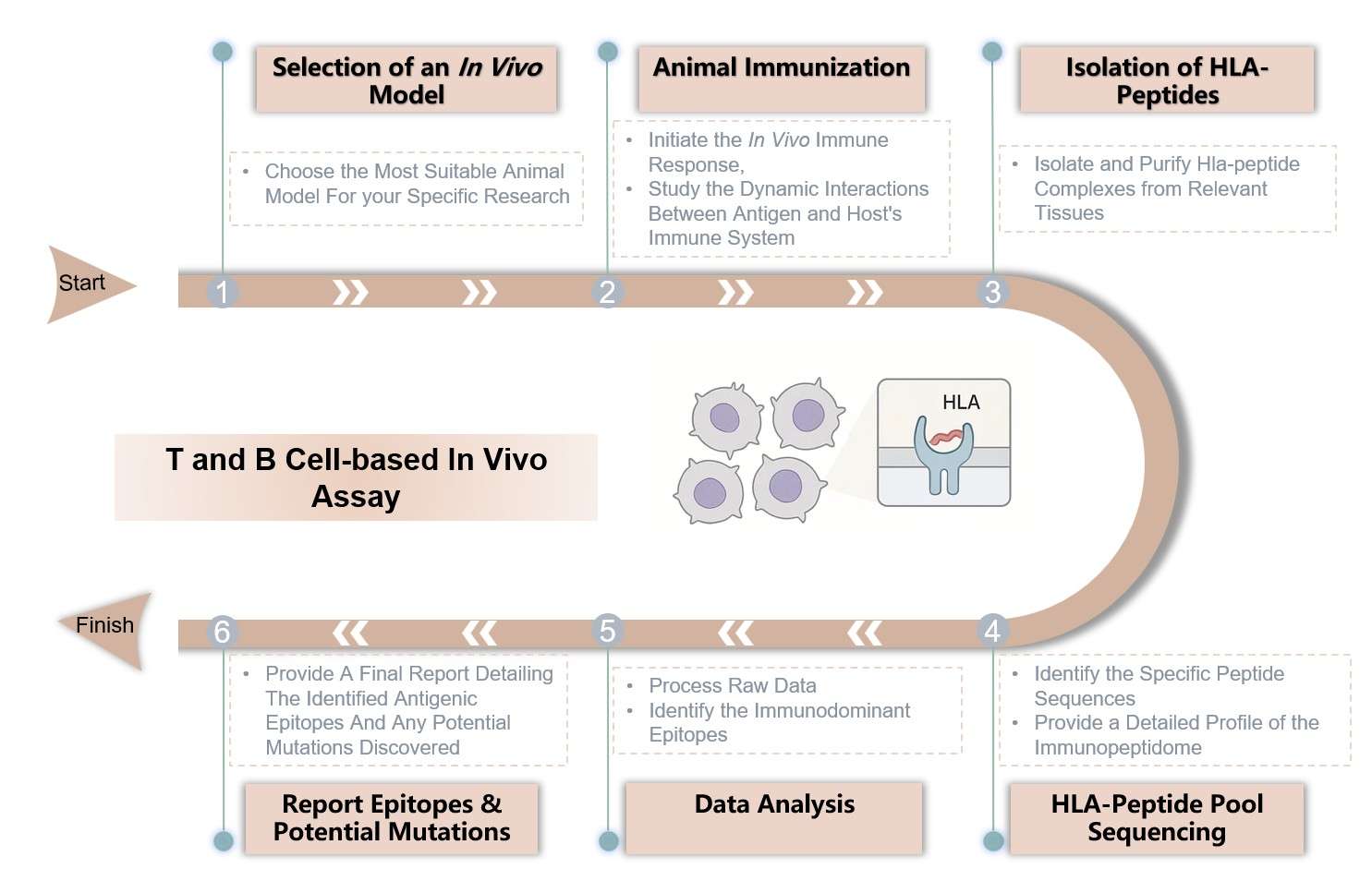
Highlights
Accelerated Efficiency & Targeted Discovery
We provide improved efficiency by using advanced methods to identify physiologically relevant cancer peptides. This streamlines the discovery process, getting you to meaningful results faster.
Superior Animal Models
Our platform utilizes advanced animal models that are engineered with more HLA types. This ensures more clinically relevant data and a broader understanding of immune responses to your therapeutic.

High-Quality Epitope Candidates
Our process is designed to provide fewer but high-quality and reliable immunodominant epitope candidates. This delivers actionable data, helping you focus on the most promising targets.
Comprehensive Epitope Characterization
We offer a comprehensive characterization of tumor epitopes using multiple mechanism-related assays. This provides a holistic view of your therapist's action, validating its true potential.
Discover how a partnership with us can streamline your research - Get a quote today.
Customer Reviews
-
Effective Vaccine Development
Using Creative Biolabs' assay in our research has significantly improved the identification of immunogenic epitopes for our vaccine project. The detailed data were particularly valuable and helped us select the most promising lead candidate. - Dr. Mt Ts, Senior Scientist. -
Game-Changing Personalized Therapy
The ability to use PDX models for immunopeptidome analysis was a game-changer for our personalized cancer therapy project. Creative Biolabs' service provided the high-quality, authentic antigen data we needed. - Aa Sz, Head of Immunology.
FAQs
Why do I need an in vivo assay when I already have strong in vitro data?
While in vitro data is a great start, it often doesn't capture the full complexity of the immune system. In vivo assays are crucial for understanding how your therapeutic behaves in a dynamic, physiological environment.
What is the advantage of using PDX models?
PDX models allow us to study the immune response to human tumors in a living system. This is especially valuable for identifying novel tumor antigens and neoantigens, providing more clinically relevant data than traditional cell line models.
Related Services
Chemokine Production Measurement Service
Purification Development
Beyond standard services, we can develop and optimize custom purification protocols for your specific proteins or antibodies. This ensures high purity and yield, which is essential for consistent and reliable research results.
Learn More →How to Contact Us
Creative Biolabs helps you accelerate drug discovery and streamline clinical trial processes by providing comprehensive, real-world data on immune cell function. We leverage advanced animal models and state-of-the-art analytical platforms to generate actionable insights into your product's mechanism of action.
Contact us for more information and to discuss your project.
Reference
- Rijensky, Nataly Mancette et al. "Identification of Tumor Antigens in the HLA Peptidome of Patient-derived Xenograft Tumors in Mouse." Molecular & cellular proteomics : MCP vol. 19,8 (2020): 1360-1374. Distributed under an Open Access license CC BY 4.0, without modification. https://doi.org/10.1074/mcp.ra119.001876
 Download our brochure
Loading case studies...
Online Inquiry