Our service offers a one-stop solution from lab to large-scale analysis. We ensure efficient upstream and downstream process development with the capacity to handle large numbers of samples for your project.
Cell Avidity Analysis Service
Creative Biolabs provides precise, quantitative measurements that reveal the true binding potential of your candidates. We go beyond simple binding numbers to deliver a functional score that is highly correlated with in vivo efficacy. Our service helps you de-risk your lead selection process by identifying the most potent and functional molecules early on, reducing the need for costly and time-consuming preclinical studies. We provide a definitive functional metric that can be used to select leads, optimize therapeutic design, and predict clinical response.
Introduction What We Can Offer Workflow Why Creative Biolabs Customer Reviews FAQs Related Services Contact Us
Cell Avidity: a More Biologically Relevant Measurement
The efficacy of many immunotherapies and biologics hinges on the strength and durability of their binding to cellular targets. Avidity, the cumulative binding strength of multiple interactions, is a more accurate measure of this functional bond than single-point affinity. This distinction is crucial because a high-affinity interaction at a single site may not translate to effective binding in a complex cellular environment, where multiple, weaker interactions can collectively generate a more potent and stable bond.
To understand how this service can be leveraged to address specific project requirements, request a consultation.
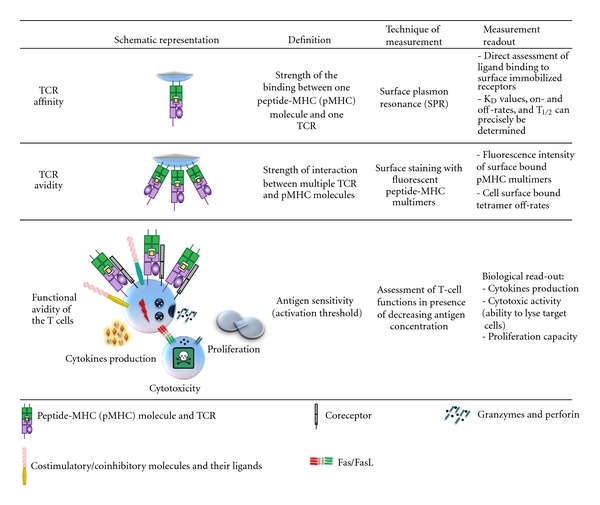 Fig.1 Schematic representation, definition, technique of measurement, and readout of TCR affinity and functional avidity.1
What We Can Offer
Comprehensive Solutions
Quality and Compliance
We provide a well-established quality system that incorporates Quality-by-Design and process analytical techniques. Strict procedures and aseptic verification are upheld throughout the process to ensure GMP-certified production.
Operational Stability
We guarantee the stability of strains in cell banks and large-scale fermentations. Our documentation quality and procedures are assessed and approved by a qualified quality assurance service, ensuring reliable and consistent results.
Customizable Approach
We offer a customized service that includes optimizing codon usage for gene expression in microorganisms. Our flexible process can be run in batch, fed-batch, or continuous mode, with optimized culture conditions to maximize your yield.
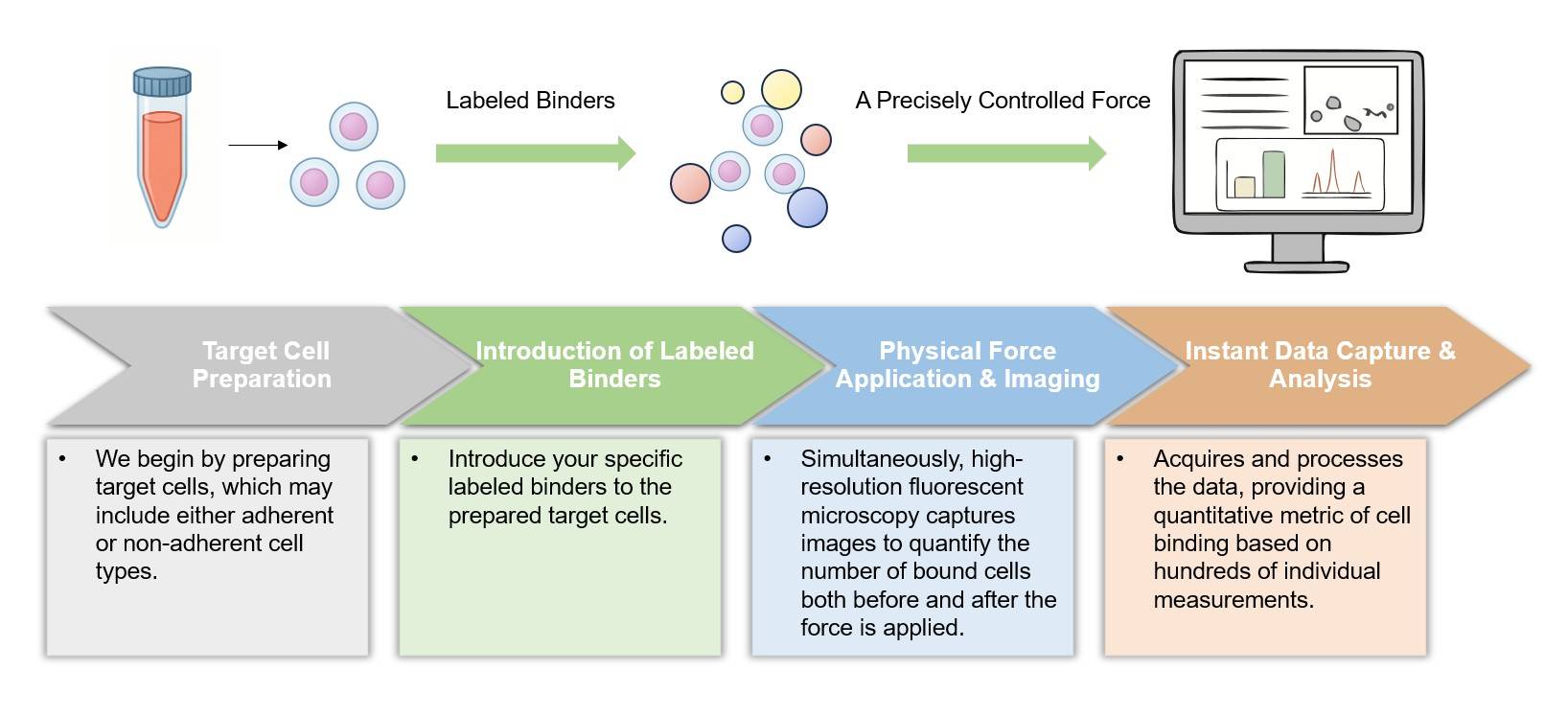
Workflow of Cell Avidity Analysis Service
Highlights
Unmatched Leadership
Creative Biolabs is a leader in advanced biological analysis. Our service acts as a crucial bridge between traditional molecular assays and functional studies, giving you a complete and more accurate picture of your therapeutic candidates' true potential.
Functional Insights
Our service gives you a crucial level of detail and accuracy that is not available with other methods. Our unique approach to avidity measurement provides a more complete understanding of your candidates' therapeutic capabilities and potential for success.
Heterogeneity Analysis
We provide a crucial level of detail and accuracy that is not available with other methods. Our unique approach to avidity measurement includes analyzing the heterogeneity of the response. This reveals a more comprehensive picture of the immune response.
Mechanistic Approach
Our unique approach uses controlled force platforms to measure true functional binding in a cellular context. This provides a level of detail and accuracy that is not available with other methods, allowing you to confidently predict a candidate's in vivo efficacy.
For comprehensive information regarding our service offerings and to receive a detailed cost estimate for your specific project, get a quote today.
Customer Reviews
-
Reliable Data
Creative Biolabs' cell avidity analysis service was instrumental in validating our vaccine candidates. The quantitative avidity data gave us a tangible metric to compare formulations and confirmed the production of high-avidity antibodies, which was a key differentiator in our project. - K***t H. -
Decision−Making Tool
Creative Biolabs' cell avidity analysis service provided crucial predictive biomarkers for our CAR-T cell therapy program. The correlation between patient T cell avidity and clinical response was a game-changer, helping us identify patients most likely to benefit from treatment. - L***a J.
FAQs
How does cell avidity analysis differ from traditional affinity measurements, and why is it more beneficial?
While affinity measures the strength of a single interaction, avidity measures the collective strength of all interactions under physiologically relevant conditions. This provides a more accurate and predictive metric for the functional efficacy of your candidate.
What kind of samples can I submit for your service?
We can analyze a wide range of samples, including but not limited to CAR-T cells, bispecific antibodies, vaccine antigens, and various target cell lines. Our team will work with you to ensure your samples are compatible with our platforms.
Related Services
T Cell-based In Vitro Assay
Characterize T-cell responses with our full suite of T-cell-based assays, including cytotoxicity, cell proliferation, and cytokine release assays to measure antigen-specific activity.
Learn More →Antibody and Protein Production
Our comprehensive antibody and protein production services ensure you have the high-quality, high-yield materials necessary to conduct your avidity analysis.
Learn More →How to Contact Us
By providing a comprehensive and predictive metric for functional binding, Creative Biolabs empowers you to make informed decisions that can accelerate your research and unlock the true potential of your therapies. For detailed information and to discuss how our services can assist your specific project, please contact us.
Reference
- Viganò, Selena et al. "Functional avidity: a measure to predict the efficacy of effector T cells?" Clinical & developmental immunology vol. 2012 (2012): 153863. Distributed under an Open Access license CC BY 4.0, without modification. https://doi.org/10.1155/2012/153863
 Download our brochure
Loading case studies...
Online Inquiry