Creative Biolabs supports gene and cell therapy by identifying cancer epitopes. Using gold-standard 51 Chromium release assays, we measure T-cell and NK-cell cytotoxicity with precision. This simple, sensitive method helps evaluate immune cell killing—advancing your therapeutic research.
Learn More →Complemental C1q Binding Assay Service
Background Methods Advantages Publication FAQs Customer Review Related Services Contact Us
Complemental C1q Binding Assay: Precision in Complement Analysis
At Creative Biolabs, we are excited to introduce our complemental C1q binding assay, a state-of-the-art service designed to advance your understanding of complement system interactions. The complemental C1q binding assay provides critical insights into how antibodies interact with C1q, the first component of the classical complement pathway, which plays a key role in immune response and pathogen clearance.
Importance of the Complemental C1q Binding Assay for Antibodies
The complemental C1q Binding Assay is crucial for evaluating the ability of antibodies to interact with the complement system, particularly with the C1q protein. This interaction is a key component of the immune response, playing a significant role in the activation of the classical complement pathway. Understanding and characterizing this binding interaction is essential for several reasons:
- Therapeutic Efficacy: For therapeutic antibodies, effective binding to C1q can enhance their ability to mediate immune effector functions such as antibody-dependent cellular cytotoxicity (ADCC) and complement-dependent cytotoxicity (CDC). This can lead to more effective treatments for various diseases, including cancers and autoimmune disorders.
- Safety and Immunogenicity: Evaluating C1q binding helps in predicting and mitigating potential adverse effects, such as excessive immune activation or unintended complement activation, which can lead to tissue damage or inflammatory responses.
- Mechanistic Insights: The assay provides valuable insights into the mechanisms of action of antibodies, helping to differentiate between those that can initiate complement activation and those that cannot.
- Regulatory Compliance: Regulatory agencies often require detailed characterization of antibody interactions with the complement system as part of the approval process for new therapeutic antibodies. The C1q Binding Assay is a standard method to meet these regulatory requirements.
- Product Optimization: The assay can be used to screen and optimize antibody candidates during the development process, ensuring that only those with the desired complement binding properties advance to further stages of development.
Technical Methods for Complemental C1q Binding Assay
Several advanced techniques can be employed to analyze complemental C1q Binding, each offering unique advantages:
- Surface Plasmon Resonance (SPR)
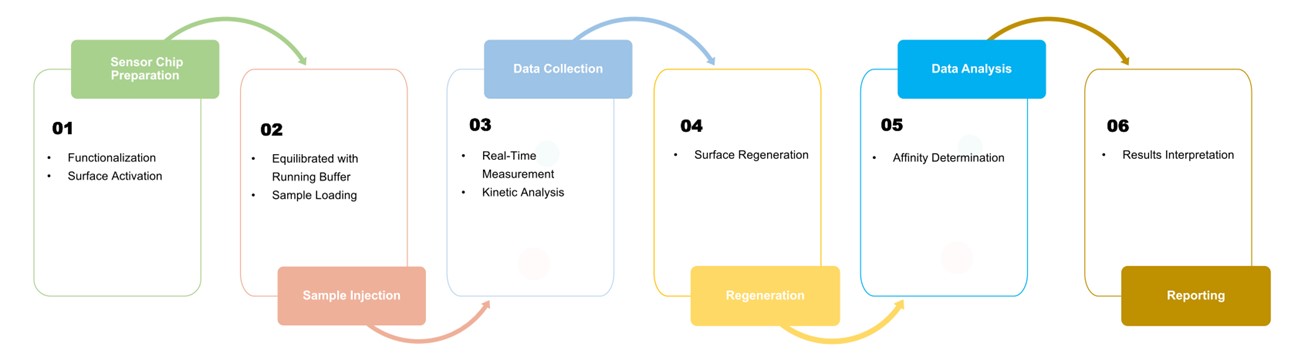
SPR is a powerful, label-free technique that provides real-time monitoring of molecular interactions. It is highly sensitive and can measure binding kinetics and affinity accurately. SPR is particularly suitable for studying the interaction between antibodies and C1q, offering precise data on binding dynamics.
- ELISA
It is effective for bulk sample analysis and provides quantitative data on antibody-C1q binding. However, it lacks real-time monitoring and detailed kinetic information.
- Bio-Layer Interferometry (BLI)
BLI is another label-free technique that measures changes in interference patterns of reflected light due to binding events. It provides real-time data and is relatively simple to use, making it suitable for high-throughput analysis of C1q interactions.
| Step | Description |
|---|---|
| Sample Preparation |
Ligand preparation: Prepare antibodies or proteins as ligands. Analyte preparation: Prepare C1q protein in various concentrations. |
| Biosensor Selection and Activation |
Choosing the Right Biosensor: Select a biosensor type compatible with the ligand. Activation: Activate biosensors if required (EDC/NHS for Amine Reactive biosensors). |
| Ligand Immobilization | Immobilization Process: Immobilize the ligand onto the biosensor surface. Washing: Wash to remove unbound ligands. |
| Baseline Establishment | Baseline measurement: Establish baseline signal by dipping the biosensor in the buffer. |
| Association Phase | Binding interaction: Dip the biosensor in the C1q solution and monitor real-time interaction. |
| Dissociation Phase | Dissociation monitoring: Move the biosensor to buffer to monitor C1q dissociation. |
| Regeneration | Regeneration of Biosensor: Use a regeneration buffer to remove bound C1q and reuse the biosensor. |
| Data Analysis |
Kinetic analysis: Determine ka, kd, and KD from real-time data. Quantitation: Quantify C1q concentration in samples. |
| Quality Control and Validation |
Control experiments: Validate specificity and accuracy. Repeatability and reproducibility: Perform repeat measurements for consistency. |
Key Features and Benefits of Our C1q Binding Assay
Understanding Complement Activation
The assay helps elucidate how antibodies trigger the complement cascade by binding to C1q, providing valuable data on complement activation potential.
Optimizing Therapeutic Antibodies
By assessing C1q binding, you can evaluate and enhance the efficacy of your therapeutic antibodies, ensuring they effectively initiate the complement-dependent cytotoxicity (CDC) required for robust immune responses.

Ensuring Safety and Efficacy
Accurate analysis of C1q interactions helps predict potential immunogenicity and safety profiles of antibody-based therapies, supporting the development of safer and more effective treatments.
Advanced Technology
Our assay utilizes cutting-edge techniques to provide precise and reliable data on C1q binding, offering real-time and label-free measurements to support your research and development needs.
Whether you are developing new therapeutics or optimizing existing ones, our complemental C1q Binding Assay is an essential tool for understanding and enhancing complement-mediated immune responses.
Publication Sharing
This study highlights the critical role of BLI in measuring the interaction between recombinant C1q and immobilized antibodies. This BLI measurement is crucial for quantifying the binding affinity and kinetics of the interaction, providing real-time data that are essential for understanding the inhibitory potential of the antibody. By immobilizing the antibody on the biosensor and introducing recombinant C1q as the analyte, the study demonstrates the precise and dynamic nature of this interaction. This information is vital for the development and optimization of therapeutic antibodies that target the classical complement pathway, offering insights into their mechanism of action and potential efficacy.
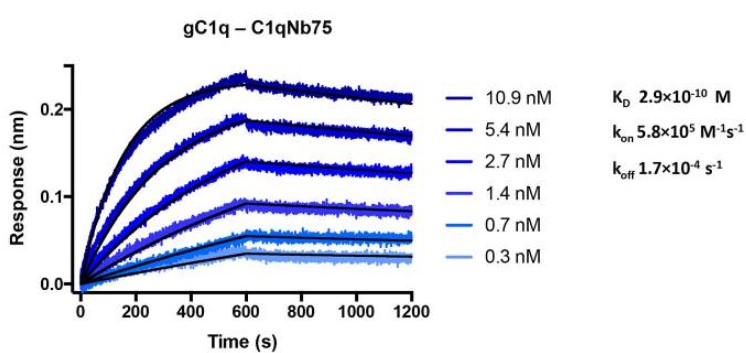 Fig.1 BLI measurement of the interaction between recombinant C1q and immobilized antibody.1
FAQs
Here are some common questions from potential customers interested in our complemental C1q binding assay service, designed to address genuine concerns and guide you toward further inquiry:
Q1: What specific technologies or platforms does Creative Biolabs use for this assay to ensure high sensitivity?
A1: Creative Biolabs' primary platform for the complemental C1q binding assay is a highly sensitive and robust ELISA-based system. They also use high-throughput biosensor technologies like SPR or BLI for detailed kinetic binding data, ensuring they select the most appropriate technology for your specific needs.
Q2: What controls and standards are included in the assay to ensure the accuracy and reliability of the data?
A2: To ensure accuracy, every complemental C1q binding assay at Creative Biolabs includes a comprehensive set of controls and standards. This typically includes a positive control, a negative control, a blank control, and a standard curve, which allows for precise quantification and validation of assay performance.
Q3: Can the C1q binding assay be customized for unique antibody characteristics or specific research needs, such as different antigen formats?
A3: Creative Biolabs offers flexible and customizable assay development. Our expert team can adapt the assay protocol to accommodate various antibody formats, different antigen presentation methods, and specific buffer conditions, ensuring the assay is perfectly tailored to your unique research objectives.
Customer Review
-
Enhanced Efficacy Prediction
Using Creative Biolabs' complemental C1q binding assay allowed us to precisely correlate C1q binding with in vivo efficacy, providing a crucial predictive marker for our therapeutic antibody's performance. - Dr. A*n S
-
Uncovered Hidden Liabilities
Creative Biolabs' C1q binding assay helped us uncover subtle, yet critical, differences in complement activation between our lead candidates that we hadn't detected with other methods. This early detection prevented potential safety issues down the line, saving us significant resources. - J*e R
Please contact us to discuss your specific customization requirements.
Related Services
To further support your therapeutic antibody development and provide a holistic understanding of your candidates' immune profiles, Creative Biolabs offers a comprehensive suite of complementary services:
T Cell-based 51 Chromium Assay
MHC-Ligandome Mapping
At Creative Biolabs, we leverage cutting-edge mass spectrometry (MS) to map tumor immunopeptides, revealing the antigenic profile of malignant tumors. Our advanced MS platform delivers highly enriched, truly presented peptides, while our expert bioinformatics team provides precise, reliable data analysis to support your research.
Learn More →How to Contact Us
At Creative Biolabs, we provide high-quality C1q binding assays to accelerate your antibody development. Using advanced technology, we deliver precise, real-time analysis of antibody-C1q interactions, giving you the reliable data you need to make informed decisions.
Let us support your research with our expertise—contact us today to discuss how we can help advance your antibody projects!
Reference
- Laursen, Nick S., et al. "Functional and structural characterization of a potent C1q inhibitor targeting the classical pathway of the complement system." Frontiers in Immunology 11 (2020): 1504. Distributed under Open Access License CC BY 4.0, without modification.
 Download our brochure
Loading case studies...
Online Inquiry